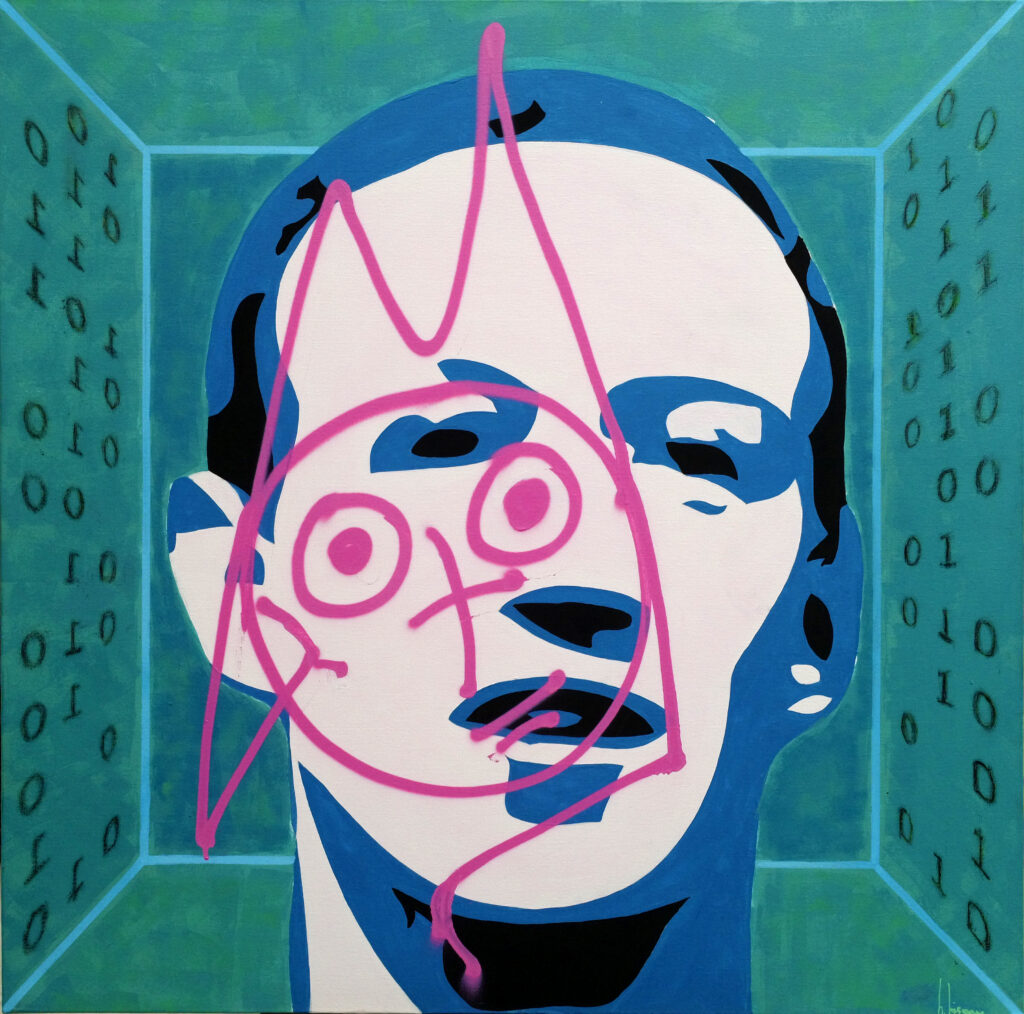
French artist Hervé Loiseau brings a career spanning graphic design, television, and advertising into his artistic practice. In his provocative TOTO series, he turns his gaze toward influential figures shaping contemporary culture and society—from Elon Musk and Donald Trump to Greta Thunberg and Naomi Osaka.
If every canvas had a soundtrack, what would audiences hear the moment they stepped into your world?
Music plays an important role in my creative process. When I was a child, I would often sneak into the studio of a painter named Édouard Mac-Avoy, who always worked to the music of Erik Satie, especially the Gymnopédies. I have to admit that ever since then, this music has stayed with me. It is the sound of work, of calm, and above all, of depth, especially when I spend long hours in the studio. I’m afraid I may be one of the few people who still listens to this kind of music. The people looking at my paintings probably hear something much more modern … maybe even a little more rock ‘n’ roll!
Which single object in your home or studio would you rescue first in a fire, not because it’s valuable but because it tells your story?
My brushes. I have always used the same ones for years: a range of angled brushes in different sizes. If I have to change brushes, I make a complete mess of things. I love creating areas of flat color that have to be as perfect as possible. This probably comes from the exercises we were made to do for days at art school, especially painting serif letters freehand, over and over again, while our teachers corrected us very severely.
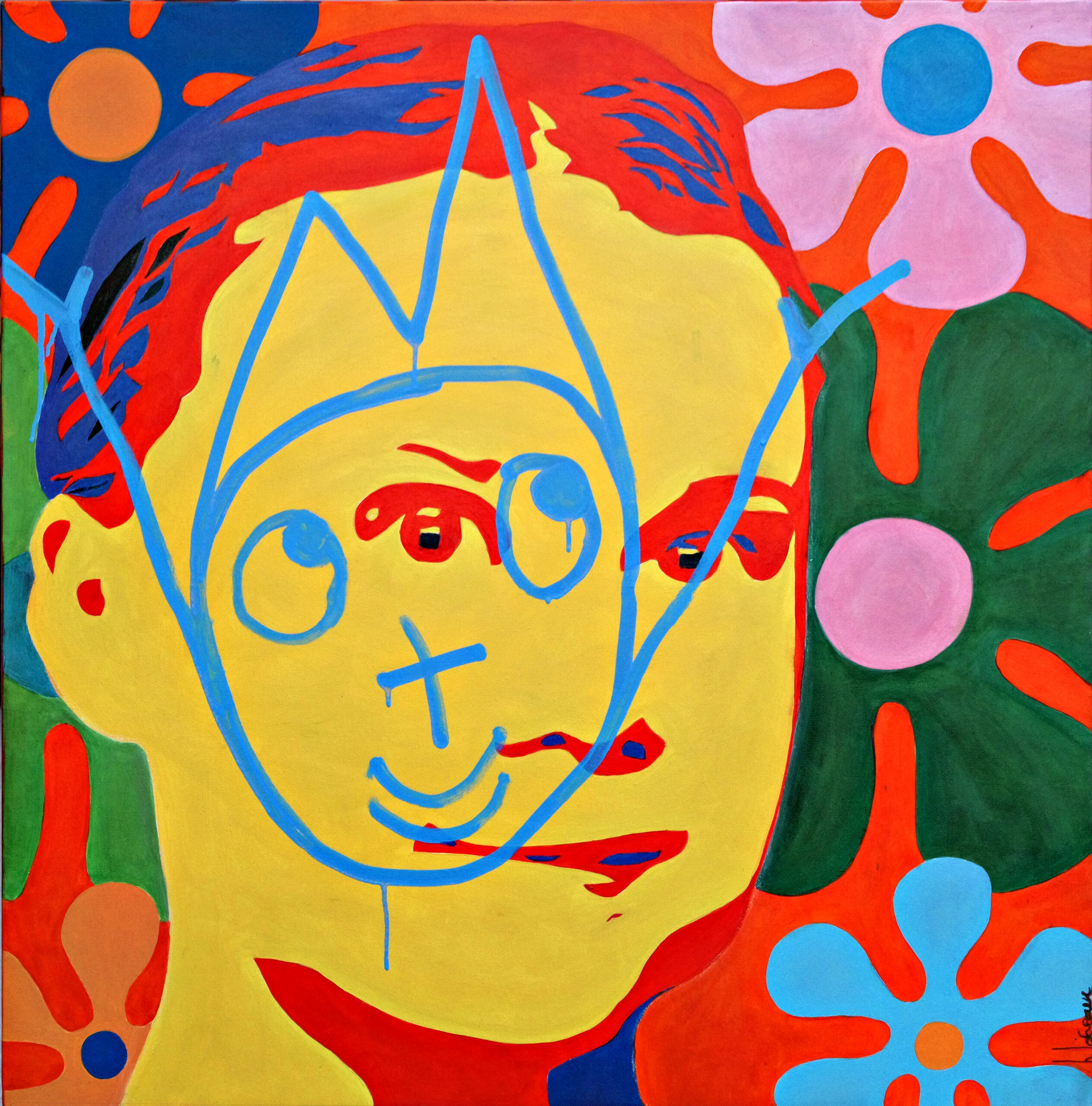
If someone walked into your studio when no one was watching, what small ritual or habit would they witness that says everything about who you are as an artist?
They would discover that I am a very messy painter and that I get paint absolutely everywhere, especially on my hands, in my hair, and all over my smock. It’s always the same smock, and I’ve been wearing it for years. There is so much paint on it now that it practically stands up by itself! They would also hear me talking to myself when I start thinking about the person or subject I am painting. For better or worse, when you paint a portrait, you have to establish some kind of relationship with the person you are portraying, or in my case, depicting. To do that, I do a great deal of research, depending on what Toto wants to say.
What’s something people almost always assume about you after seeing your work that couldn’t be further from the truth?
What I find very amusing when people come to the studio is that, at first, they often don’t understand anything. What I mean is that they don’t immediately recognize the person I have painted, especially when they are looking at a 1-meter-by-1-meter painting from 2 meters away. What you see in a small reproduction may seem obvious, but it is always different when you stand in front of the real painting. Of course, Toto’s face is immediately recognized because he is the first thing people see.
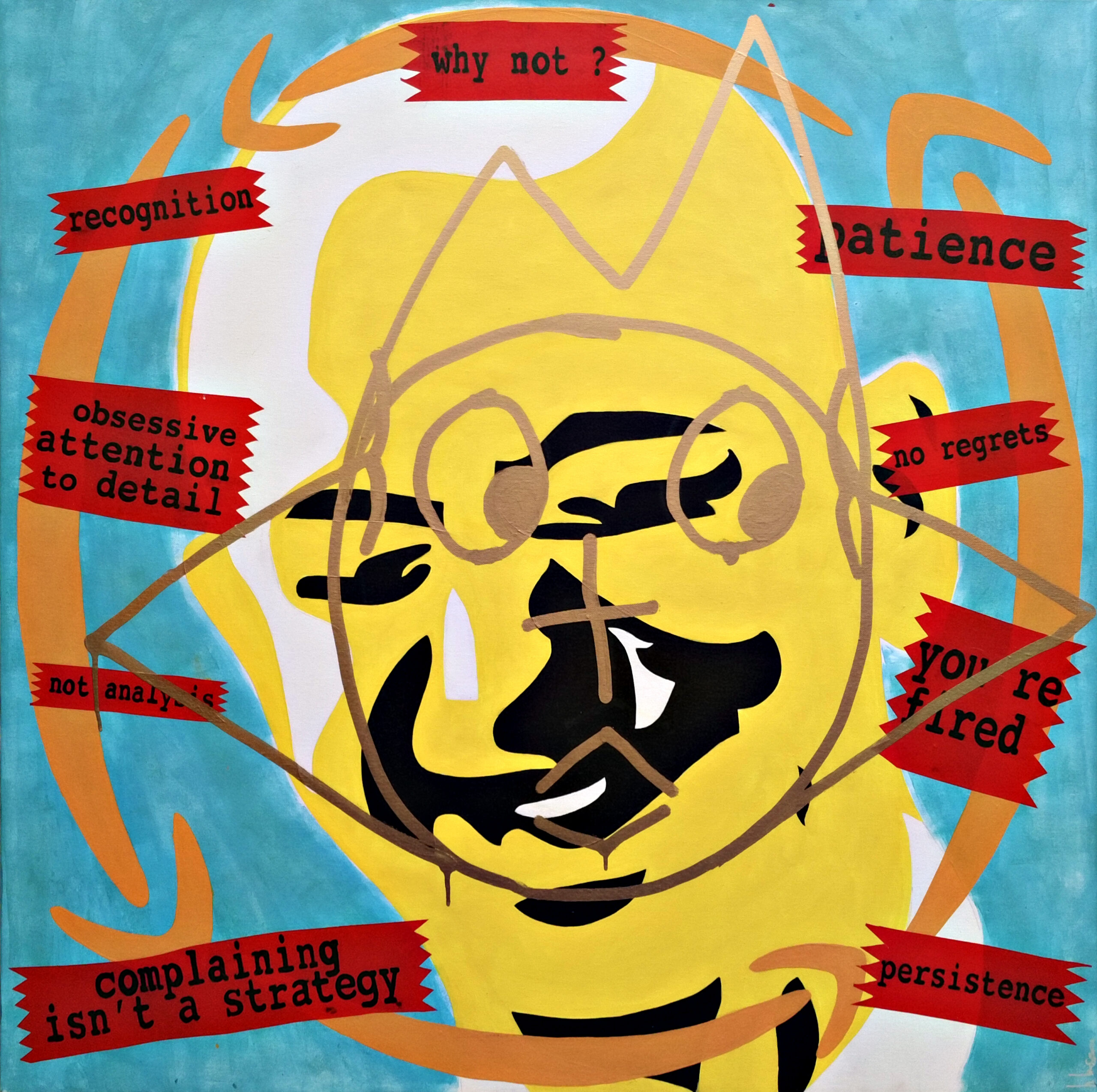
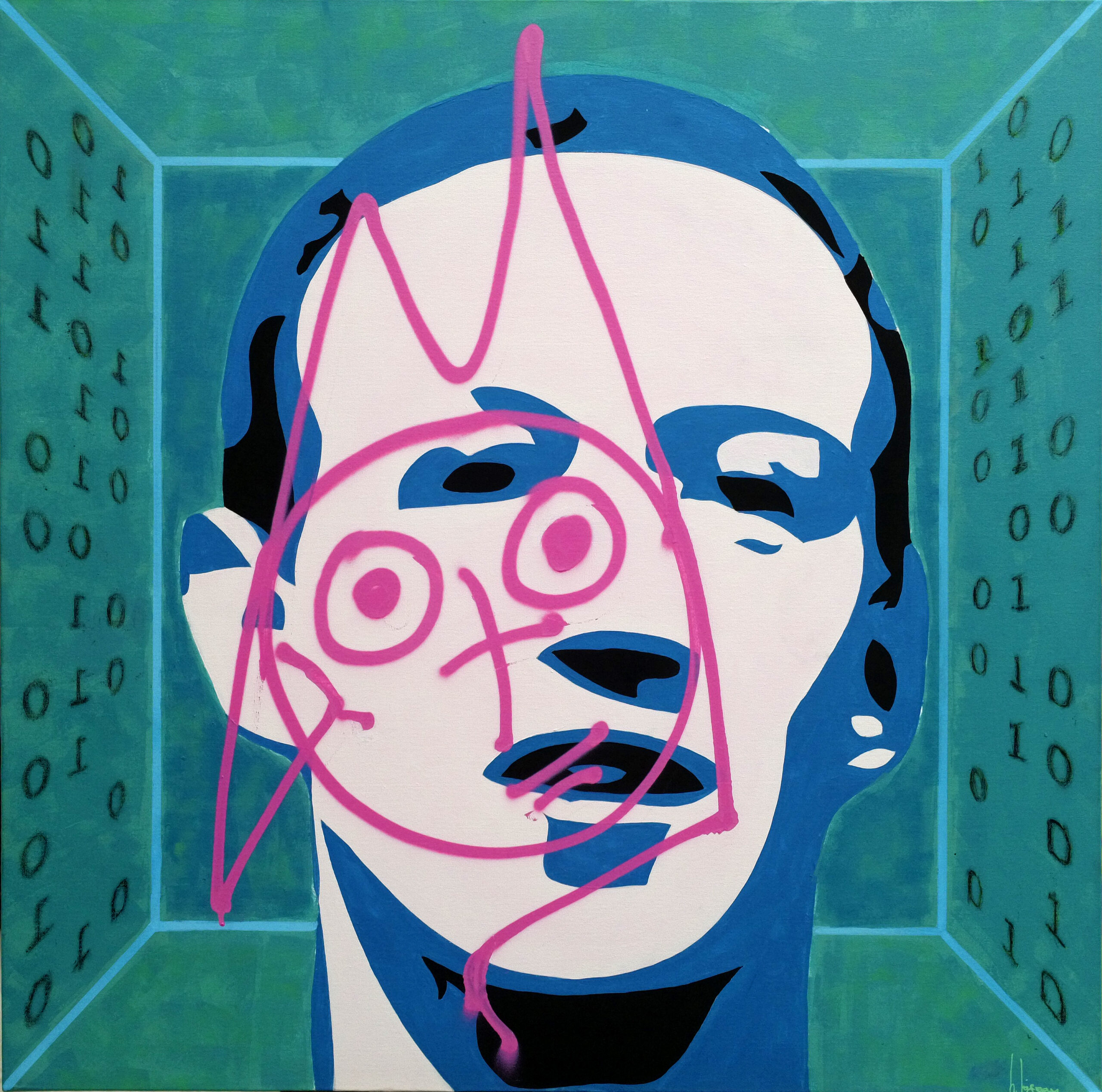
Imagine you wake up tomorrow unable to create ever again. What creative obsession do you think would completely take over your life instead?
This is something that happens much more often than people might imagine. It’s a bit like a writer staring at a blank page: the ideas simply don’t come, and sometimes even the desire to create isn’t there. It can last for several weeks, and when that happens, you have to find a way to escape from it. Since I’m passionate about tennis, I head straight for the tennis courts.
Imagine someone discovers one of your artworks 200 years from now, knowing nothing about our era. What do you hope they understand about humanity, not from the subject itself but from your use of color, balance, and illusion?
That is what I hope for more than anything. I’ve been lucky enough to have sold paintings on four continents (for example, Kim went to Hong Kong and Xi Jinping to Japan, very amusing!), and the first time it happened, I genuinely thought I could die happy then. Something I had created had touched another person somewhere else in the world. It was an extraordinary feeling. Since then, I have painted portraits of well-known people from all over the world, people who have an influence on the world around us. Some are kind; others are utterly detestable. In any case, that’s Toto’s opinion. He always says exactly what he thinks because he is seven years old, and who can stop a seven-year-old from saying exactly what he thinks?
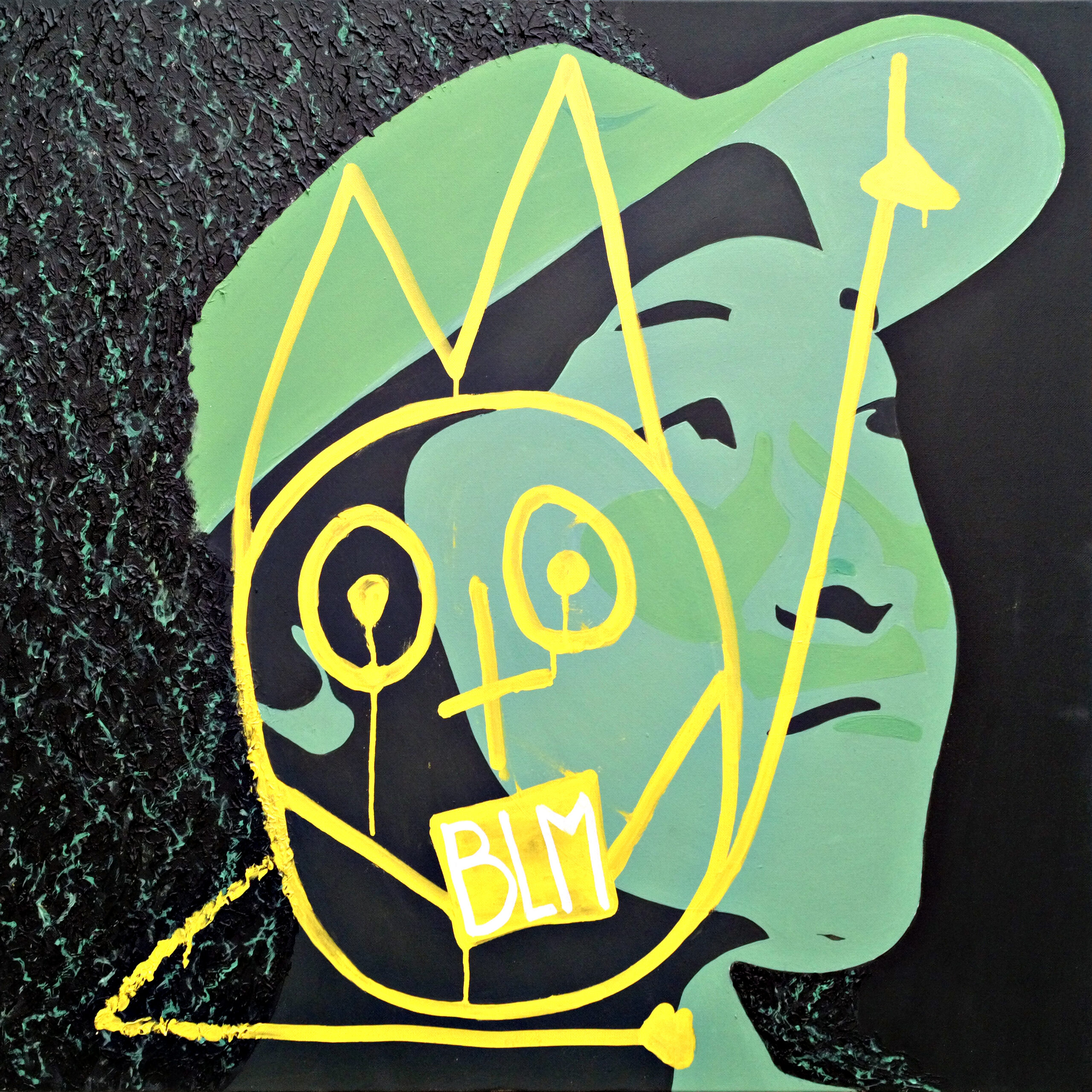
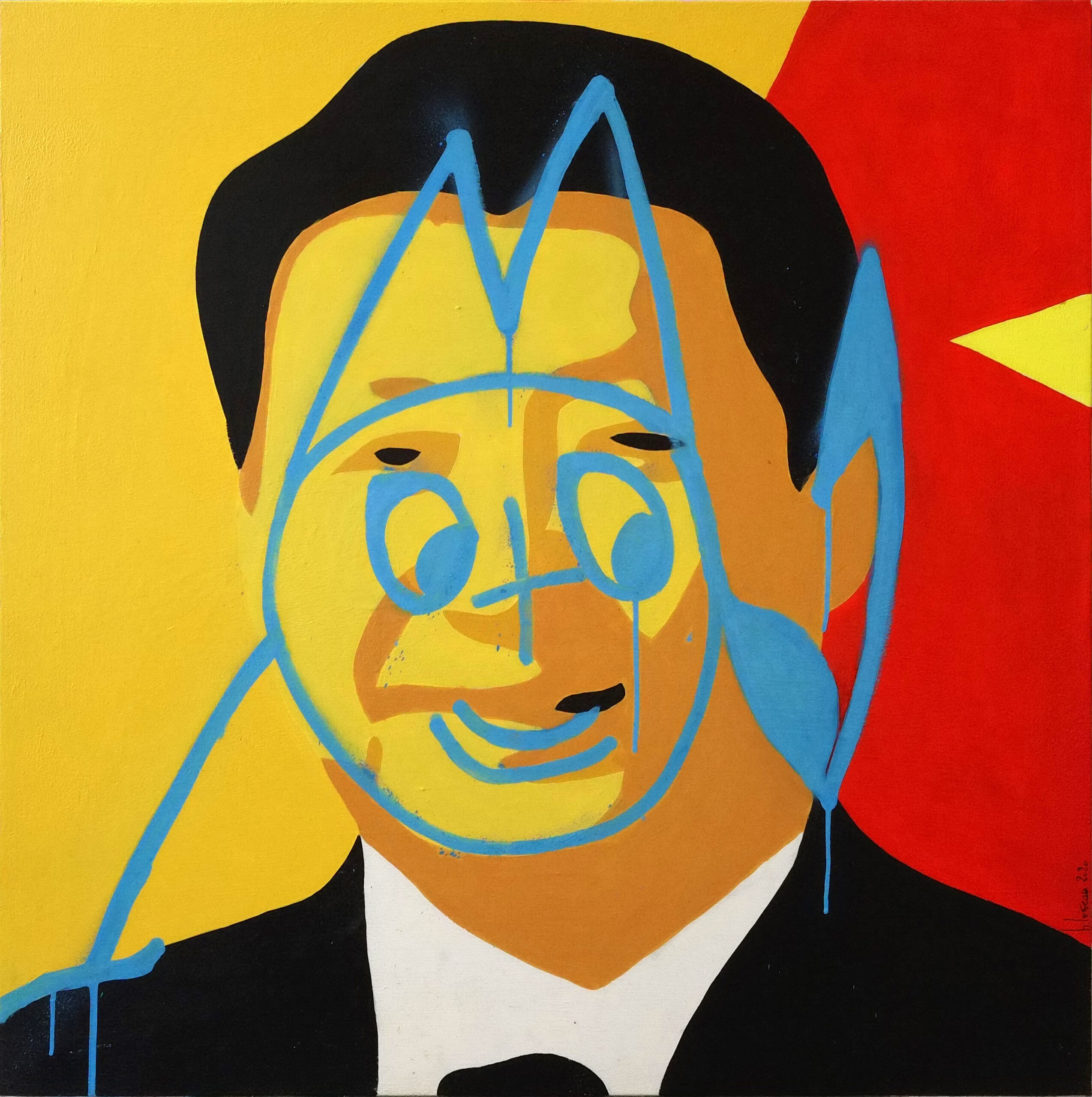
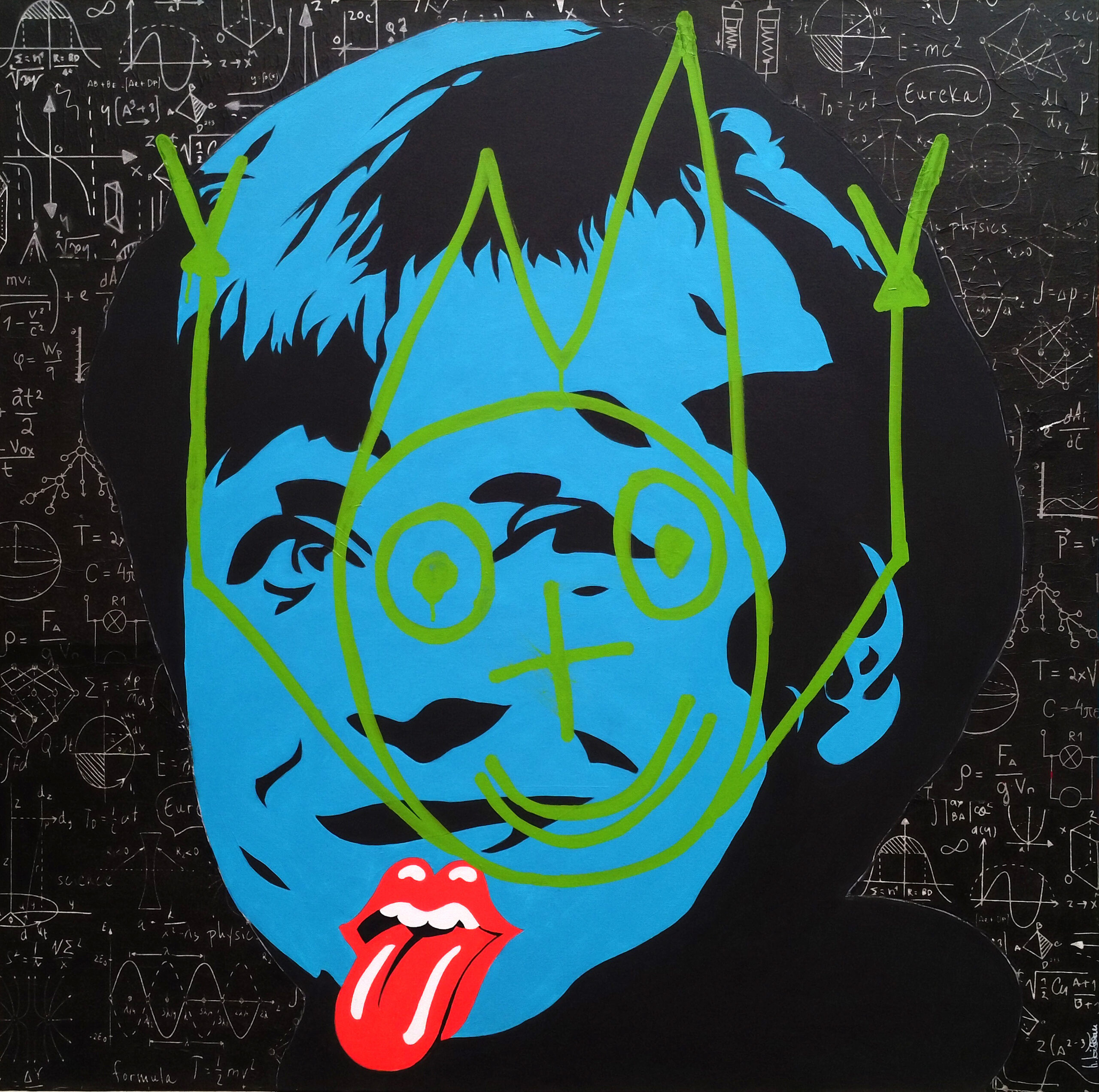
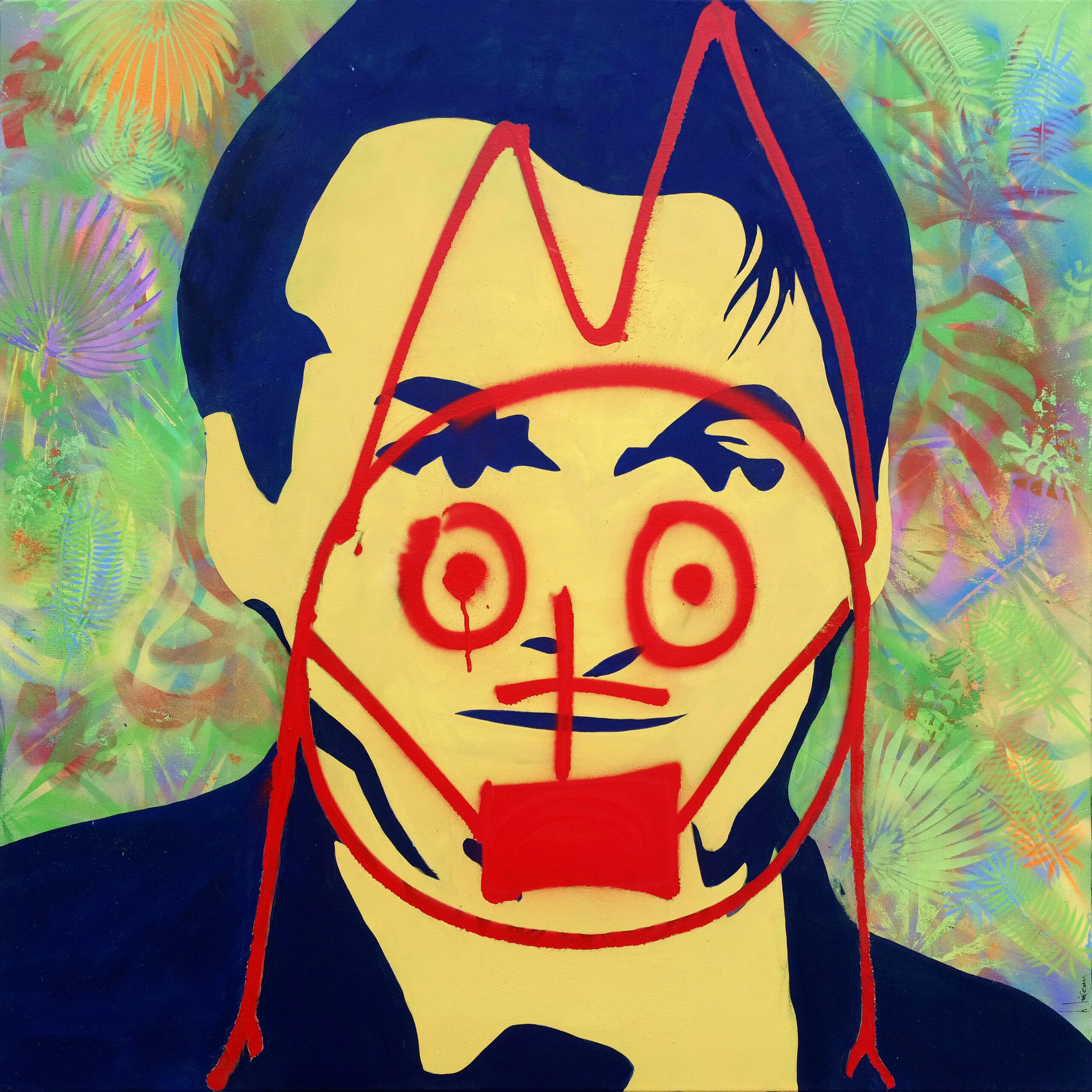
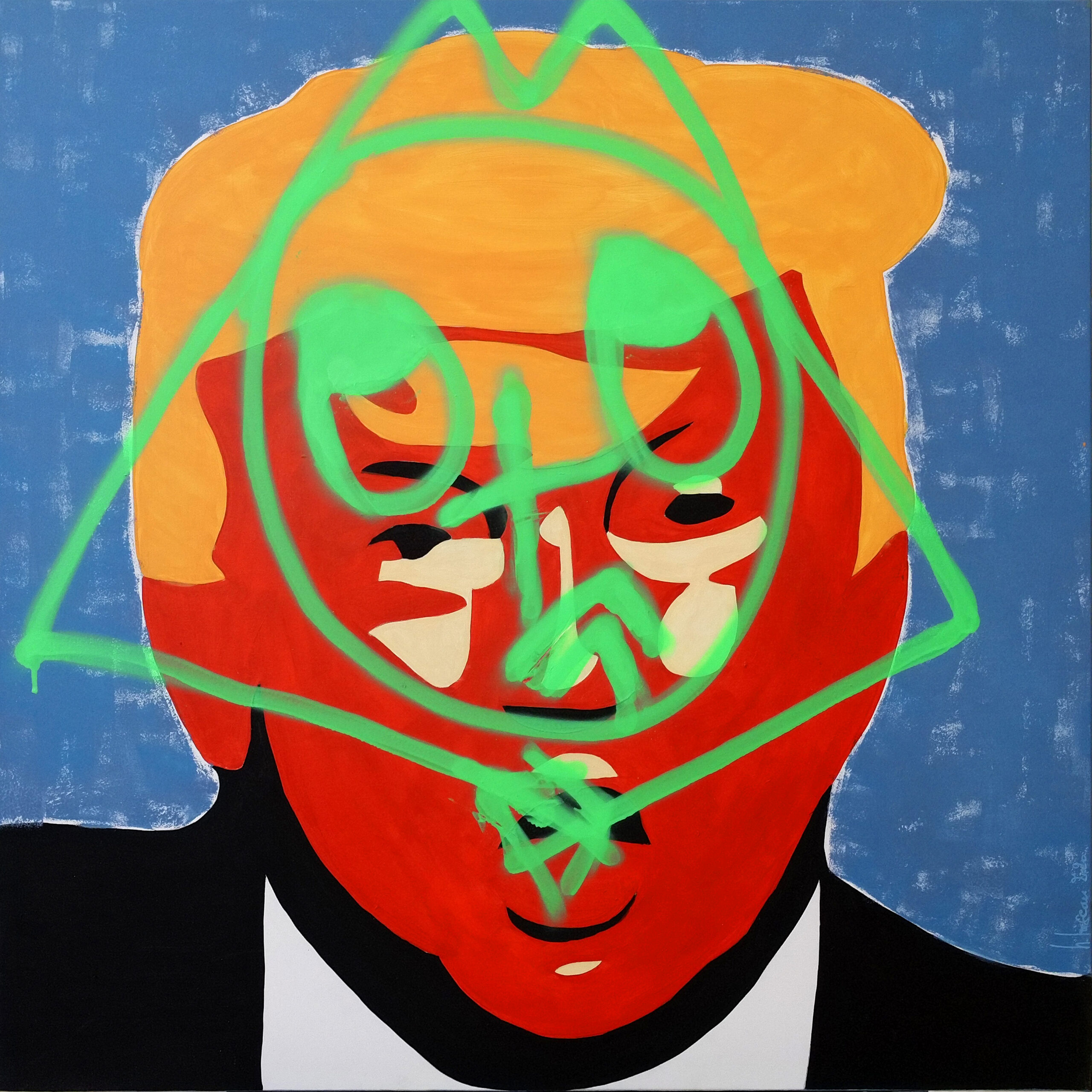
*“Toto” is a simple French doodle made from the equation 0+0=0, forming a child’s face, and it is the first thing people notice in the painting. He says exactly what he thinks, with the honesty only a child can have. The bonnet d’âne (dunce cap) on his head is a reference to the French school system; it was something placed on the heads of poor-performing students.