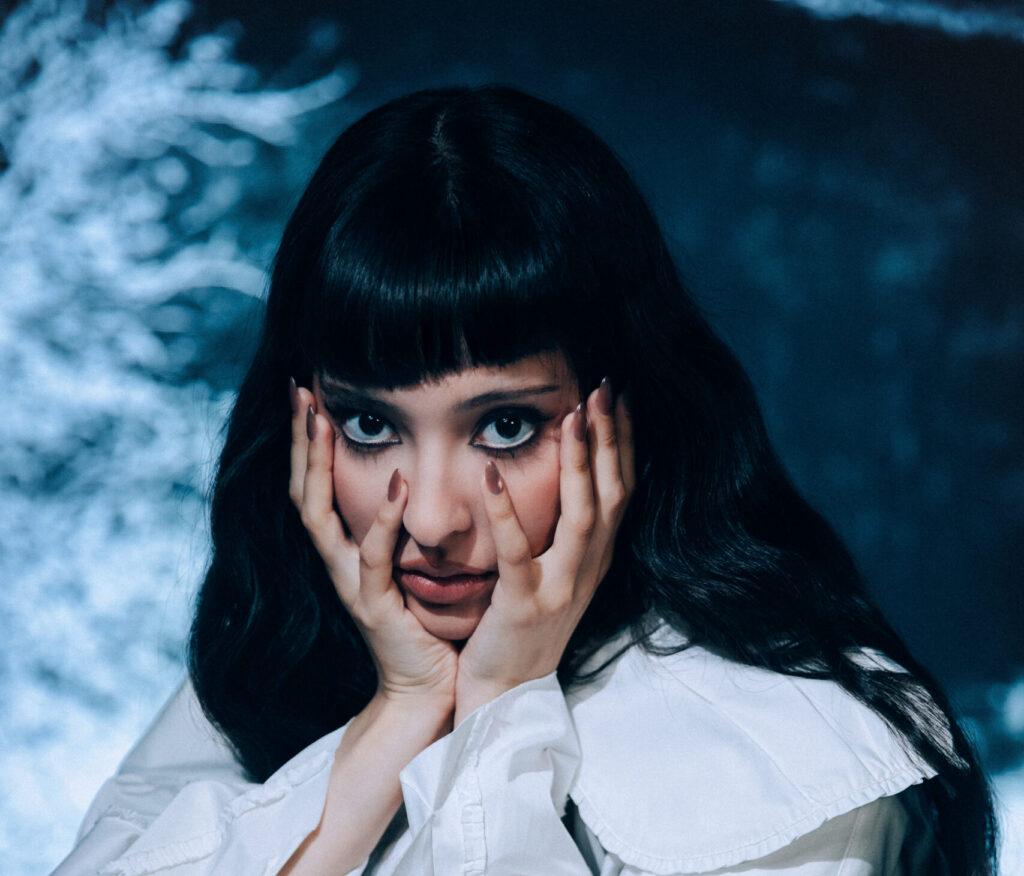
Photographer DYLAN PERLOT @dylanperlot
Stylist KAITLYN VITUG @kaitlynvitug
Hair RACHEL LITA @rachellitahair
Makeup AKINA SHIMIZU @aki__makeup
Production Coordinator CASSIDY COCKE @cassidy.ac
Photographer Assistant JESSE ZAPATERO @jessezapatero
Stylist Assistant EVELYN CRISTOBAL @evezeye
Location FD PHOTO STUDIO LA @fdphotostudio fdphotostudio.com
Intern ABIGAIL RISH @abigail.rish
Words by Kimberly Haddad
Faouzia grew up around music, singing long before she ever touched an instrument, long before there was any thought of standing in front of a crowd and giving that much of herself away. She used to watch her older sister play the piano, describing it as freeing, something she recognized as a real possibility for herself, right there in front of her.
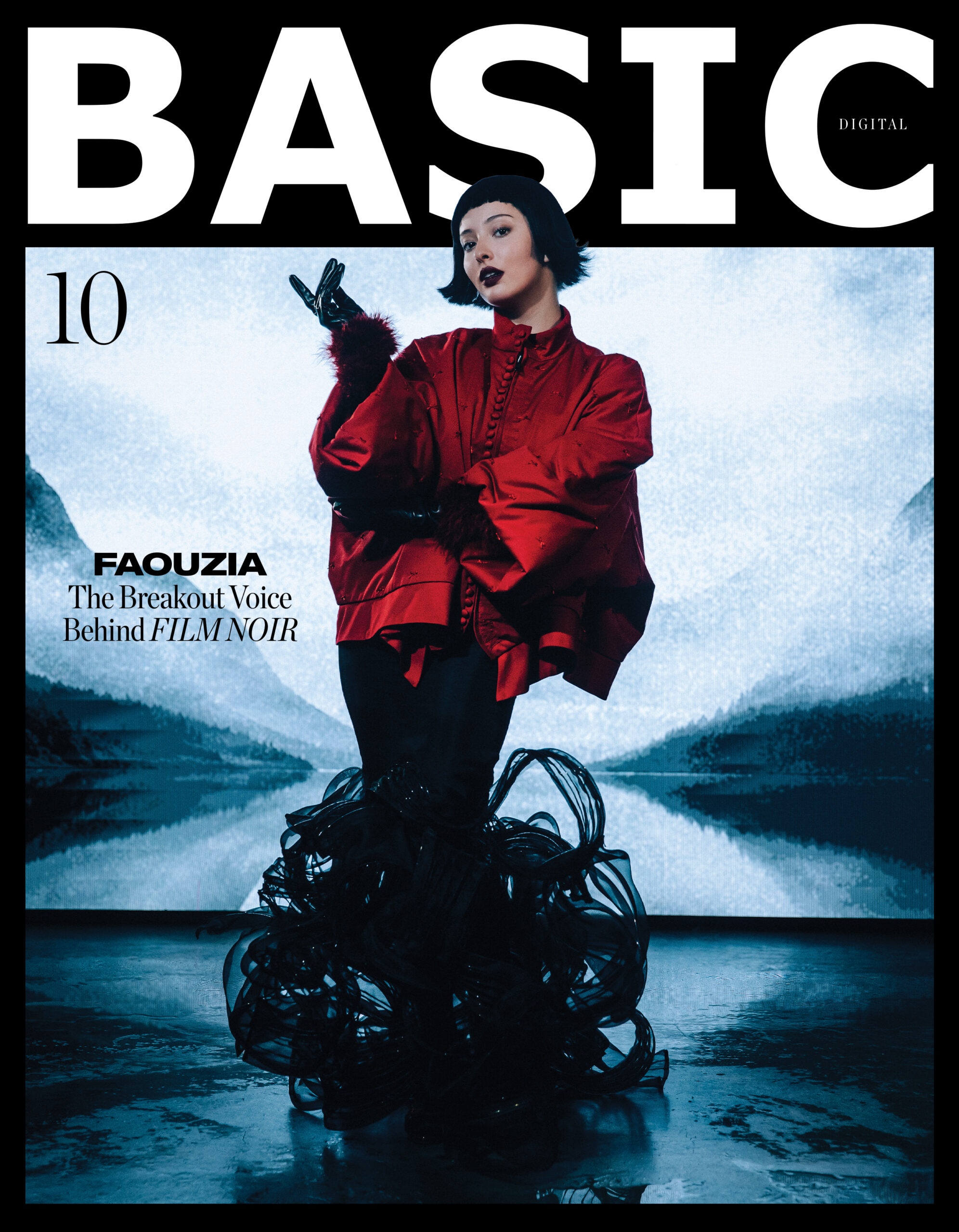
Skirt LUXI DENG @luxideng_
Gloves MARTA MILJANIC @martamiljanic
She remembers lying across the backseat of her dad’s car, turning her head just enough to press her ear against the speaker so she could hear the radio more clearly. Not just the chorus or whatever sat on the surface, but everything—the breath before a vocal line begins, the reverb trailing off at the end of a word, the background textures and rhythmic details that slip past most listeners. The average kid would have waited for the door to open. She didn’t. She stayed there, listening as if there was something to uncover, something she wasn’t willing to miss. That’s where it started for Faouzia, and it explains a lot about how she approaches music now.
She was already writing then, and she never really let go of it. Songs, stories, skits—anything that moved through her, she found a place for it. She paid attention to people: what they said, what they avoided saying, how emotion could fill a room without being acknowledged. For a long time, that work remained private. Putting it in front of someone else meant giving up control over how it would be received, what it would mean once it wasn’t only hers anymore. The younger version of Faouzia wanted to create for the sake of creating, but there was an inevitability to it—others were going to hear it. And they did.
By the time FILM NOIR was released independently, Faouzia had been singled out as an Artist to Watch by Variety and Entertainment Weekly, crossed languages and audiences, and turned songs like “Tears of Gold” and “Rip, Love” into global entry points. The album’s 11 tracks, including “Porcelain,” “Peace & Violence,” and “Unethical,” move with the size of old cinema and the intimacy of something written too close to the skin. Now, with the deluxe version of FILM NOIR adding three new songs, the record doesn’t loop back, the additions sit just outside the original album, still tied to it while edging toward what comes next.
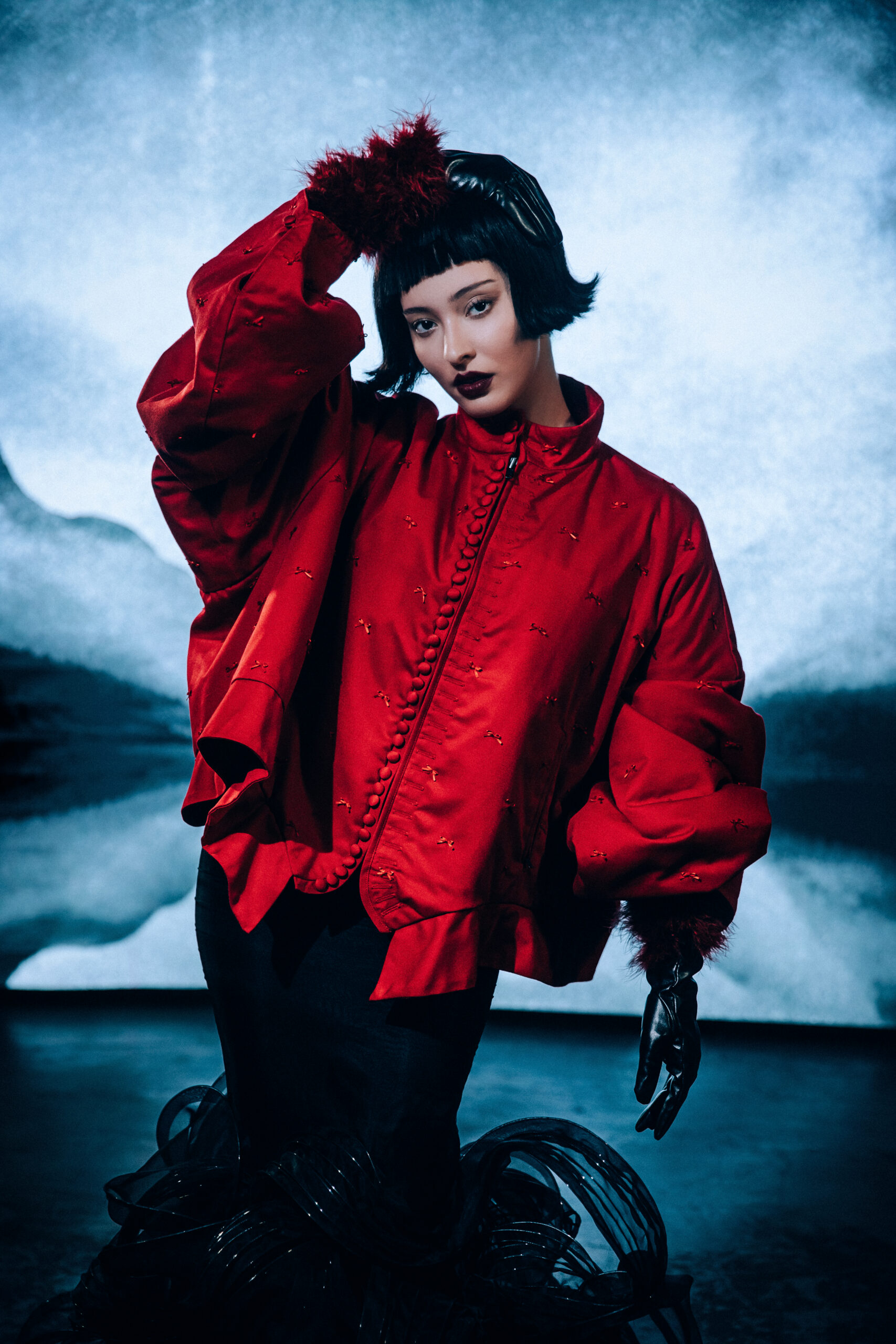
Skirt LUXI DENG @luxideng_
Gloves MARTA MILJANIC @martamiljanic
You started writing songs and poems when you were really young—before most people even know what they want to say. When you think back to that version of yourself, do you remember what those early pieces were actually about, or how they felt to write?
Ever since I was young, I always loved very emotional pieces—anything that would make me feel—so I would gravitate a lot toward melancholic stories and read so many books. I was also always absorbing other people’s stories around me. I liked to listen to what other people were going through, or even just silently observe what was going on around me. I would pull a lot of inspiration from that and from my personal life, but obviously things at the time were probably not as intense or serious as they are now. I feel like I have always had a source of inspiration to draw from and write from, and from a young age it was always bittersweet, emotional, dramatic, and a little bit melancholic.
When you think about yourself as a kid, before anyone was listening, what did making something give you?
It’s so funny because I didn’t really have an end goal. I just had this unexplainable and undeniable urge to write and create. Sometimes it was in the form of short stories or novels. I would sit at my computer, and I just had an endless pool of things I wanted to say or worlds that I wanted to build. Ever since I was five or six, I would write not only songs but stories, skits, plays, and I always just wanted to create, whether that was music or not. I loved sharing it with my closest loved ones, but a lot of the things I wrote were more for myself, to kind of get it out there and not keep it inside. It’s hard to explain, but I wasn’t really there to show it to others. That really scared me. It made me very anxious. I felt embarrassed and shy. My parents would always push me to share it with teachers and sing at talent shows, but I was always so nervous to do so. I just wanted to create for the sake of creating.
Do you still get really nervous when you share your work with others?
I really do, but not as much as when I was younger. I had very crippling anxiety when I’d go on stage, and it was like this up until a few years ago. I am very introverted. I don’t like being watched or being put on a platform. Honestly, I don’t like being perceived either. I’ve gotten better at separating myself as a human and separating my art from myself as the artist. So now I just tell myself that when I’m on stage, it’s me, the artist. I’m there to display my art and music and what I created. Then it’s not so much about who I am personally.
You’ve talked about watching your sister play piano and wanting to learn. Do you remember what you felt in those moments? Was it curiosity, admiration, or something else?
It was a mixture of curiosity, excitement, and anticipation. I couldn’t wait to be behind the keys and play the way she did because it looked so freeing. I’ve always naturally gravitated toward anything musical. To have that in front of me and see my older sister playing was such a present example of something I really wanted to do.
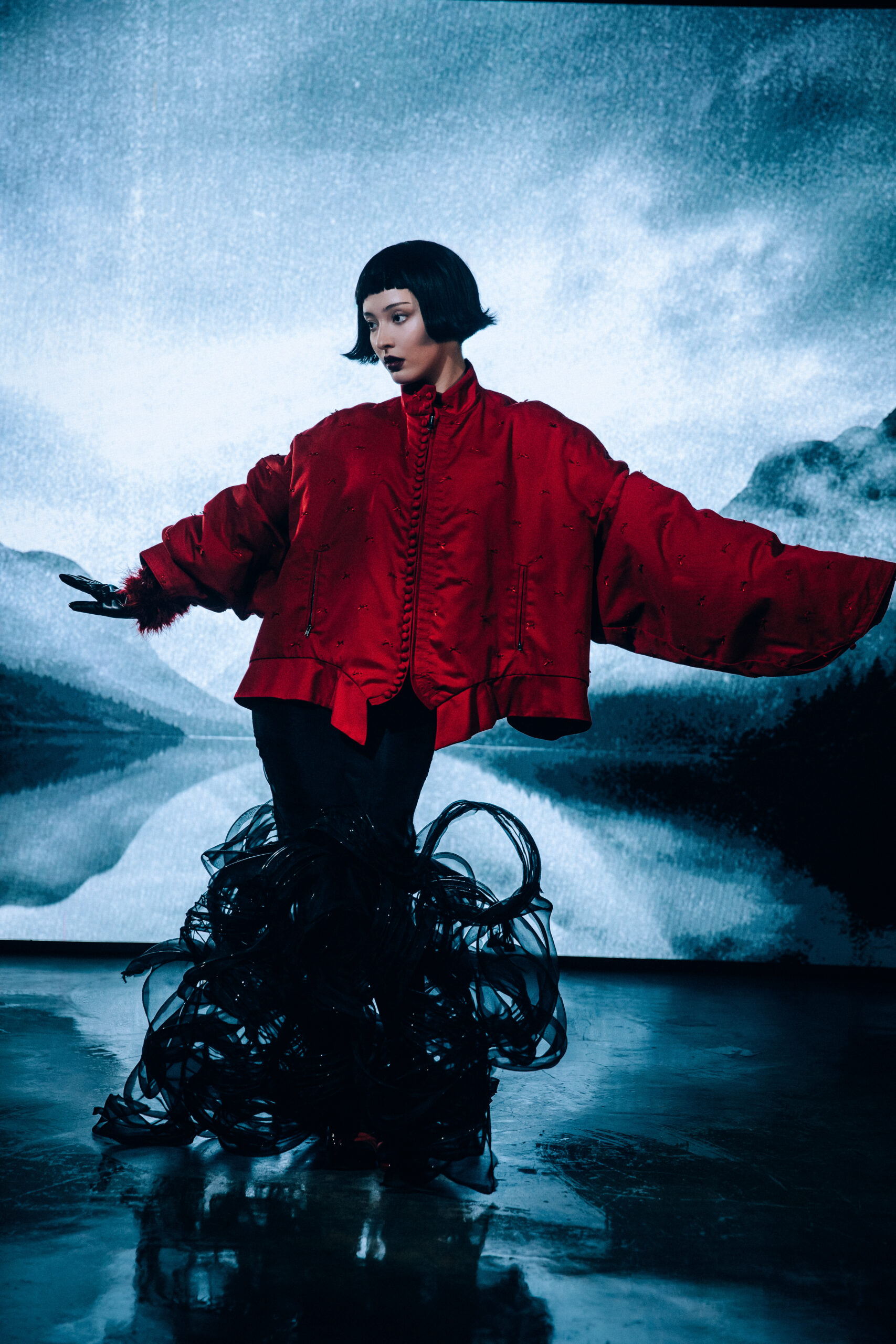
Skirt LUXI DENG @luxideng_
Gloves MARTA MILJANIC @martamiljanic
Do you think you would’ve found music the same way if it hadn’t been in your home already?
I genuinely do think so, because I was singing long before I even played. I’ve always loved listening to music on the radio. Sometimes, when my dad would park the car, I would lay horizontally and press my ear up against the speaker in the back because I just wanted to hear the radio more clearly, every little detail that was being played. I would have found my way to music even if it didn’t start with the piano.
You grew up between Morocco and Canada, with different languages, food, and ways of existing at the same time. Did that duality ever feel confusing growing up, or did it give you clarity about who you are early on?
I think I had a sense of clarity. I feel very lucky and privileged to have been able to have so many different inspirations to draw from. The way I see it is instead of having one world, I have two. I was always so curious to learn about other people’s cultures and their music. I was diving into so many different genres of music. I don’t think it was ever confusing. I was proud of it. When I was very young, I got bullied for it, which wasn’t the best, but I was quick to move past that and embrace who I was.
FILM NOIR stands alone, and the songs I added to the deluxe are ones that feel adjacent to that world, but they also act as a bridge to what is coming next.
Are there parts of your upbringing that you didn’t fully appreciate until later, but now feel central to who you are?
I think I had a very similar experience to so many immigrants who grew up in the West. For example, my name being confusing to everyone, no one being able to pronounce it, or people thinking I was weird. I just felt like an outcast. I love my name. I love my culture, Moroccan food—every- thing that I would have been marginalized for in the past is what’s nearest and dearest to me. And that passion and vigor that Moroccans have is what keeps me going to this day. The things I was put down for are the things that empower me the most.
You’ve been open about feeling like you didn’t fully fit in as a child, and that it shaped your first compositions. When you look at your work now, do you still feel like you’re writing from that place, or has that relationship changed?
As life goes on and I’ve experienced different things, I am writing from both perspectives. I write about what is going on at whatever point in my life, but I think it’s always in the back of my mind. I am always going to have my past and my history. Not only did they shape me, but they are also my reality. I knew my path was going to be different, and I knew it was going to be more difficult than what it would normally be, but I accepted that early on. I took it as a challenge, and when I’m writing or promoting my music, every day that I wake up, there is an unspoken challenge that I have to carry with me. I also knew that life would be more fulfilling. Hopefully, with more work and more people being exposed to what they don’t know about, it can open doors to others.
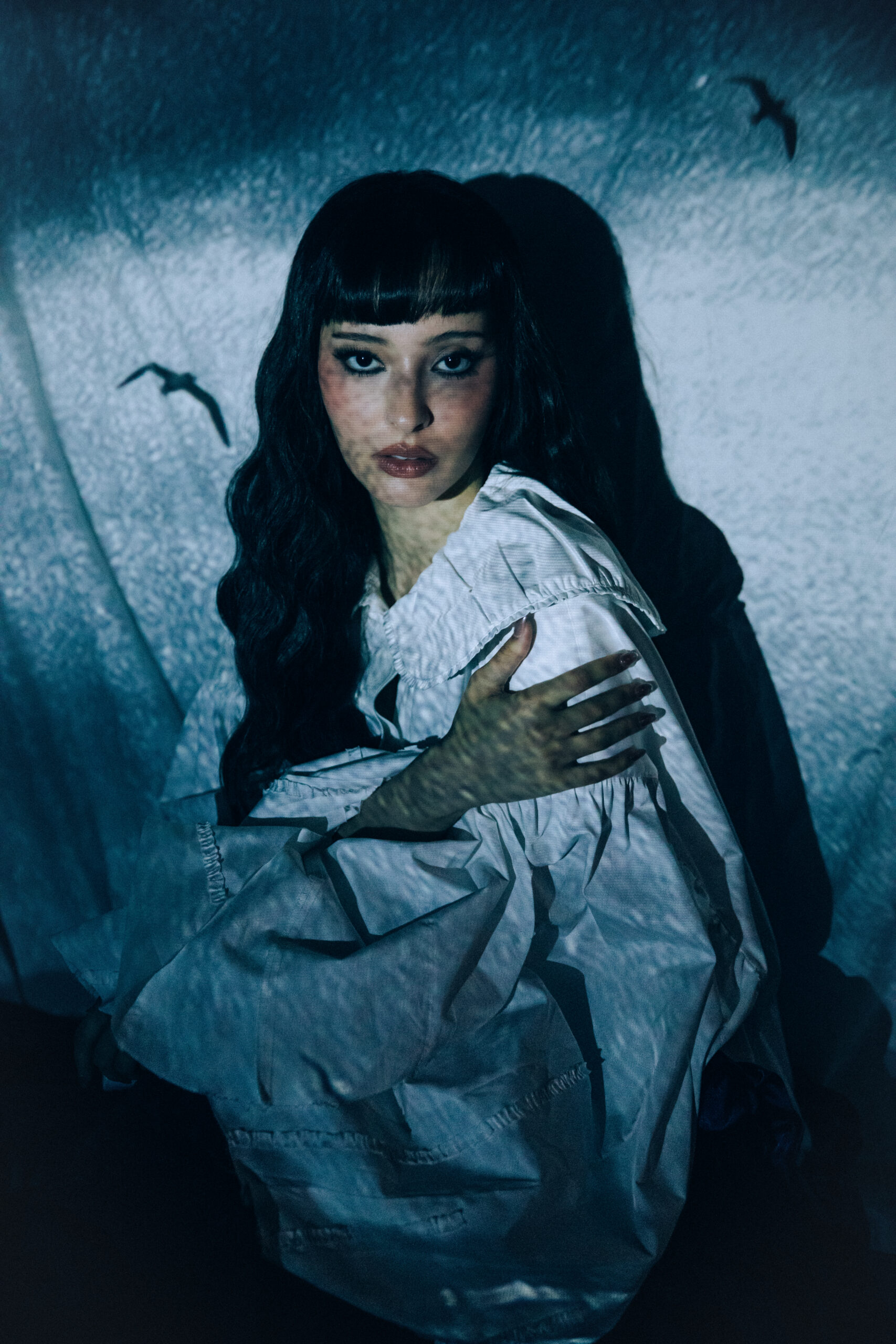
What made you want to revisit FILM NOIR with a deluxe release instead of starting something entirely new? Did the new songs feel like a continuation of that project?
The FILM NOIR deluxe is more of a bridge. I think the album, in its entire composition, was meant to be a complete piece of work. I trimmed a lot of songs, songs that I liked but didn’t love and didn’t feel like they had a place in the project. FILM NOIR stands alone, and the songs I added to the deluxe are ones that feel adjacent to that world, but they also act as a bridge to what is coming next. I don’t want to get ahead of myself, but I am writing a lot and working on more music. I was kind of sifting through everything I had written and feel like the songs I added to the deluxe are ones that aren’t quite in the next world and aren’t quite in the FILM NOIR world. They are somewhere in between and hold hands.
You’ve said FILM NOIR holds everything you needed to say at that point. Was there anything you almost left off because it felt too personal?
Honestly, I think I was pretty personal. I wouldn’t say I took out songs for being too personal, but I did edit some lines, very few, because I didn’t want the songs to come out and live on forever with specific lines, especially if those lines felt like they told a small part of my story. I wanted people to listen to them many years down the line and not wish that I had said something else.
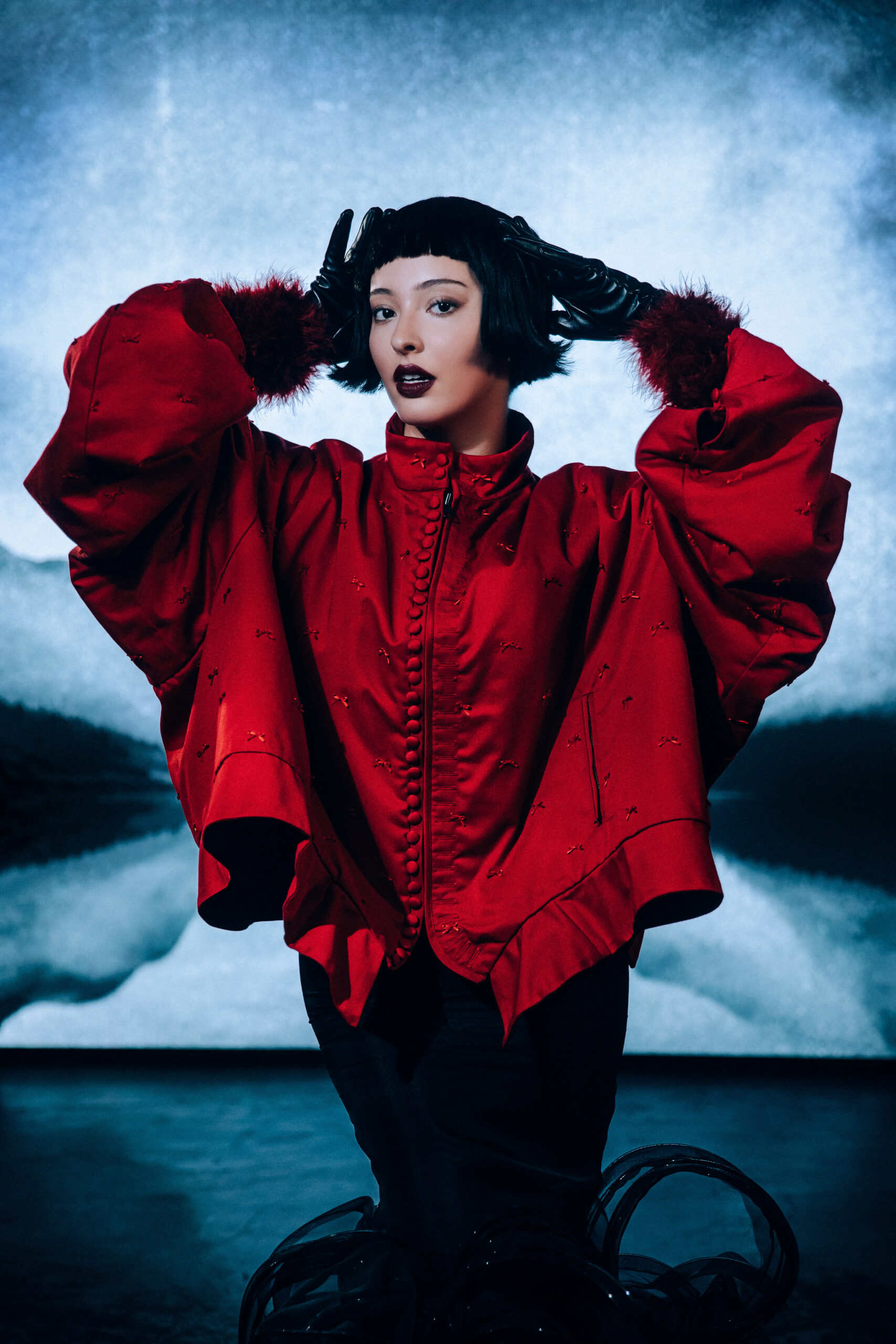
Skirt LUXI DENG @luxideng_
Gloves MARTA MILJANIC @martamiljanic
Your music feels really big, almost theatrical. With “Unethical,” I could literally sit in the dark and cry, but I can also hear it in a huge film moment. When you’re making a song, are you thinking about scale and impact from the beginning, or does it grow into that?
It kind of just grows into that. When I walk into a studio, especially if I’m working with someone for the first time, they always ask me to describe the music. And I do tend to describe it as cinematic, dark, and emotional, but when we’re writing, it doesn’t really start out that way. It starts out very minimal, and there tends to be a natural build that happens with strings, horns, piano, and the melodies, because I always write things that are very intense. Sometimes that intensity is portrayed in the music building and in all of these really big sounds. That intensity is sometimes also sparse and intentional, with lyrics and melodies that aren’t so over the top, but I love having something that feels big and makes people feel.
What does your creative process usually look like when you’re starting a song?
I have a note on my phone, and now I have notebooks that I want to start writing in more because it feels different when you have pen to paper. I have so many song ideas. Sometimes I’ll just be walking and something will pop into my head, whether it’s a song title, a line, or a melody. Sometimes I’m at the piano and singing, other times I’m not. I’ve even had this happen where I’m at a restaurant, I go to use the restroom, I’m washing my hands, and I hear music playing. It’ll be something obscure that I hadn’t heard before, and it’ll trigger inspiration for me. So I write all these things down and have them in my back pocket, or I bring them to the forefront of my mind. Then when I sit down in the studio, there are times when I’ll have a very clear idea of what I want that day, and other times I wait and see what wants to be written or what song is waiting to come. This happens a lot. Sometimes the producer will put down chords and I’ll just start to sing, a lot of gibberish, mostly, but a lot of melodic gibberish, and in that moment of gibberish there will be words that peek through. It’s almost like these words are telling me, this is what you need to write about today, this is what you have to say, this is what your subconscious wants to talk about. I think that’s the best way for me to write because it feels the most authentic, and the song ends up feeling like it always existed when it’s written, because it was meant to.
I just had this unexplainable and undeniable urge to write and create. Sometimes it was in the form of short stories or novels. I would sit at my computer, and I just had an endless pool of things I wanted to say or worlds that I wanted to build.
When you hit that moment—when a word or phrase clicks and everything starts to follow—what does that feel like?
It feels so right. It feels like you have a puzzle and you’re kind of moving the pieces randomly, but they’re somehow all snapping into place and you’re seeing the picture unfold. It’s so random but so perfect. It’s very satisfying. Then the fun begins in the production, when you see how you want that specific message to be conveyed.
“Unethical” connected in a huge way. When you were making it, did you know it had that kind of pull, or did it surprise you once it was out in the world?
I’m not going to lie, I had such a strong feeling about that song. When I wrote it, I tested it on my family and told them the song was special. I felt it in my bones. I knew it when I wrote the lyric “unethical.” Up until that point, I was melodic and a lot of the lyrics were already written. But when the word “unethical” presented itself, I knew there was something very special to the song. When I released it, I also had this sense of urgency. I believed in the song so much and believed other people needed to hear it, and that once it reached their ears, they would understand it and feel it as much as I do. I feel very lucky that people did resonate with it, because they could have just not.
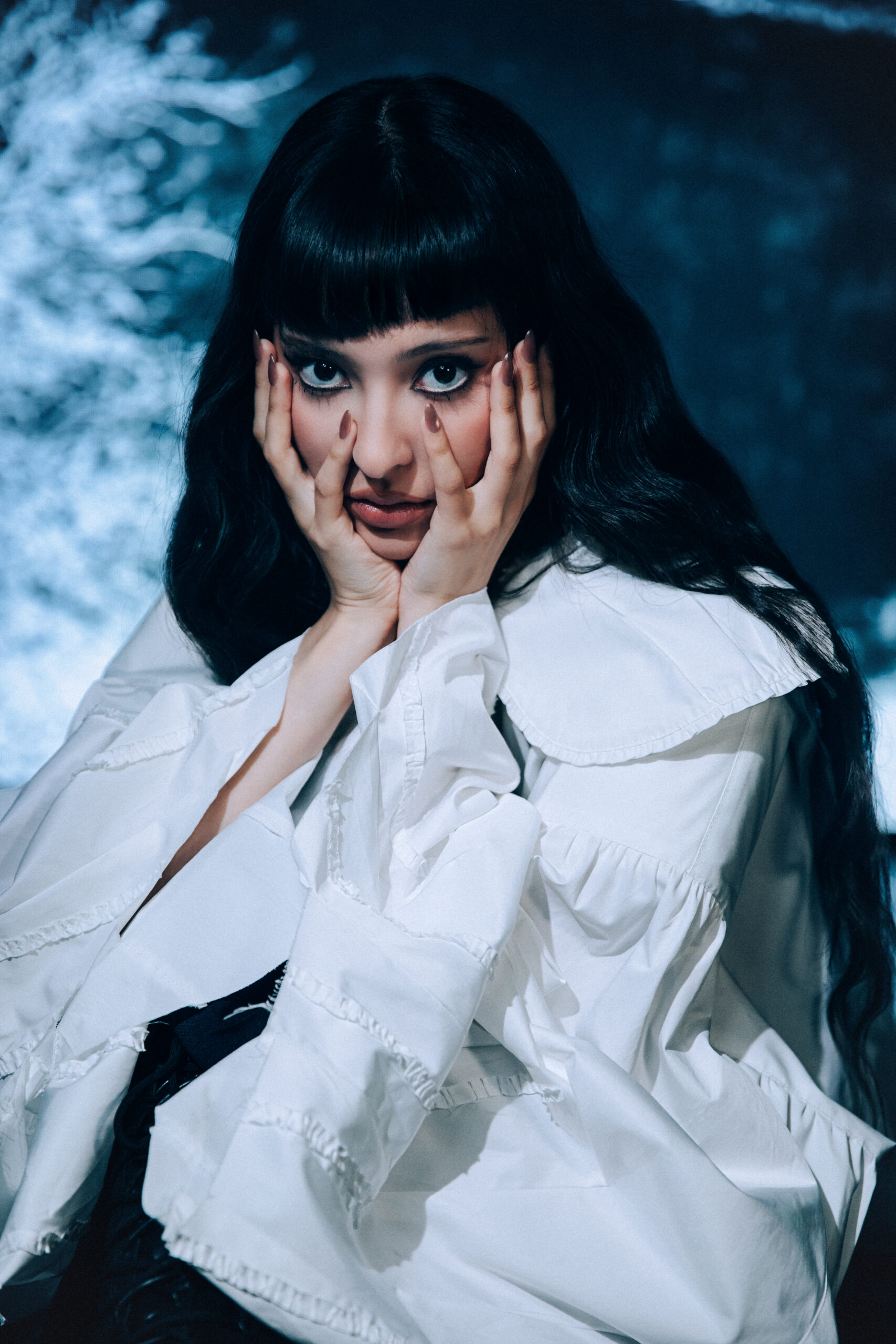
What is the story behind the track?
At that time in my life, I was sacrificing who I was at my core for other things in my life. I felt like I had completely stripped away my essence to fit into what other people wanted from me. I’m the type of person who won’t give up on anything. I’ll keep fighting for it, even at the expense of who I am. I reached a point where I knew that I needed to be let go to be able to let go of the situation; otherwise, I would have lost myself completely. I feel fortunate to be on the other side of things, but it’s difficult to get out of those cycles. I saw so many people relate to this song in so many ways, whether it was romantic or platonic. So many people wrote down their stories, and it was so touching to see that. I was so glad that I put the song out there and was as transparent as I was, even though it felt like I was exposing a very vulnerable part of myself.
You’ve built a career that crosses cultures, languages, and audiences in a way that’s pretty rare. When you strip everything else away, what do you actually want people to understand about you through your work?
I want people to understand what they need to understand and what they need in their life at a specific moment. I think music finds people in very fun and mysterious ways, but always when they need it the most. I hope they can find comfort in it. But when it comes to what I want for myself creatively, I want people to know that I am so extremely passionate about my art, and it is something I treat like fine art. I want people to know I am very deliberate and intentional with every single one of my lines, the melodies, the lyrics, the production. Even in the mixing and mastering of a song, I put in so many hours. It gets to a point where I’m not even sleeping, because I’ll just be replaying songs in my head and always tweaking and fine-tuning them. I want people to know that I care about what I do so much, and I will always be this way.
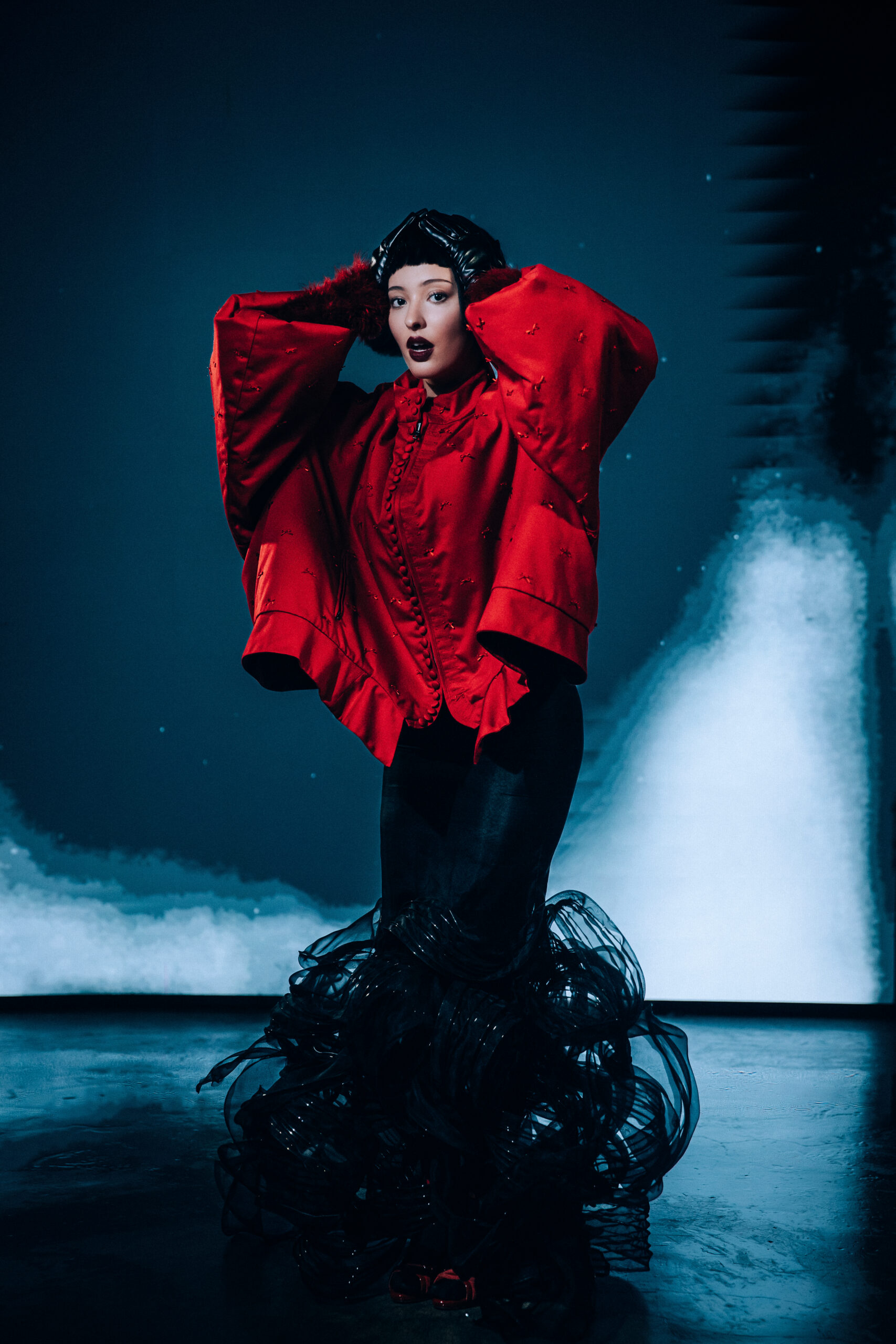
Skirt LUXI DENG @luxideng_
Gloves MARTA MILJANIC @martamiljanic
You recently announced your tour after a four-year break, including festival dates. How are you feeling about getting back out there, and what are you most looking forward to?
Honestly, I am very nervous because it has been nearly four years, and I have no idea what to expect. I’m excited to get out there and see familiar faces, and new faces I haven’t seen before. I’m also excited to tour with music I am extremely proud of. In the past, I have had songs that I was proud of, but there was a lot of pushing and pulling in different directions because of the situation I was in with my label. Now I am completely in charge creatively, so I think it will be a new experience, and I’m so excited to be doing my first U.S. festivals. I just want to be the best that I can be on stage and have a lot of fun.
What led to the four-year break from touring?
There were quite a few things that prevented me from touring. One of them was that the first tour was extremely difficult on my voice and body. For the European tour, we were driving in a small car across Europe, doing overnight drives, not really sleeping, and I was doing back-to-back shows in North America. I did six shows in seven days, just belting for hours. I was very sick. It was a little bit traumatizing. I told myself that the next time I toured, it had to make more sense, and I wanted it to be healthier and take care of myself. I also had a lot of issues with my album being held up and not being able to release anything. It took many years to move past it all.