
Stephanie Pfriender Stylander’s foundation as an image-maker has always been tactile: darkroom chemicals, contact sheets, backdrop fabric, taped-up layouts, and the repeated prints she experimented with while living in Europe. Before her photographs appeared in French Glamour, GQ, Interview, Harper’s Bazaar, and the other publications that shaped her early career, she was shooting classmates at an abandoned Navy base and navigating crowds in Boston with a student camera. Assisting Art Kane taught her discipline; Milan and Paris taught her pace—testing models constantly, borrowing clothes from local shops, meeting editors in person, and watching the films that ended up informing the way she looked at people. Along the way she photographed artists and actors like Keith Richards, Antonio Banderas, Heath Ledger, and Björk, approaching them with the same curiosity she brought to new faces. Stylander’s recent move toward photo transfers, layering, and mixed media connects directly to her earliest habits, especially her interest in repetition and recomposition. It’s a continuation of the same practice: building images, then rebuilding them, allowing earlier work to take on a new structure.

Do you remember the first time you picked up a camera—not just when, but why? What were you trying to see or hold onto?
It was the late 1970s. I was in high school, and we had an advanced art and photogra- phy department. My 35mm camera always hung around my neck, and I sensed early on that the camera acted as a bridge from me to the world. I was drawn to people and faces. I always wanted to know who they were and what their lives were like. The darkroom held the magic of reliving these events as if holding onto memory and time. That really spoke to me.
Before you learned exposure or composition, what image from your childhood made you want to translate the world into pictures?
After high school, I was studying photography at Endicott College, and there were two photo sessions that made a strong impression on me. One class was fashion photography. Our teacher took us out to this old Navy base with other students who acted as the models, and we all piled into the teacher’s old truck with his dog. It was the first time I had models in front of me, the first time I went on location, which felt so natural—like I had done it many times. The historical Navy base was abandoned, the girls were hanging around, and I was intrigued by using the set to create a story. The other class was photojournalism, and we went into Boston with another photography teacher to photograph the crowd during the Pope’s visit. I wandered around alone; it was raining lightly, which I liked. I photographed people, portraits. It was the first time I was at an event as a photographer, and this, too, felt right. These field trips drew me into fashion and portrait photography.


Every artist passes through a phase of mimicry—absorbing influences, studying the masters, refining technique—until one photograph, one project, or even one mistake reveals something undeniably their own. Can you remember the moment your vision first felt yours rather than learned?
After Endicott College, I graduated from the School of Visual Arts in their photography department. During these years, I assisted the photographer, Art Kane. I worked on his sets for everything from Vogue Italia to cigarette campaigns. Art was all about style in a picture and about pushing yourself to understand what you want to say through your photographs. He was also emphatic that you can only give three choices from your shoot to your editorial client, and I followed that motto for years. When I moved to New York City, I was working a part-time job and started testing with models from the agencies, which then led to shooting commercial photography. I was assertive and researched fashion brands and advertising agencies so I could show my portfolio in person during these years. I was working, but I wanted more. I wanted a personal style. I wanted my fashion photographs to tell a story, but what story? At that time, many American photographers would move to Milan or Paris and start working editorially, since there were so many fashion magazines eager to work with new photographers. And so, I moved to Milan and began by testing models who came from all over the world, and we were all looking at Vogue Italia, which was fantastic in the early 90s—such a complete inspiration and exactly what I wanted to be surrounded by. Backdrops of construction cloth would be thrown out of my apartment windows to create outdoor studios. The ancient streets, the European environment—it all excited me. I started developing a style.
Every generation of image-makers inherits a visual language—and then either extends it or breaks it. When you looked at fashion photography in the 90s, what did you feel needed breaking as you began to shoot?
Living in Milan, I was looking a lot at Steven Meisel and Peter Lindbergh. They were creating something I had never seen. The emotion in their pictures spoke through girls with gigantic character, makeup, and hair that spoke of time, an all-night-long kind of thing, and fashion that had mystery and sex in filmic locations. So, I went on a trip, searching for my own voice through my emotion and my story—the choices I would make with models, makeup, hair styling, and locations. I started creating the images that were in my head. To get fashion, I would go to local stores in Milan asking if I could borrow clothes, and so many stores lent me great fashion. I met a makeup artist who became my roommate for years through Milan and Paris—and that’s how you begin to build your team. Then I went to all the magazines. I met with their editors repeatedly to share my portfolio. They were more than happy to look at your work and meet you. I started getting editorial assignments after about one year. During this time, I worked a lot for Rizzoli magazines and Harper’s Bazaar Uomo, and then moved to Paris. These stories were 12 to 20 pages, and I chose the pictures. The photographer had complete freedom within this enormous creative playground.
You’ve said your work was inspired by the French New Wave— was that attraction about aesthetics, or about rebellion against perfection?
By the time I moved to Paris, I started going to a lot of the French cinemas where I fell in love with the French and Italian film masters, particularly Godard, who told stories through the characters’ emotions, set in poetic locations, and applied multiple imagery to his films with unique style. I can see myself right now in that moment watching a film with my mouth open, just going, wow. The imperfections of the actors and the environment really spoke to me. It was the life I wanted to live in. I didn’t want to show a perfect life. For me, there was no such thing. I liked the rebellious nature of his direction, and I felt like life should be lived that way. Make mistakes, live, do it again, take fear out of the equation. So yes, a rebellion—carve your own road, and write your own symphony.
You’ve photographed everyone from actors to musicians, each bringing something different into the frame. Who caught you off guard once the camera was between you—someone who revealed a side of themselves you didn’t expect? Maybe a moment behind the scenes that’s stayed with you but rarely gets told?
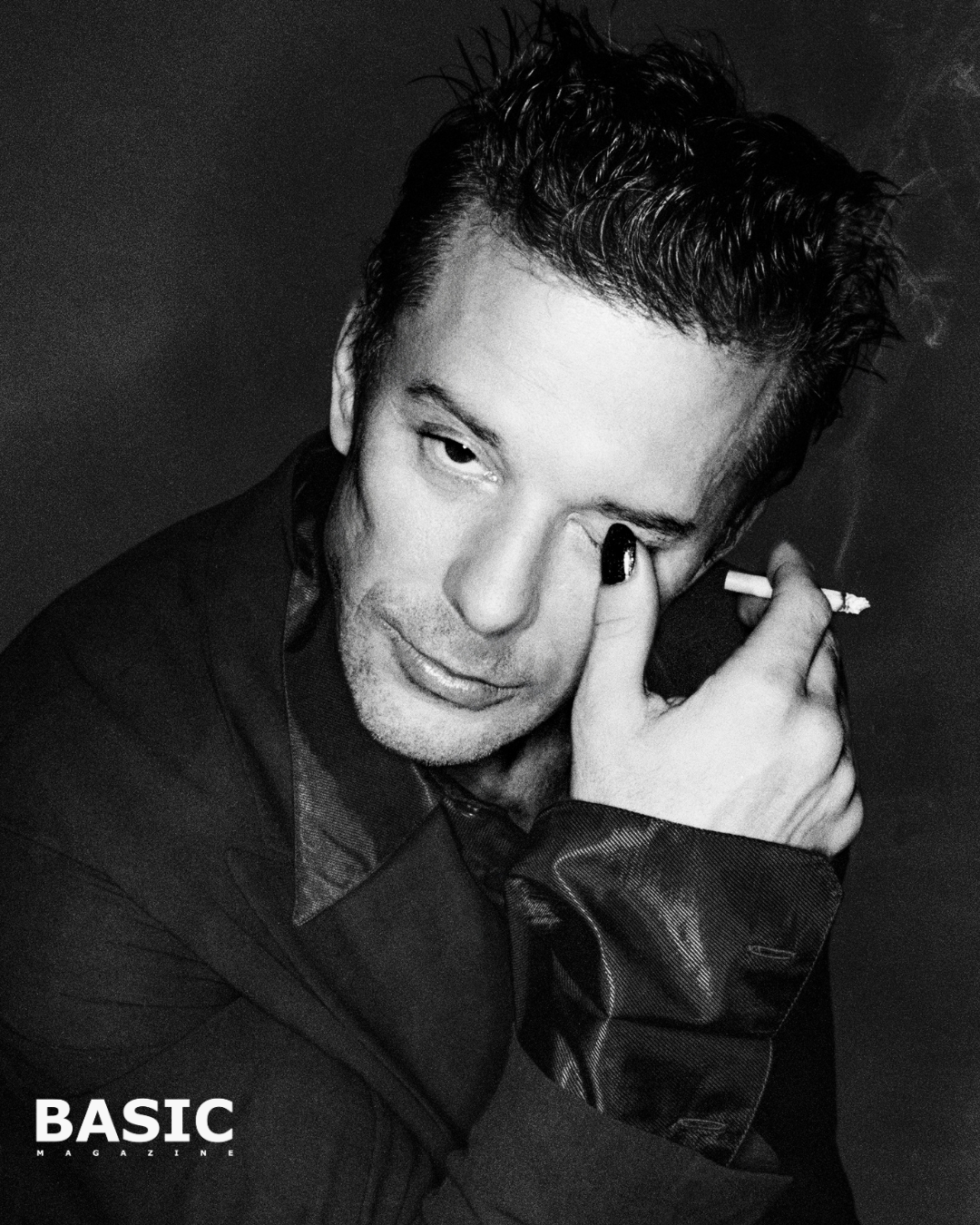
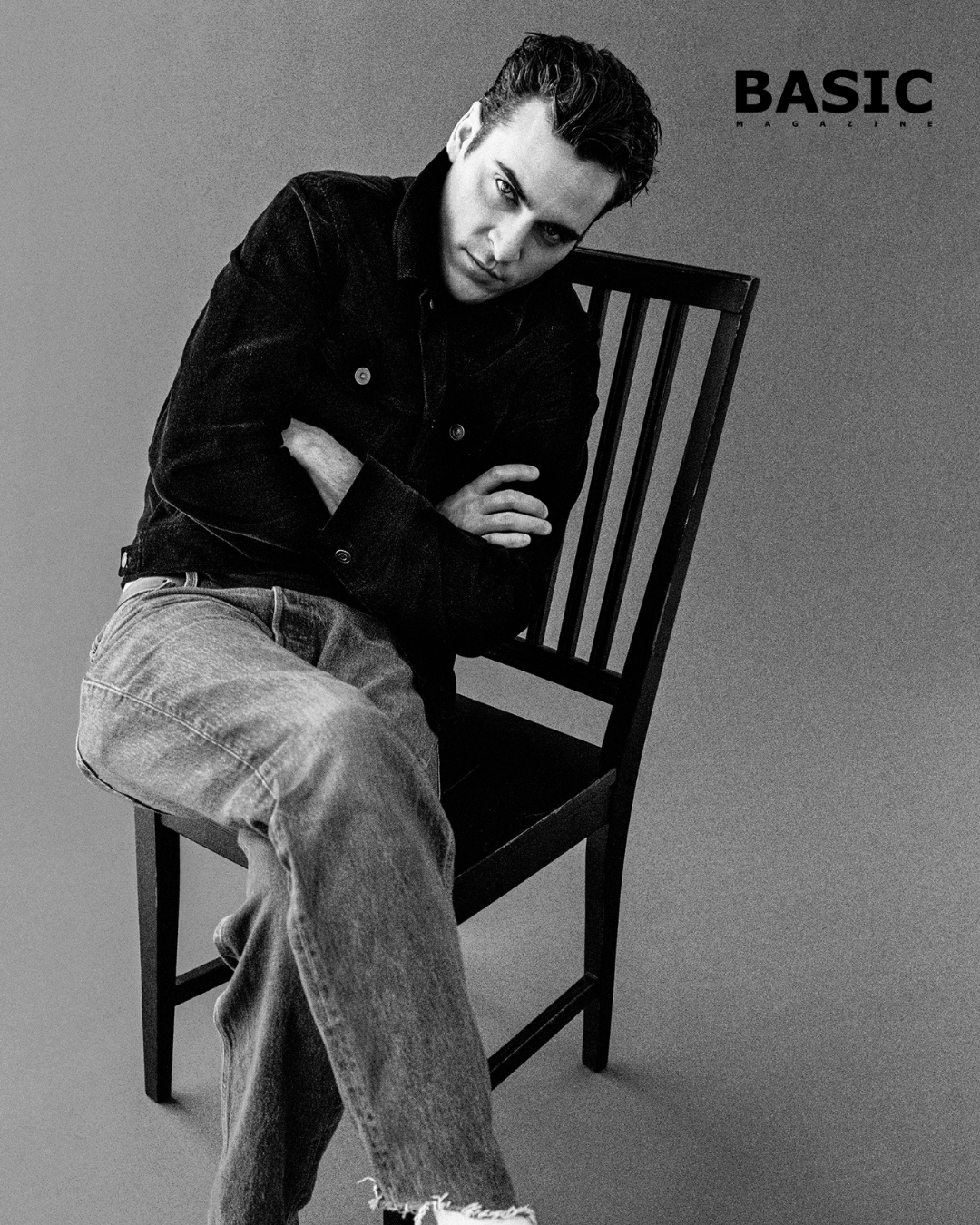
Joaquin Phoenix, a master actor. When he came into the studio, he began speaking to me in a tongue, and so I joined him. We just stood there babbling. This led us into the studio and then onto the floor, and something wonderful was happening. It was very raw and real. Our defenses disappeared. You don’t get breakthroughs like this all the time when photographing actors. We both felt a need to disappear from everything else and live in the moment.


What’s one small, unseen detail from a famous shoot that still lives in your mind—a sound, a look, something no one else noticed?
I was working with French Glamour, a magnificent fashion magazine. We had three models, and we flew from Paris to the gritty city of Marseille for a large editorial story. One of the models was new on the scene. She had an unusual presence; her eyes expressed loss. At times during the shoot, I could see that her eyes would get watery. I thought about asking her what was happening, but I realized I didn’t need to. I could see she was feeling, and that is the gift, the beauty, and the power of photography.
That shoot with Kate Moss has become mythologized over the years. What do you remember about the atmosphere before the first frame—was there a moment when you sensed you were capturing something different?
Kate was free, a young British girl who yearned to be on the road. She has pure innate qualities that you can’t teach—it has to come from within. I spoke to her about film qualities that I like in girls from French and Italian films. I showed her physically what I was looking for, she listened, and off we went. Kate also has an incredible sense of confidence and she owns it. After the shoot, I called my friend and said, ‘this girl is going to be a star.’

You’ve compared Kate to Anna Karina in Godard’s films—what specifically about her presence or movement felt cinematic to you?
Kate was quirky—the way she behaved, the way she looked, the way she moved. She was her own girl, one of a kind. Anna Karina had many of the same qualities. I spoke to Kate about Anna and her idiosyncrasies, her whimsical nature, her flirtation. Kate has a presence of beauty that takes you in, a magnetic presence that makes you want more. They were both born with this.
Walk me through the moment you know a frame is the one—what aligns for you technically and emotionally when it lands?
I always say it is a BOOM—that’s it. Immediately a picture jumps off a screen, a page, or through the camera. Every aspect, all elements of the image I am after are in sync. It is a very musical process. The picture just sings. The composition must be right to my eye, and emotionally it has to say what I am after. Revisiting decades of work for The Untamed Eye must have been emotional.

Did the archive ever contradict the story you thought you were telling?
My archive is deep, and of course there are shoots where I say, why did I do that, why didn’t I do this? Mistakes. But such is life. Wins. But such is life. A photographer’s archive is a mirror of one’s life. Where was I emotionally, mentally, physically, spiritually at each decade? These questions and answers reflect in my photography. To be a photographer, there is curiosity, aggression, romance, and emotion all rolled into one. My archive is very alive. I am always digging into my shoots. I can walk down a street, and an image will float into my head, and so I begin the hunt. Now I find myself choosing pictures that I passed by. I love my archive.
You’ve said you’re returning to collage, something you did early on. What feels different about doing it now, with a lifetime of images behind you?
I look at a lot of art and photography books, starting when I moved to Paris. I have worked with repetitive images, grids, and composites for decades. Psychologically, I like seeing the same picture again, mirroring what we see in our brain. Images can be a puzzle with complexity, repetition, revealing and concealing, like life. When I was working in Europe, a lot of the magazines took to my use of an image in this style. I would go to a Xerox store and do a layout of my idea for several of the pages in the editorial, and the editor would run it. I have so many tear sheets where I did the design of the pages for the magazines.

How does painting over your own photograph change your relationship to authorship?
I can do whatever I want with my photographs since I own all of them. I am really into working with my photography and using mixed media such as acrylic paints, solvents, and other materials. This brings me to creating layers with new materials.
Do you believe a photographer’s responsibility is to witness or to interpret?
Photojournalists would have other requirements than fashion photographers, since one is based in documenting reality. I do think that every photographer’s responsibility is both. Once you pick up the camera, you are interpretating and witnessing.

What does vulnerability look like through your lens, and how do you know when you’ve caught it?
When creating a portrait, if I feel vulnerable, then I know that the subject is feeling vulnerable. Both people need to be able to experience this. It is really the space between us that speaks, that makes the portrait, and that is necessary.

Finish this thought: A portrait fails when…
There is no connection between the photographer and the subject.
If you could write a caption under your entire archive, one sentence, what would it read?
She swam far and wide riding the waves in this deep blue perfumed sea.
