
Photographer VIKTORIJA PASHUTA @viktorija_pashuta
Stylist CARA GORDON @cara_gordon
Hair ZACHARY MORAD for Exclusive Artists using Bellami Hair Extensions @zacharymorad
Makeup LUPE MORENO @lupemoreno_mua
Photography Assistant JATHAN CAMPBELL @jathancphoto
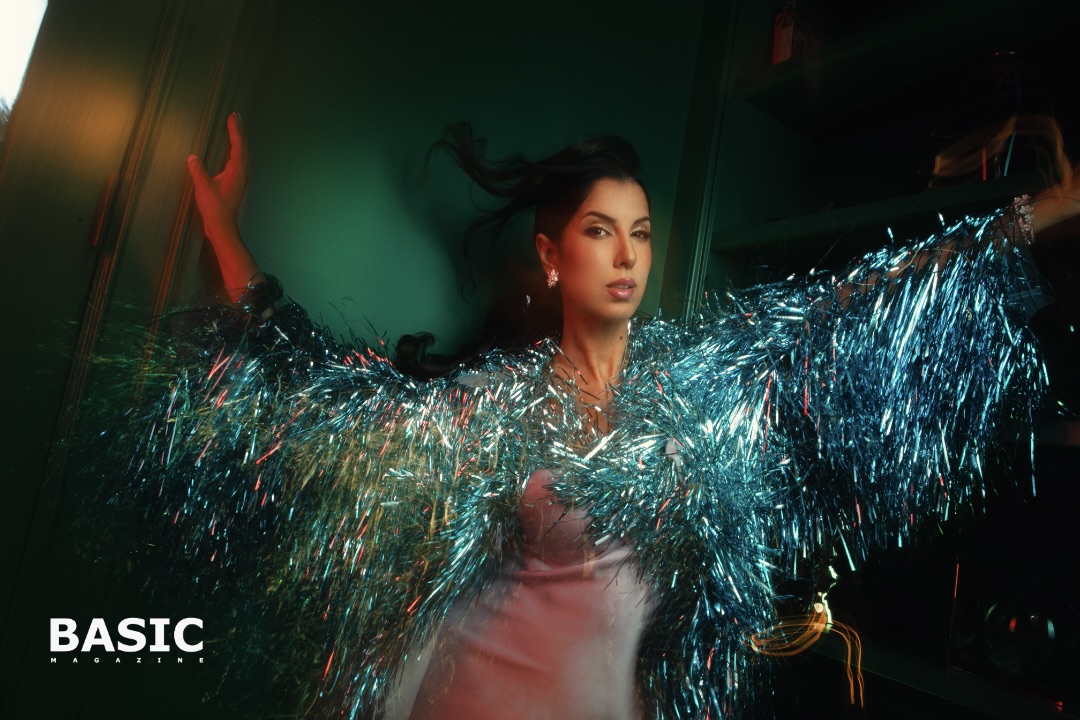
Words by Kimberly Haddad
Tina Odjaghian doesn’t talk about power in abstract terms. She’s spent her career acquiring it the hard way—through preparation, fluency, and an unwillingness to back down when the stakes are high. After learning firsthand what it means to be overlooked and under- estimated, she built a practice around making sure others aren’t left unprotected. Today, she is a leading traumatic brain injury litigator in Southern California. She’s known for taking on the cases most attorneys won’t, working closely with clients whose lives have been permanently altered, and bringing a rare level of medical understanding into the courtroom. Her work is exacting and deeply personal. Those qualities carry into how she moves through the world—from entrepreneurship to motherhood—and into how she expresses herself through fashion, in a profession that didn’t always make room for it.
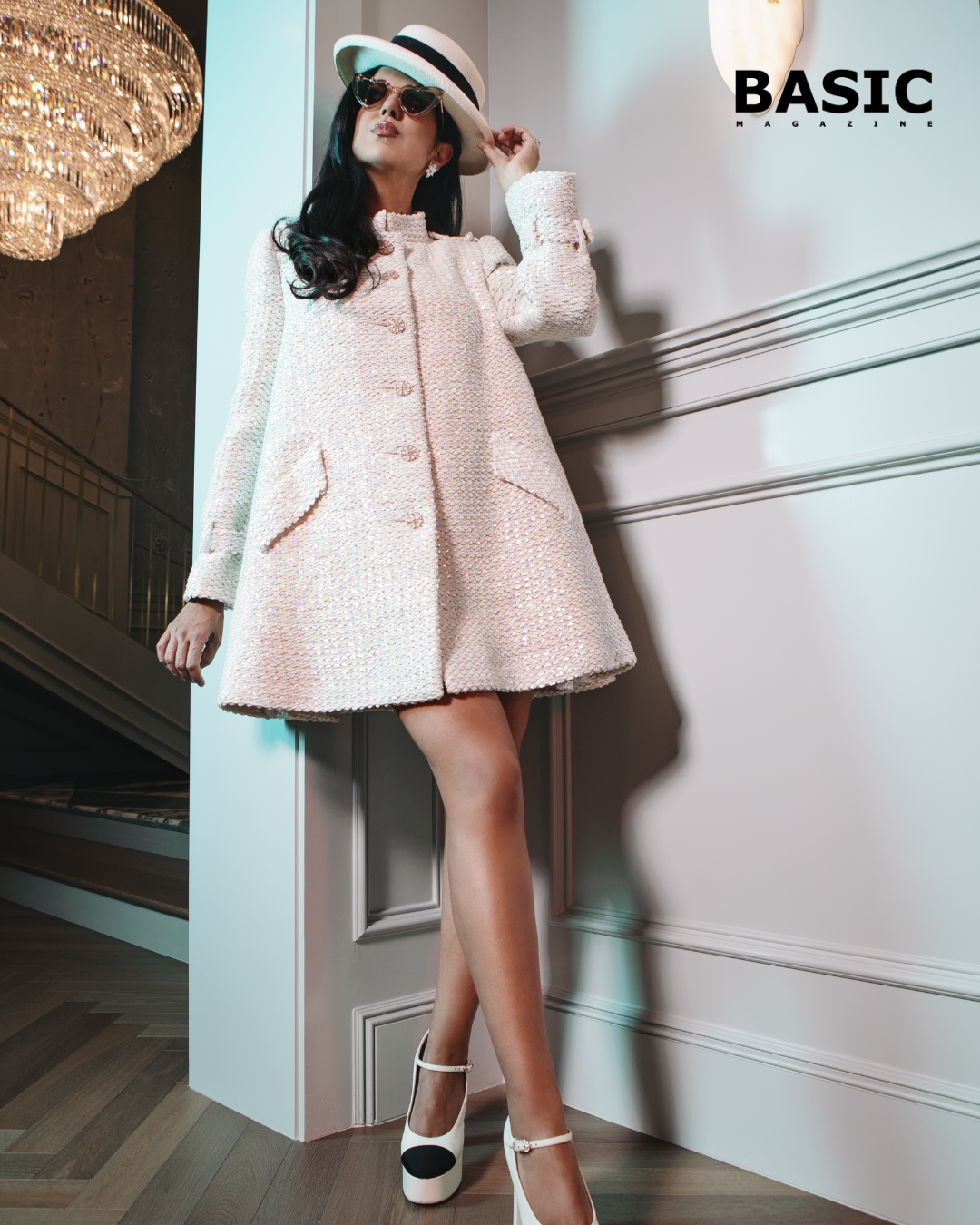
Glasses SAINT LAURENT @ysl
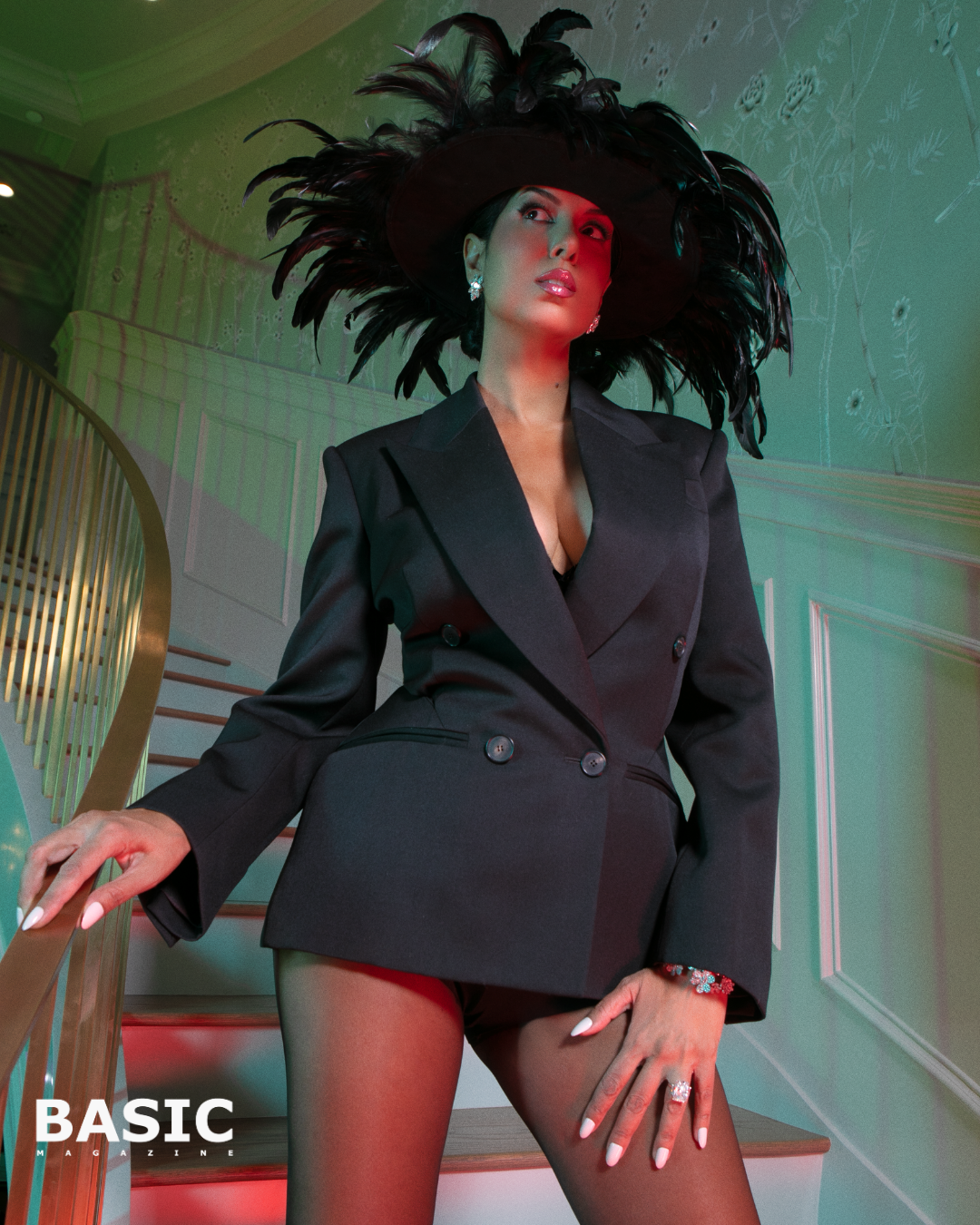
Hat ATOUSA G @atousag
You’ve built a career rooted in advocacy and reinvention. Looking back at where you grew up and the culture that shaped you, what early experiences do you think most informed the woman you are now—both inside and outside the courtroom?
I’m a multicultural baby. My dad is Armenian. His mother was from Russia. We lived in Iran. My mom is mixed. She is Portuguese, Indian, and Christian Arab—Chaldean to be exact. I’m a mut. I think what most shaped me was immigrating to the United States with one suit- case when I was 10 years old. My father tricked us. He told us we were going on vacation to get us out of Iran because my brother was five years old and they were starting to forbid boys at that age and older from leaving the country so they could have a reservoir of men to draft into the army. They were drafting them as early as nine and 10 years old. My dad was worried and wanted to get us out of there. He knew my mom loved it back home and wouldn’t willingly go, so he tricked us. Once we came out here, we settled in my aunt’s basement in La Cañada, which is as White as you can get. I was the only brown, hairy kid in school and it was not fun, as you can imagine. Those were probably some of the worst days of my life. I also worked at my aunt’s flower shop to help the family make ends meet. While others were out and about being normal kids, I was working and carried the burden of worrying, which is something you shouldn’t have to do at that age. I do however, credit that to helping me develop my work ethic, my perseverance, everything that’s gotten me to where I am today.
What originally drew you to the law—and at what point did you realize that catastrophic brain injury cases, a far more specific and demanding sector, were where your purpose lived?
I was 16 years old when I got my first job. Then I worked in cosmetics at a big department store. There was this older American woman who strongly disliked the ethnic and mixed folks in the department. We were all hardworking. There were a lot of Armenians, Arabs, and Persians on the cosmetics floor in Glendale back then. She would make a lot of racial slurs. It was kind of traumatizing actually. I think that experience probably instigated something in me. I didn’t want to feel powerless. I wanted to root for the underdogs, to be able to stand up against discrimination. To answer your question though, it was the feeling of helplessness as a first generation immigrant, the discrimination you face, and never wanting to feel helpless, ever. I wanted a better future for my family. I wanted to have the power to stand up for myself and for others who are similarly situated.
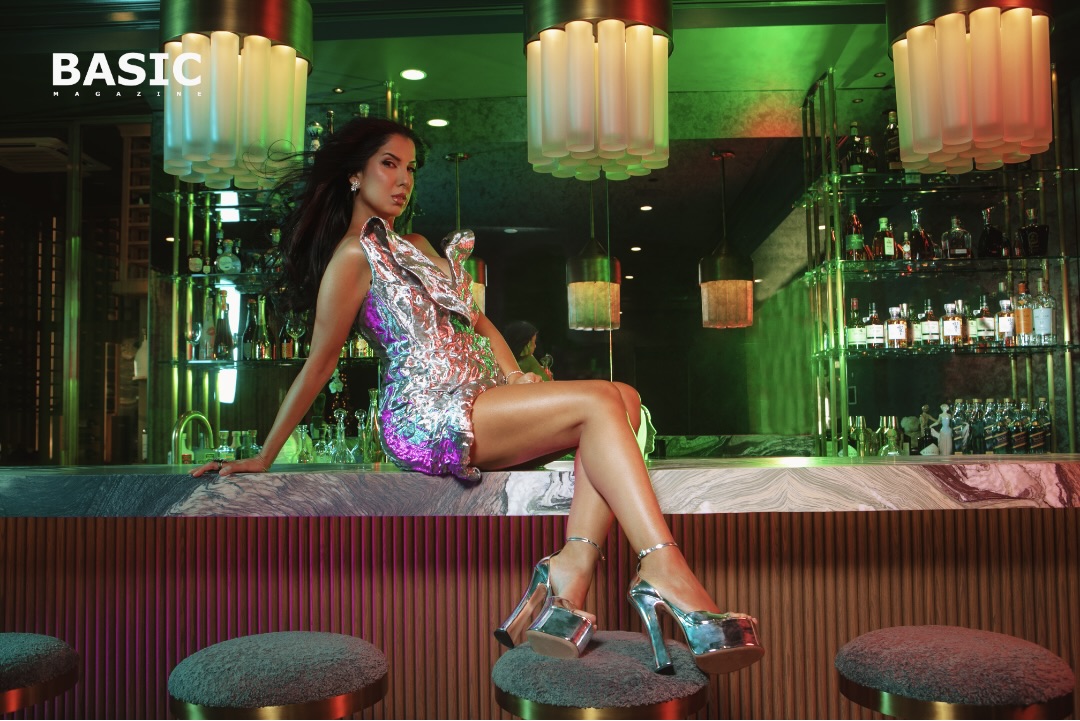
Shoes PĪFERI @piferi
You’re known for your medical fluency with TBI cases and for taking on only a select number of clients. What does it take— emotionally, intellectually, and practically—to advocate for individuals navigating the aftermath of catastrophic injury?
Look, it is really heavy work. You hit the nail on the head. But at the same time, I get to be part of the silver lining, and the rebuilding. I get to help put the pieces of someone’s torn up life back together. I get to be their first line of defense, their support structure, and I love that. I don’t take it for granted and I feel so honored to be part of their journey of rebuilding. I also kind of get to be the hero and set a good example for my boys of what a strong woman should be like. You also just feel good about yourself when you feel like you’re doing good at the end of the day. I think it does more for me than my clients even, and it’s a blessing. But I’m a little bit of a nerd. I brought myself up to speed and am constantly learning the medicine because it’s ever-evolving and changing. I can’t tell you how many times I’ve been asked if I had a medical background. I pride myself on that and I think It’s something that gives me a bit of edge over colleagues who may just be Googling medicine before walking into a big trial or deposition.
One of your early landmark moments was securing a $6.1 million settlement in a case in 2008. What did that victory teach you about the legal system, and about yourself, at that stage of your career?
I think the system is geared against people who are really badly hurt. There are so many people who are hurt and really need good advocacy, and the result at the end of the day really depends on the skillset and commitment of their lawyer. I think people really underestimate how important it is to research their attorney, to make sure they have a good track record, the resources to work up their case, and the willingness to fight.
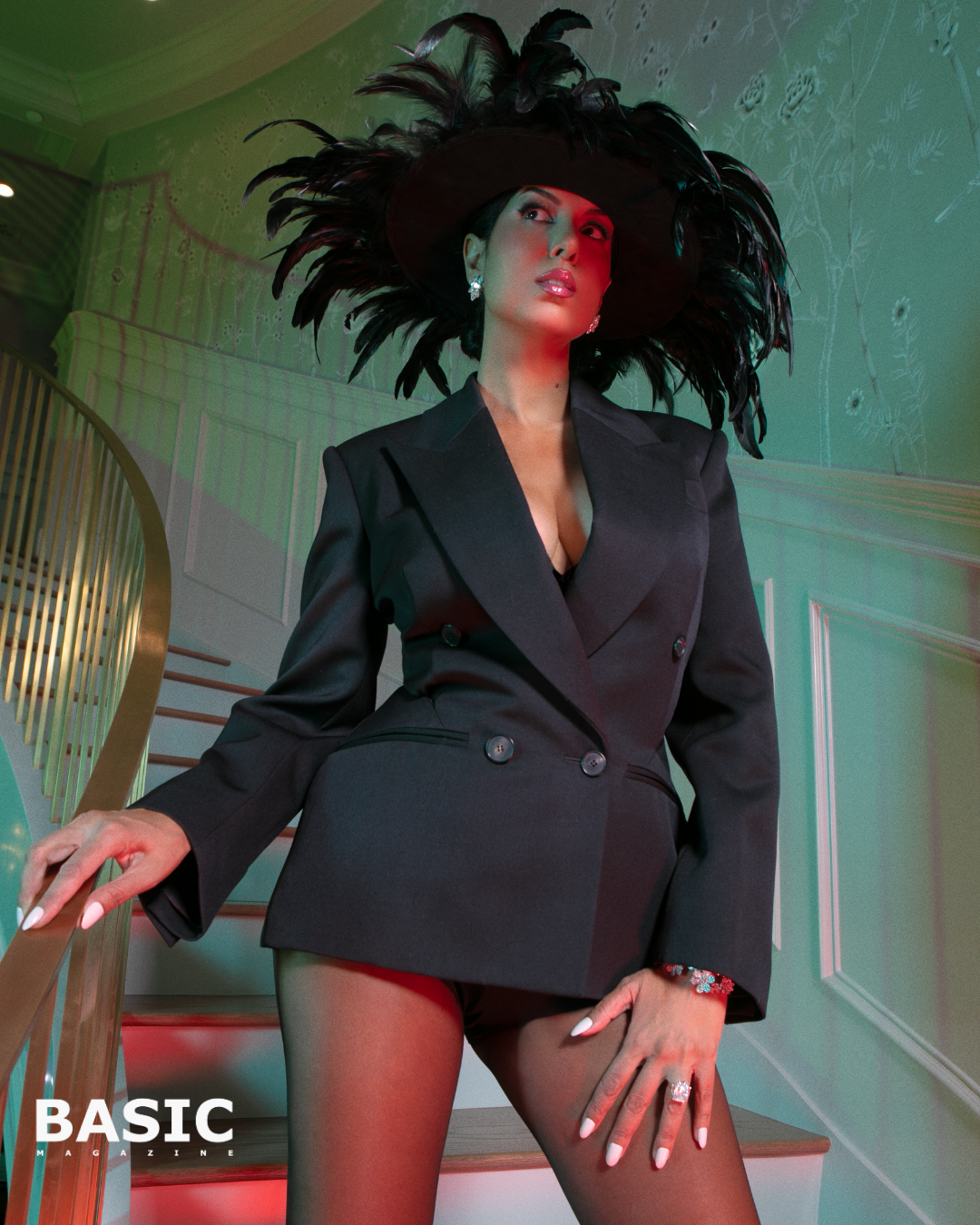
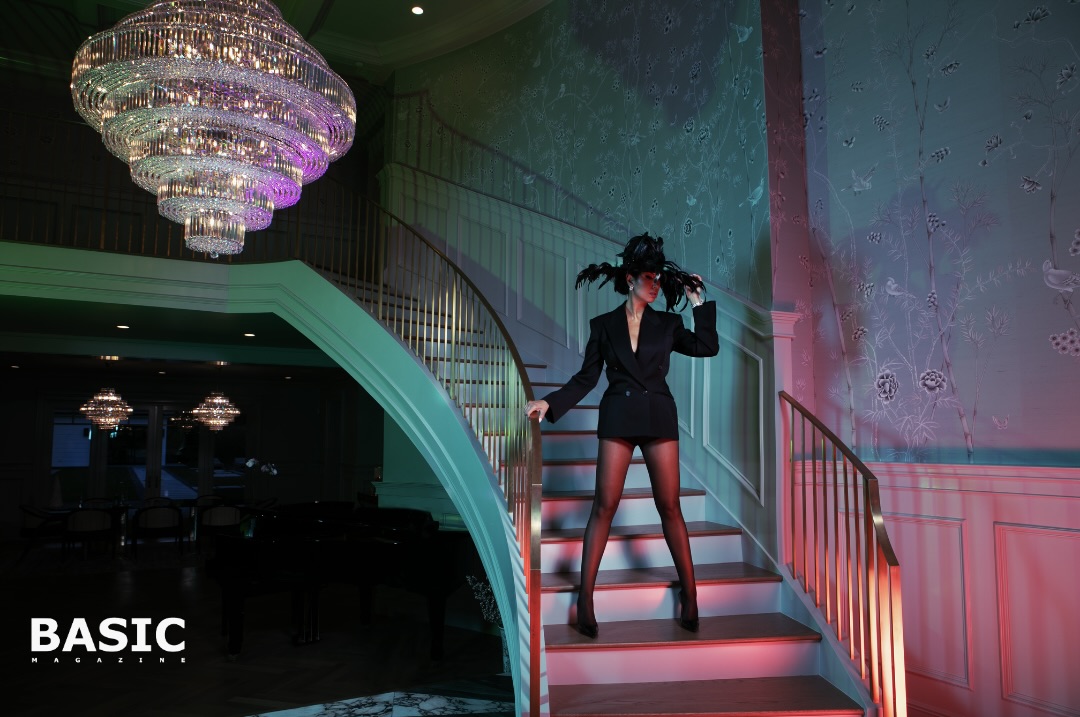
Hat ATOUSA G @atousag
Your world spans courtrooms and couture—a combination we don’t often see. What drew you into fashion as a space of expression, and how does it coexist with the intensity of your legal work?
My grandmother who I lived with for a long time was the only dentist who graduated out of a class of 120 men, and one thing I remember about her is she was very old school and very well put together. She was always impeccably dressed. She had this belief that when you go out, you want to represent yourself in the best way possible and that was your family’s representation out in the world. My mom was also very beautiful and loved designer fashion. When we moved here, we obviously couldn’t afford any of that, but back in Iran, she had quite a collection. I grew up around that, and I really love aesthetics and the arts. I was the kid under the covers with a magazine, looking at the models, dreaming, and wanting to avail myself of that culture. So the minute I was able to participate, I did. But I think because my work is so heavy, fashion really is my creative outlet. It’s a form of self-expression, and I think the way the two coexist is that when you walk out into the world, fashion is your armor. How you’re dressed makes you exude a certain energy and has the ability to impact the way you perceive the world and the way the world perceives you. I dress according to my mood, according to the task at hand for the day. I’m going to pick a different outfit if I’m in trial versus cross-examining a hostile witness, within the realm of reasonableness. I really try to let my creative flag fly when it comes to fashion. Early on in my career I would catch a lot of criticism for that because law was a male-dominated, conservative profession and women just didn’t express themselves the way that I did. Now, I think with the popularity of social media, people are finally realizing that their audience actually cares to connect with a real person, and that has the ability to drive and differentiate your brand. It’s more acceptable now. You see it in sitcoms and you see it in the fashion expression of the boss female attorney figure. Before, it was all black suits and kind of dry. For me, it only became acceptable when I started hitting big numbers. It was as though I had earned the right to express myself fully—finally.
You’ve attended some of the world’s biggest fashion shows and even gone backstage. What moments— designers, collections, or behind-the-scenes interactions—have stayed with you the most, and why?
I was a member of the Vogue 100 for a minute. I forged beautiful friendships there. I was getting most of my fashion invitations on my own and decided to venture out. During the course of this decade-long fashion journey, I’ve had the pleasure of meeting Anna Wintour, Maria Grazia, and other creative directors that shape the face of fashion today. There was one year I planned to wear a vintage Oscar de la Renta gown, but ultimately decided that I wanted to use my platform to bring awareness to my Armenian heritage and culture. My talented friend and Armenian designer Khosrov designed a beautiful gown for the occasion instead. I surprised him and took him as my plus one to Vogue World. That night, he ended up meeting a brand partner who represented his dresses in their showroom. He also got his first order from Antonia, a boutique in Milan. I am very proud of that collaboration. It was a historic Armenian heritage meets fashion moment for me that I’ll never forget.Another year, I had the privilege of designing a special dress with Richard Quinn for Vogue World, which actually made it to the runway for that season of his collection. That was another one of those pinch-me fashion moments.
You’re an entrepreneur, a mother, and a litigator working in one of the most emotionally demanding fields. What have you learned about balance—or about abandoning the idea of balance entirely—while building a life with so many moving parts?
There is no such thing as balance, and if anyone ever tells you that, they are full of shit or just aren’t living to their full potential. I think the velocity you get from moving forward is what you need to make things happen and execute. I think if you are overly fixated on this idea of balance, you are missing the mark. It’s all about making things happen, giving it 110 percent when you’re on a particular task, but if you need to switch gears and multitask, then you do it. That’s life. Somedays are going to be busier than others and you just roll up your sleeves and do it. Burnout is real, yes, and so you definitely need to focus on physical and mental health at all times. Rather than saying you’re balancing or that you’re taking time for yourself, you should be making that time part of your daily or weekly routine, be it a workout or a meditation. That’s not balancing; it’s just living.
Three words that describe your personal style—go.
Classic, edgy, diverse.
Name a designer you’ll never skip during fashion month.
Chanel.
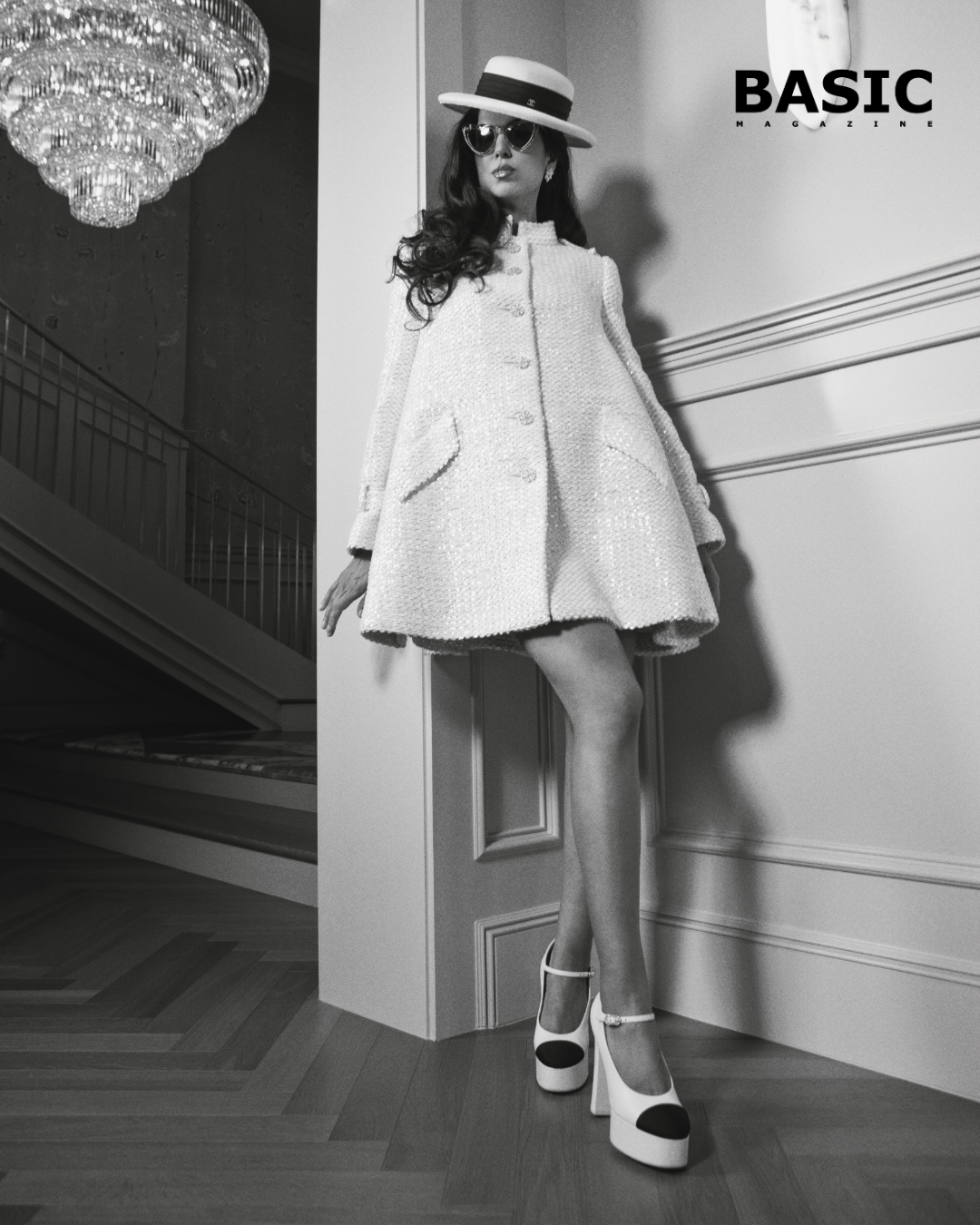
Glasses SAINT LAURENT @ysl
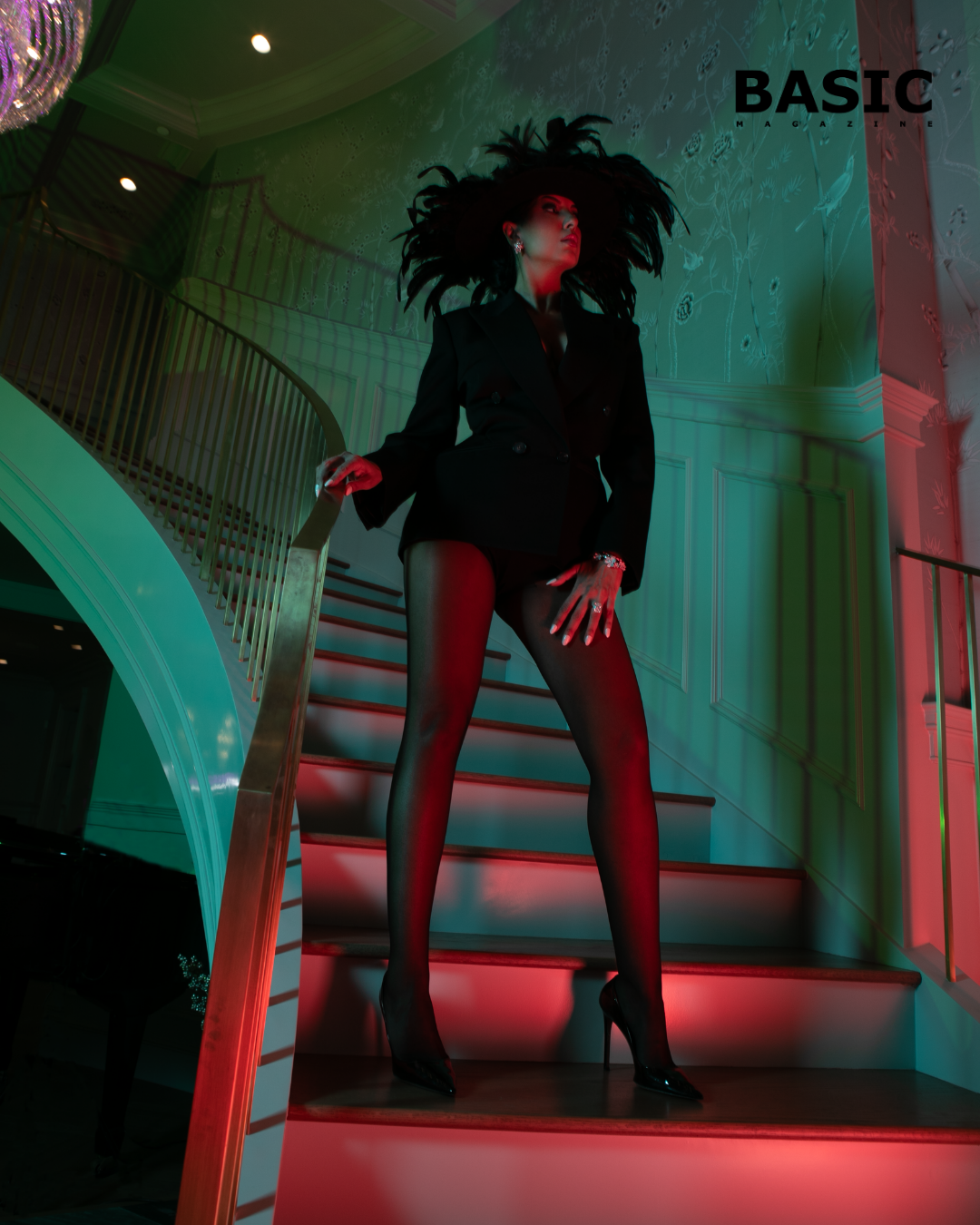
Shoes PRADA @prada
Hat ATOUSA G @atousag
What are your top brands?
The Karl Lagerfeld Chanel era, current Tom Ford, and Balenciaga. I’m looking forward to the Piere Paolo era.
What is the one power accessory you reach for before a big hearing?
Statement earrings or a vintage scarf.
What makes you feel unstoppable?
Getting dressed well in an outfit I feel good in. It actually changes the trajectory of your day. And the reason for that is if you feel confident, if you have that extra pep in your strut, and you feel good, people perceive you in a certain kind of way. The outcome is going to be different.
Give me a mantra you return to often.
Where you start out in life is in no way going to dictate where you end up. Also, hard work beats talent every time. Talent is not working hard.
