Words by LUIGI IRAUZQUI
It’s late October and unmistakably autumn in Milano—the air crisp, the sidewalks scattered with burnt orange leaves, and the landscape slipping into that perfect mix of pace and romance. It’s the ideal season to explore a place so close to my heart. Fashion Week is already a memory, but the cultural calendar hasn’t slowed for a second: opera premieres, gallery openings, social nights, and the ever-reliable Milanese aperitivo culture in full swing.


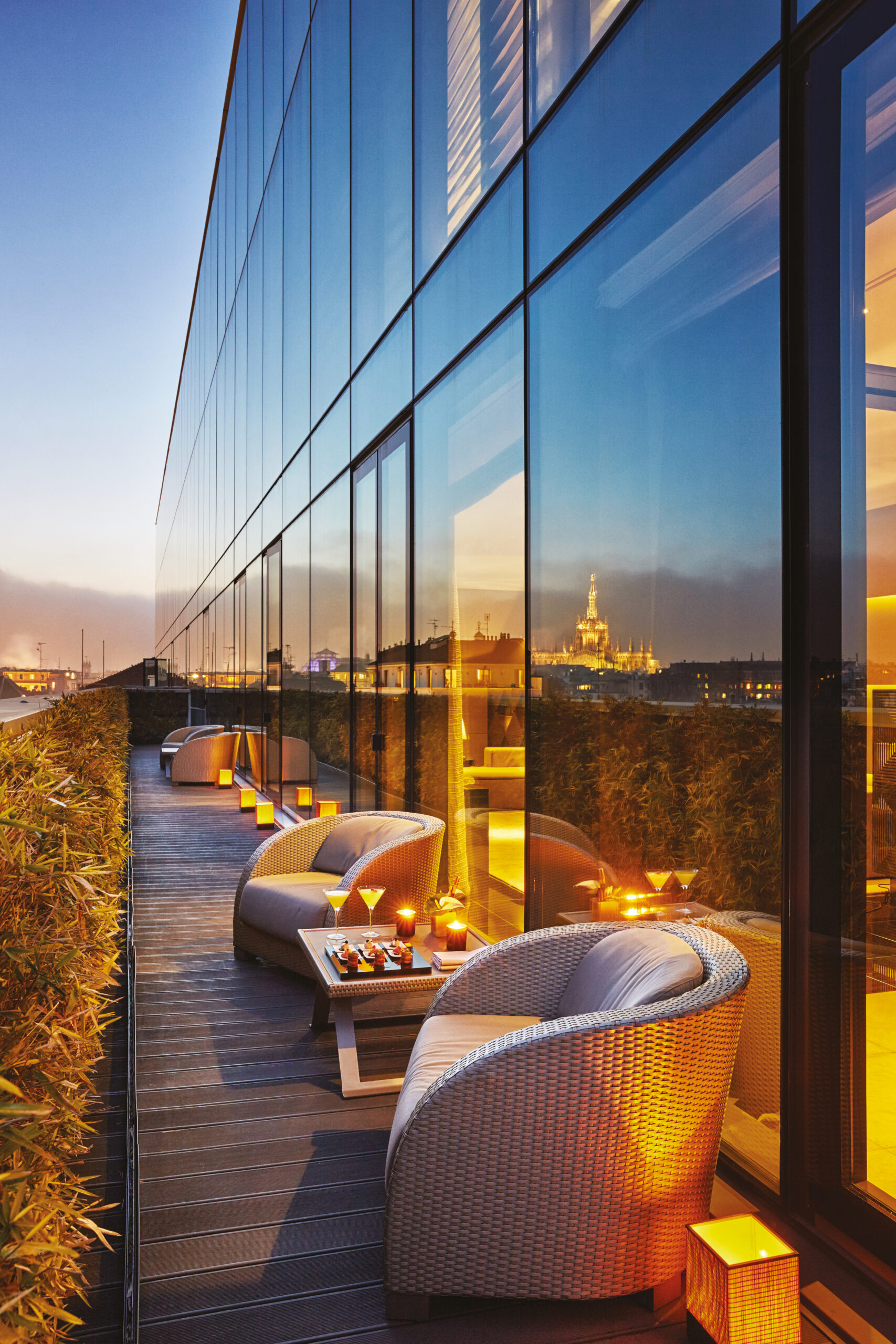
Autumn might be my favorite time to shop the Fashion Rectangle and the Brera district. The weather makes wandering feel cinematic—cool enough for a coat, warm enough to enjoy it—and the city’s palette suddenly mirrors the season. It’s here, in the “Quadrilatero della Moda,” that I arrived to experience the iconic Armani Hotel Milano, invited by Preferred Hotels’ prestigious Legend Collection.


This place is tied to my earliest memories. I came here often as a child, tagging along with my parents as they moved through the major fashion trade shows of the time. The hotel sits just minutes from Via Montenapoleone and Via della Spiga, but feels worlds removed from the bustle. From the moment we stepped inside, the staff was welcoming, chivalrous and discreet in a distinct Milanese way.


Riding the elevator up to the seventh-floor lobby, I could feel the shift. I wasn’t just checking into a hotel; I was stepping directly into the Armani universe—stylish, timeless, and singularly sumptuous. Armani Milano immediately established its presence on arrival. The design is controlled and thoughtful, with a clear focus on how guests move, rest, and experience the space. When I travel to Italy, Milano is always part of the itinerary. The city’s rhythm is continually recalibrating, balancing innovation and history with an ease that feels deeply ingrained.
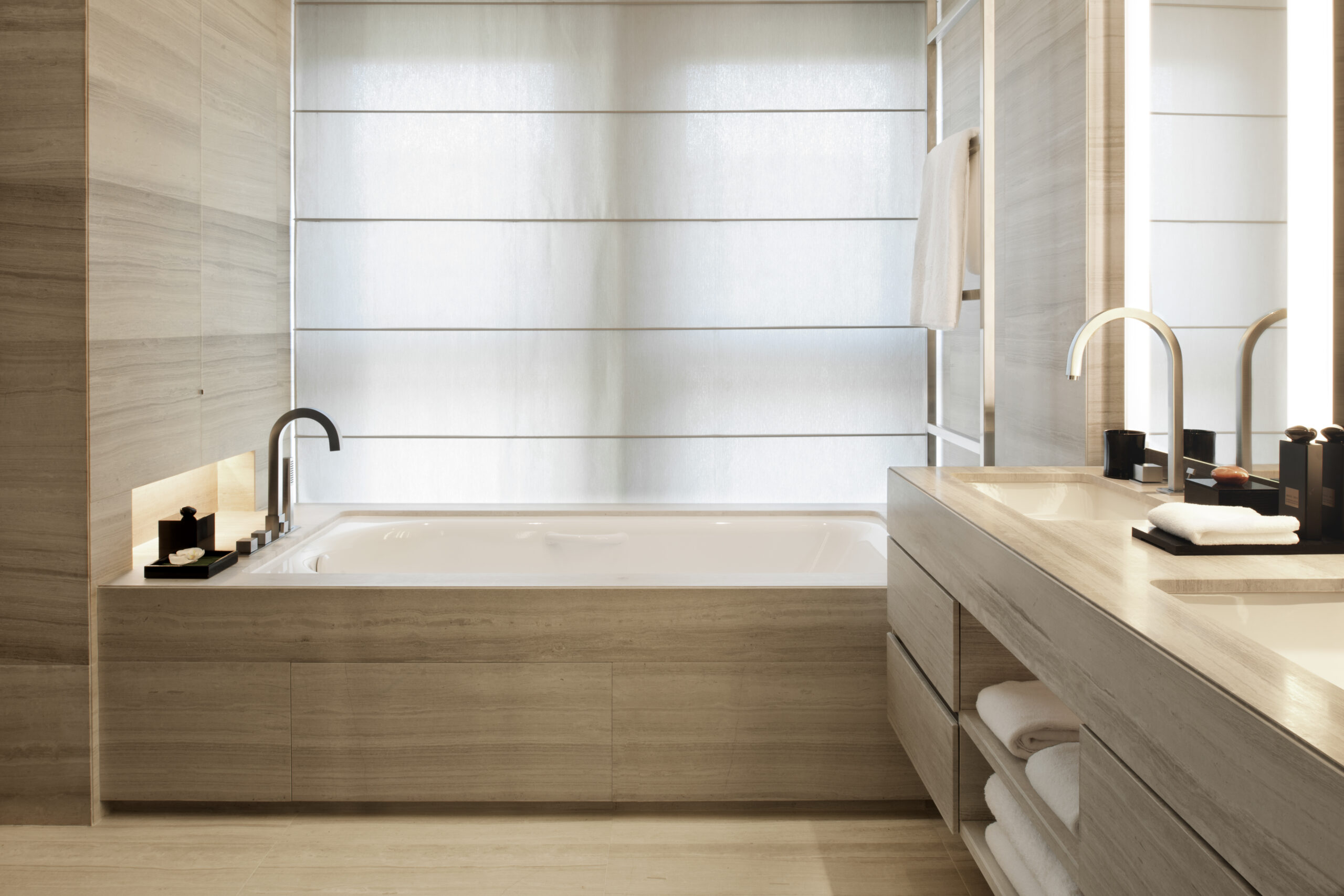
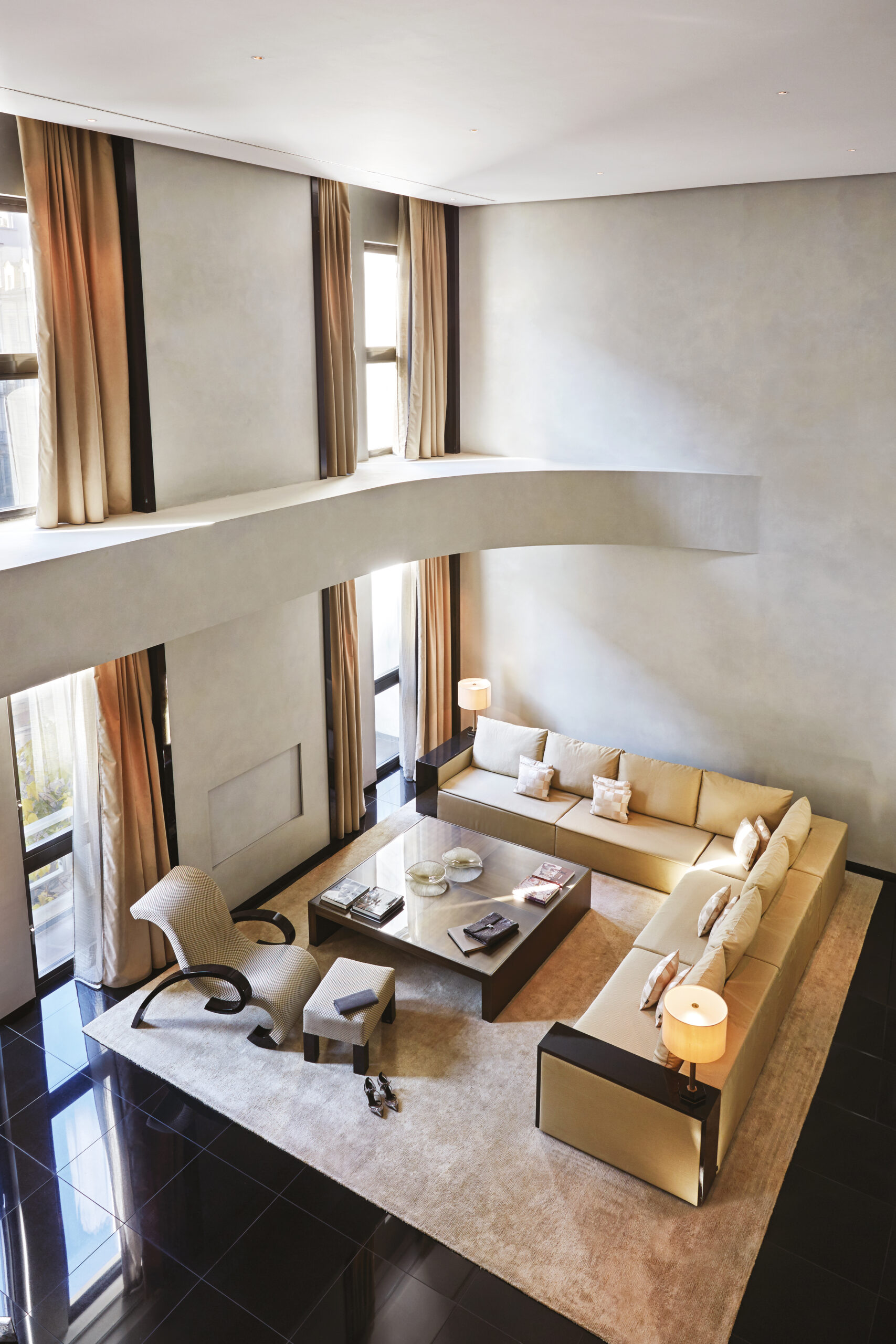
Armani Milano is the definition of minimalist luxury done right: clean architecture, a neutral palette, rich textures, and an atmosphere that never tries too hard. Armani famously called his approach “the haute couture of hospitality,” and it shows. When he landed on the fashion scene in 1975, he revolutionized the rules of elegance—neutral tones, soft structure, and that signature restraint that eventually defined an entire era (cemented forever after American Gigolo). The hotel carries that exact DNA.


His first hotel, in Dubai’s Burj Khalifa, was about scale and statement. Milan, opened in 2011, is something else entirely—more intimate, more controlled, more aligned with how Armani himself lived and imagined space. As an interior designer, I’m always scanning for the details, and here, the details are the story: uninterrupted lines, functionality, materials that hold their own. The “home-away-from-home” philosophy becomes clear almost immediately. You don’t feel like you’re visiting a brand; you feel like you’ve been invited into someone’s private version of beauty and order.

Armani transformed Enrico A. Griffini’s 1937 rationalist building into a fully immersive extension of his aesthetic, furnishing it entirely with Armani/ Casa pieces. He worked closely with his in-house design team, adding glass elements and that iconic roofline “A” to merge his identity with the building’s bones. The level of personal oversight is palpable—furniture, lighting, materials, atmosphere, even scent. Bois d’Encens, the signature Armani/Privé fragrance created with perfumer Michel Almairac, floats through the hotel. Inspired by the incense of Italian churches from Armani’s childhood, it sets the mood the second you walk in: smoky, elegant, a little mysterious.


Everything about my stay felt intentional. Lavish breakfasts at Bamboo Bar, the curated room amenities, one of the most beautifully executed spas in the city on the eighth floor—all tied into the hotel’s design language. And, in true Milan fashion, lunch at Nobu Milano (within the Emporio Armani building) matched the hospitality with a visual and culinary experience entirely its own. “They really have thought of everything” is a cliché, but here it feels earned. I travel often and with a critical eye, which has taken me through some of the world’s best hotels. Armani Milano met that standard. The suite was composed and restorative, making each morning feel focused, clear, and ready for a productive workday. As Armani once said: “There’s not a lot of difference between a piece of furniture and a piece of clothing: both have to feel good when you come into physical contact with them.” Walking through this hotel, you feel exactly what he meant.


The fashion world mourned the loss of Giorgio Armani in September 2025 at the age of 91. His passing marked the end of a monumental chapter, but staying at Armani Milano reminded me that his sensibility isn’t going anywhere. It lives on in the structure, the materials, the calm confidence of every room.


I met Re Giorgio in New York at the Emporio Armani runway show in 1998. Since then, I’ve followed his work with consistent admiration for the discipline, clarity, and conviction behind it. His influence on fashion has been lasting, shaping how design is approached well beyond his own collections.