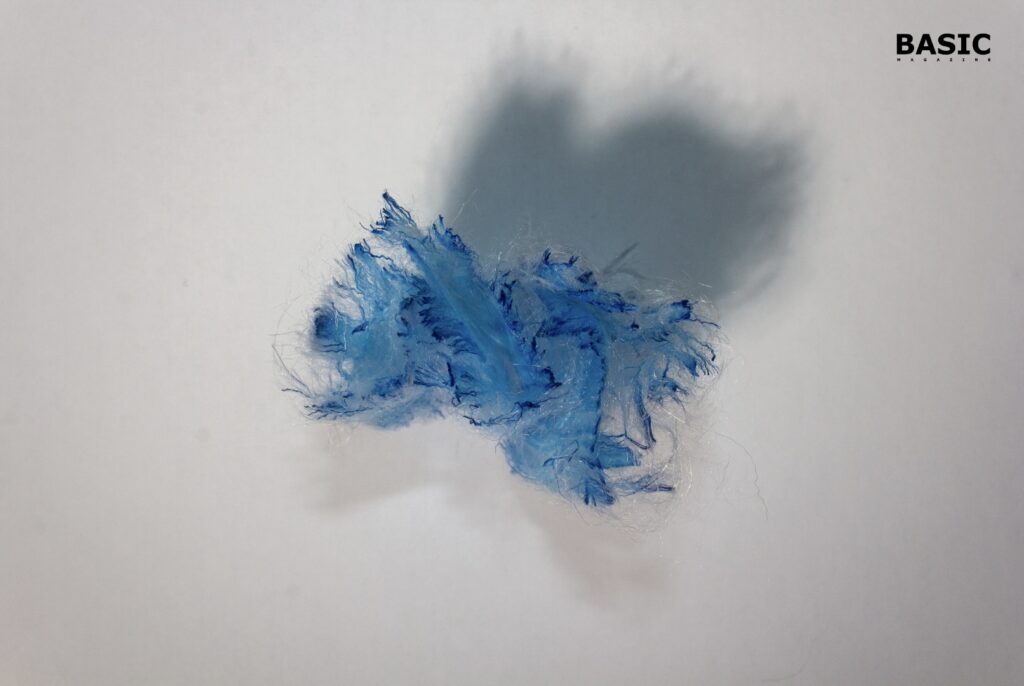
Eugène Riconneaus moves design back to its origin, developing ocean-based textiles that reach the body through the lab.
Words by Kimberly Haddad
French artist and designer Eugène Riconneaus grew up in La Rochelle, in a fishing family on France’s Atlantic coast, where the ocean entered life as work before it ever became subject matter. Prior to ER Ocean Recherche, there was photography, painting, the Paris skate scene, then a footwear line in the early 2010s that put him in stores like Colette and on women like Grace Jones and Monica Bellucci.
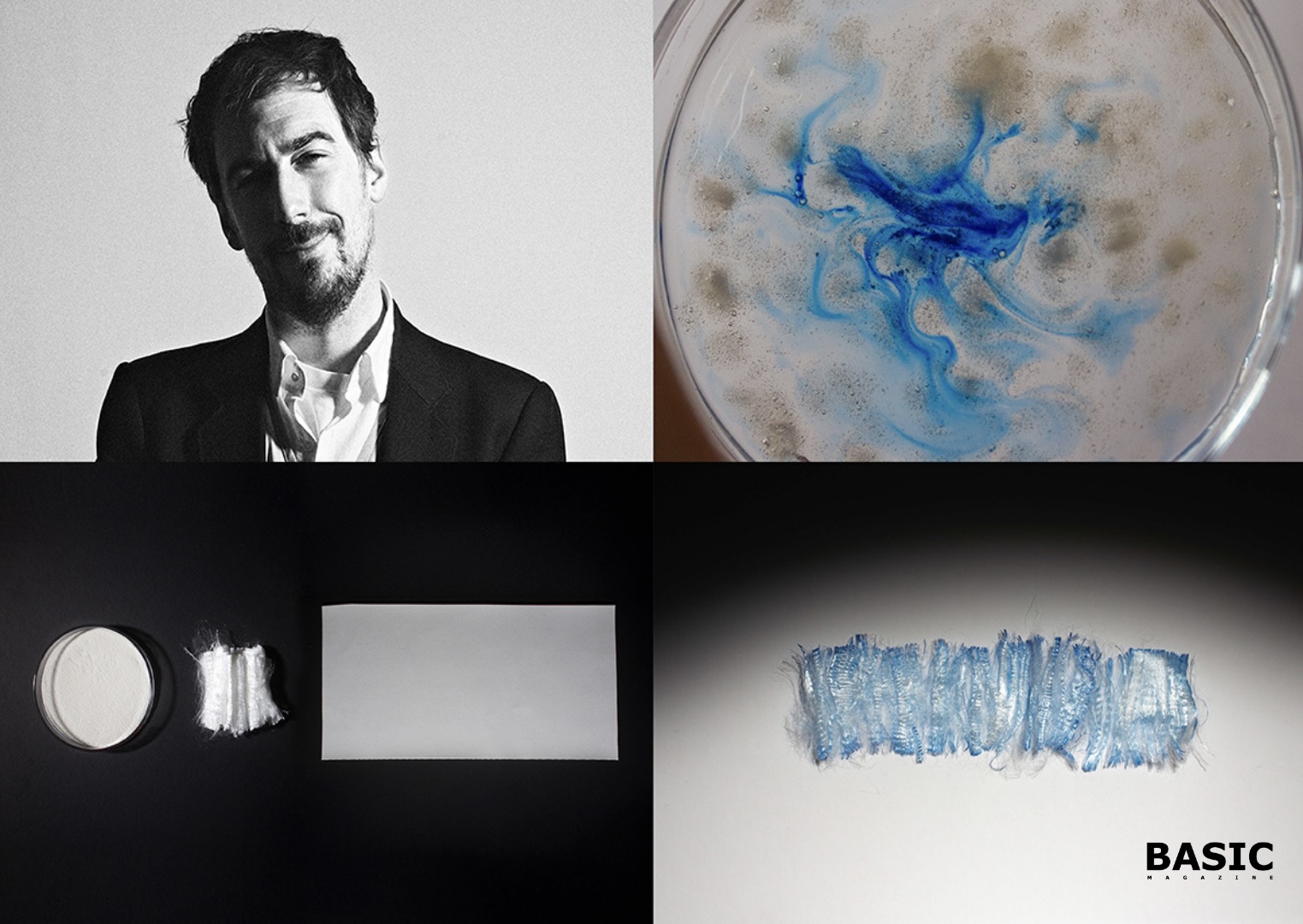
Even then, his work circled around what things are made from, using leftover stock and reworking the material itself—cutting, bonding, and assembling it by hand. That trajectory led to a MoMA projection in 2022, then back to the coastline he grew up on, where what he was seeing on those beaches began to change the direction of the work. From there, the studio moved toward developing its own materials—pigments, polymers, and fibers derived from invasive seaweed, shell waste, and discarded fishing nets—marking a deeper plunge into biomimicry and material science, with a research-driven atelier around those processes. In his work, failure is part of discovery. He mentions discovering a color almost by accident—something he forgot was still going while switching between lab work and a Zoom call.
The Ocean Apocalypse dress, unveiled at the Grand Palais, is the clearest public expression of that trajectory: a couture silhouette formed through years of development, and a reminder that the future of fashion may depend on what enters the garment from the start.
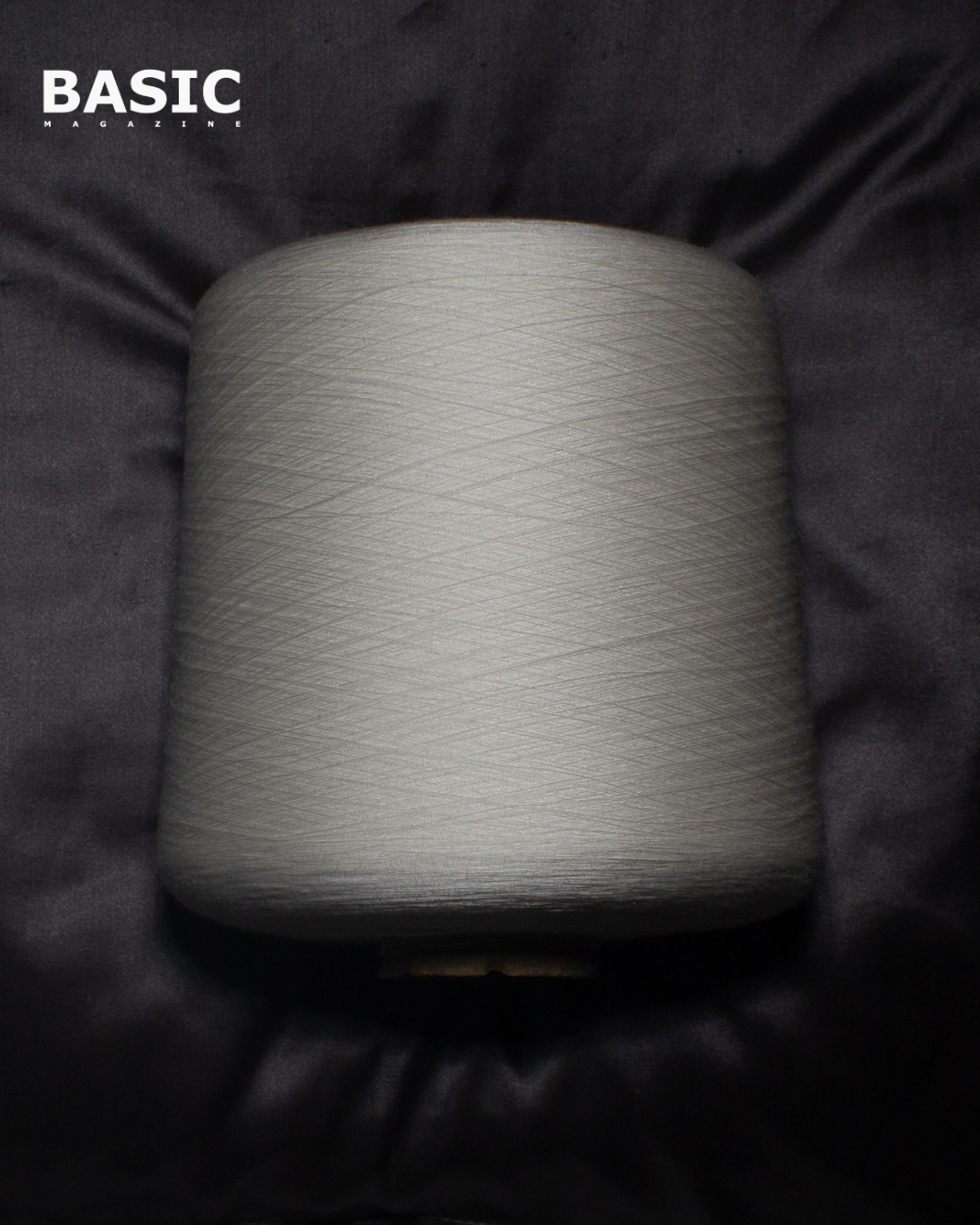
Your work sits so far upstream from what we usually think of as fashion. What does the first step actually look like? Are you starting with a species, a waste stream, a chemical property—where do you begin?
I begin with the ocean not only as a problem, but as a source of solutions. Growing up close to the coast, I became very aware of how much water our industries consume, so marine biomass made sense to me. Seaweed, for example, is not land-intensive, and it is not water-intensive in the way many conventional resources are. At ER Ocean Recherche, there is also a strong focus on respecting aquaculture, working with invasive species where relevant, and bringing the beauty of marine ecosystems into materials so people feel encouraged to rediscover and protect them.
How long does it take for a material to go from something unstable in the lab to something you can actually handle without it breaking down?
For me, it took around five years. Science can feel a bit like building a couture collection, thousands of parameters, endless adjustments, and a lot of invisible work. Here, you are also trying to understand materials shaped by billions of years of natural intelligence within a very short human timeline.
You’ve described this as a deepening of authorship rather than a shift in direction. What actually makes something yours—the form you give it, or the material you build it from?
What interests me is building and unifying an ecosystem of makers around the ocean, almost like a fashion house, extended across labs, factories, and communities. Authorship is in the direction, the choices, the language, and in the way different forms of knowledge come together. I believe the next unicorn is not a solo journey, but an ecosystem.
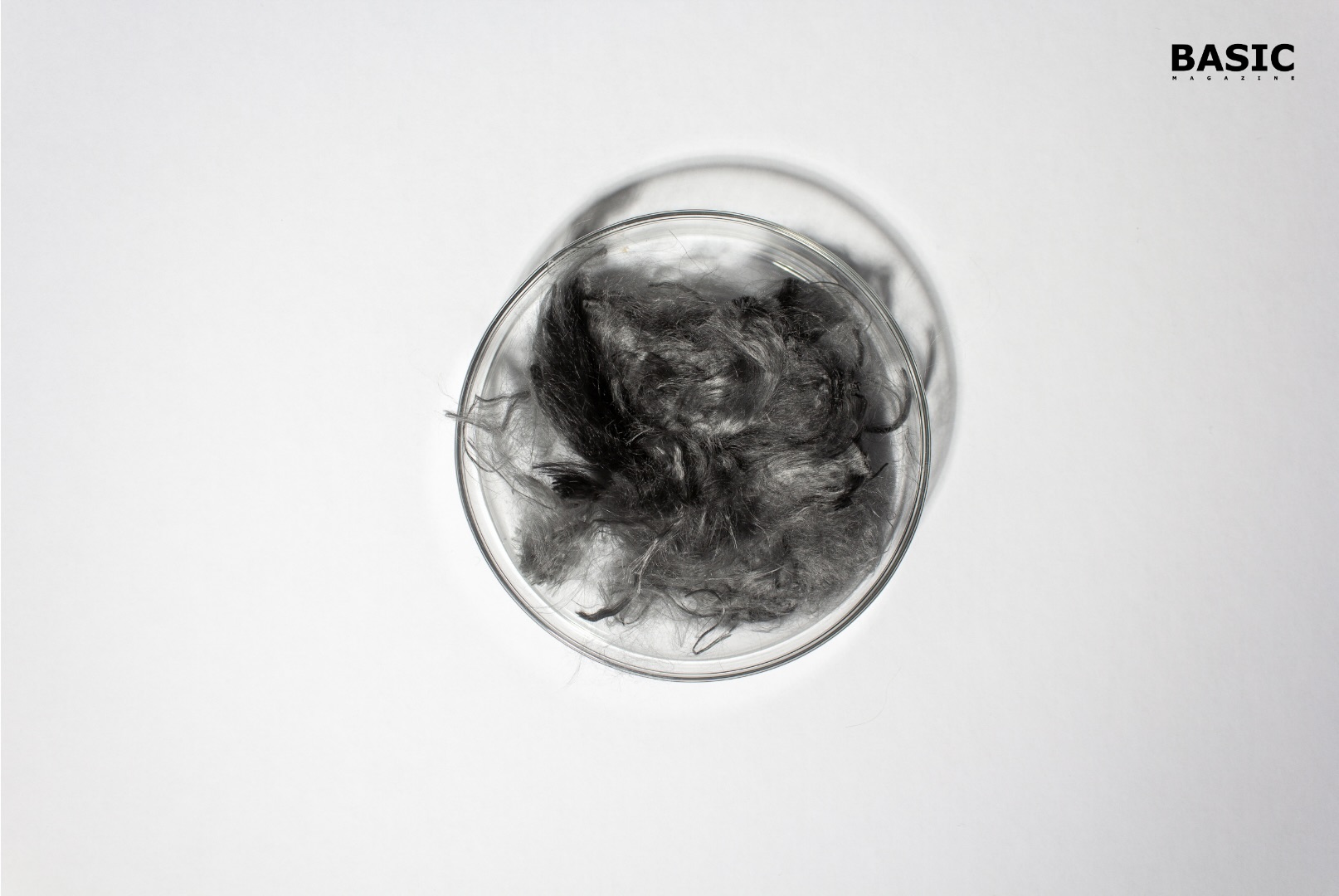
You’re effectively working against the existing supply chain, stepping in before materials are even available. What wasn’t working for you in the system as it exists?
I could not find materials that both scaled and carried the beauty I was looking for. Impact alone is not enough; a material also has to move people. With our Sei fabrics, there is something in the light, they can sparkle like sunlight on water, and that emotional quality matters as much as the environmental one. Too many promising materials stayed beautiful in the lab, but fragile or unusable in reality. I wanted to help build that missing bridge. That is also why I moved from design at the macro scale to the micron scale.
If designers don’t move earlier into material development, are they still shaping fashion—or just working within what’s already been decided?
Every role has value. I have always admired people like Massimo Osti or Azzedine Alaïa, who understood that material is already part of design. If you cut a swatch from two black dresses, sometimes the real difference is in the depth, the shine, the hand, and that level of detail is where luxury begins.
When you turn marine matter into something a luxury house can recognize, are you preserving its origin or reshaping it to fit an existing system?
Both. You need translation, otherwise the material stays outside the system. I am not interested in erasing its origin to make it fit in. I want the marine intelligence to remain present in the texture, the feeling, the story, and in the way light touches it.
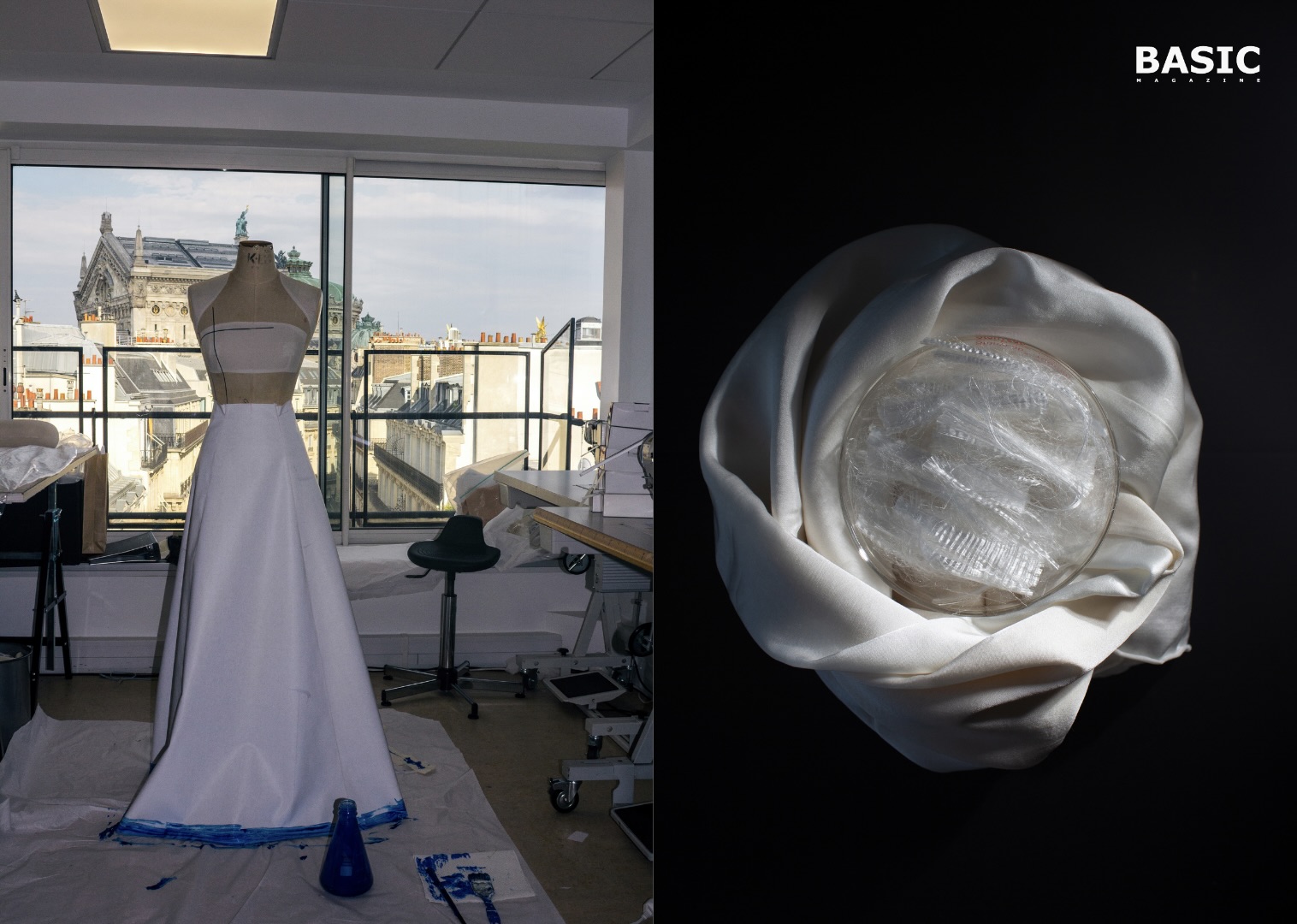
The Ocean Apocalypse dress starts with seaweed and shell waste. What did you have to figure out to get from that to something that could actually be worn?
A lot of it was about moving from raw matter to something stable enough to live on a body. Flexibility, touch, resistance, construction, all of that had to be resolved. For me, the dress was not just a look; it was proof that these materials can leave the lab and enter silhouette, emotion, and wearability. I am already developing more couture pieces from these innovations, though not as a traditional fashion line. They are made by request, for stylists or selected personalities, as a way to show different chapters of the fashion thesis I am building around these materials. I work with a local partner in Los Angeles, Atelier7474, to produce them. The goal isn’t to compete with traditional fashion, but to show what these materials can become.
You’ve said you’re still driven by femininity, but you’re working at the level of biomass and chemical processes now. What does that actually mean in practice—and does it ever conflict with the reality of the materials?
Of course it can conflict. Femininity, to me, is not separate from the science, it is in the touch, the glow, the softness, the way a surface holds light. A red, a fuchsia, a velvet, a sparkle made with natural materials has to be thought through at the micron scale, not only at the level of a Pantone swatch. I think we have started questioning what touches our skin in cosmetics and food, and now we are beginning to ask the same questions about clothing. One of my early discoveries for SeiFibre was an antibacterial property coming from the ocean itself.
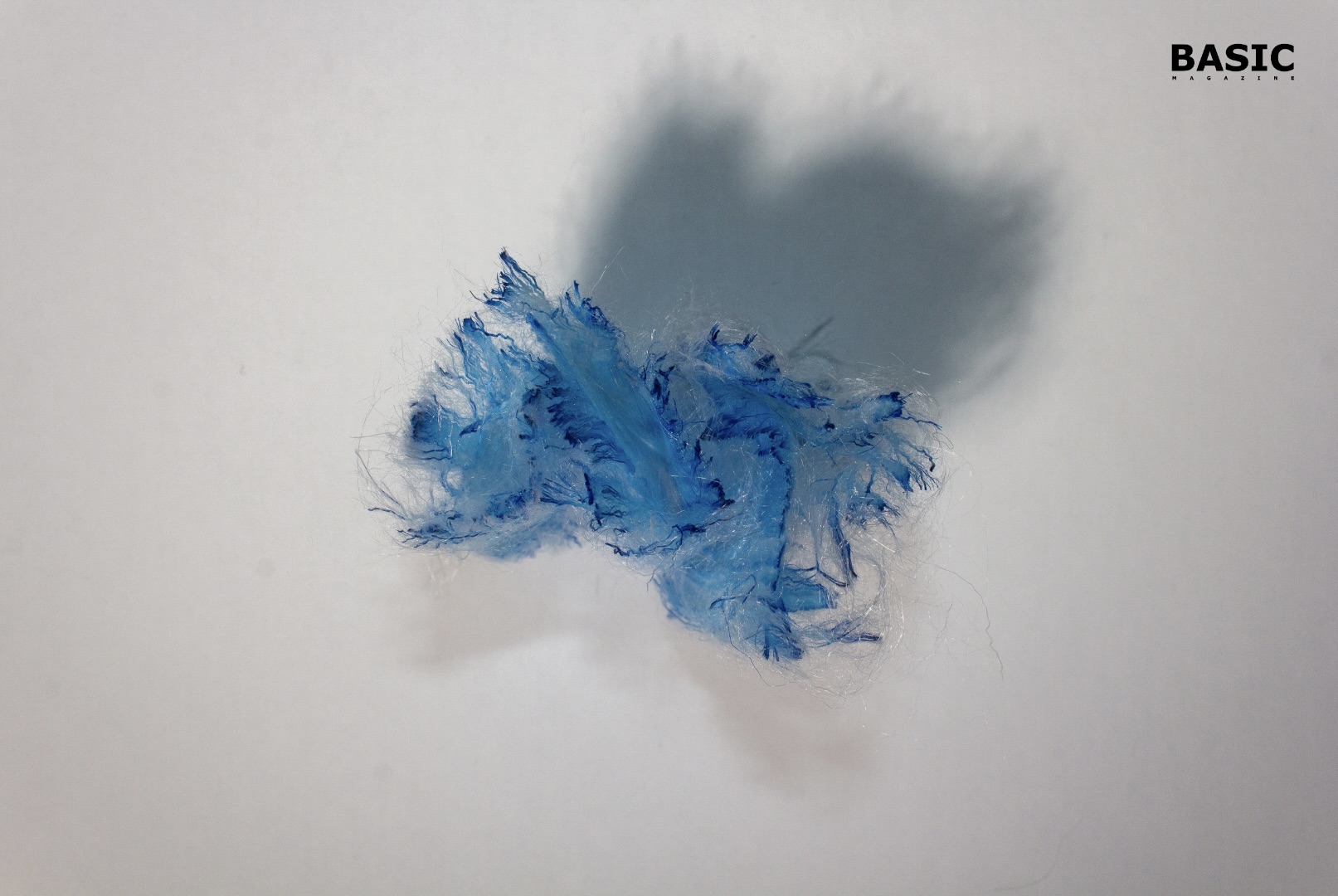
Are there constraints you’ve had to accept that traditional fashion wouldn’t tolerate?
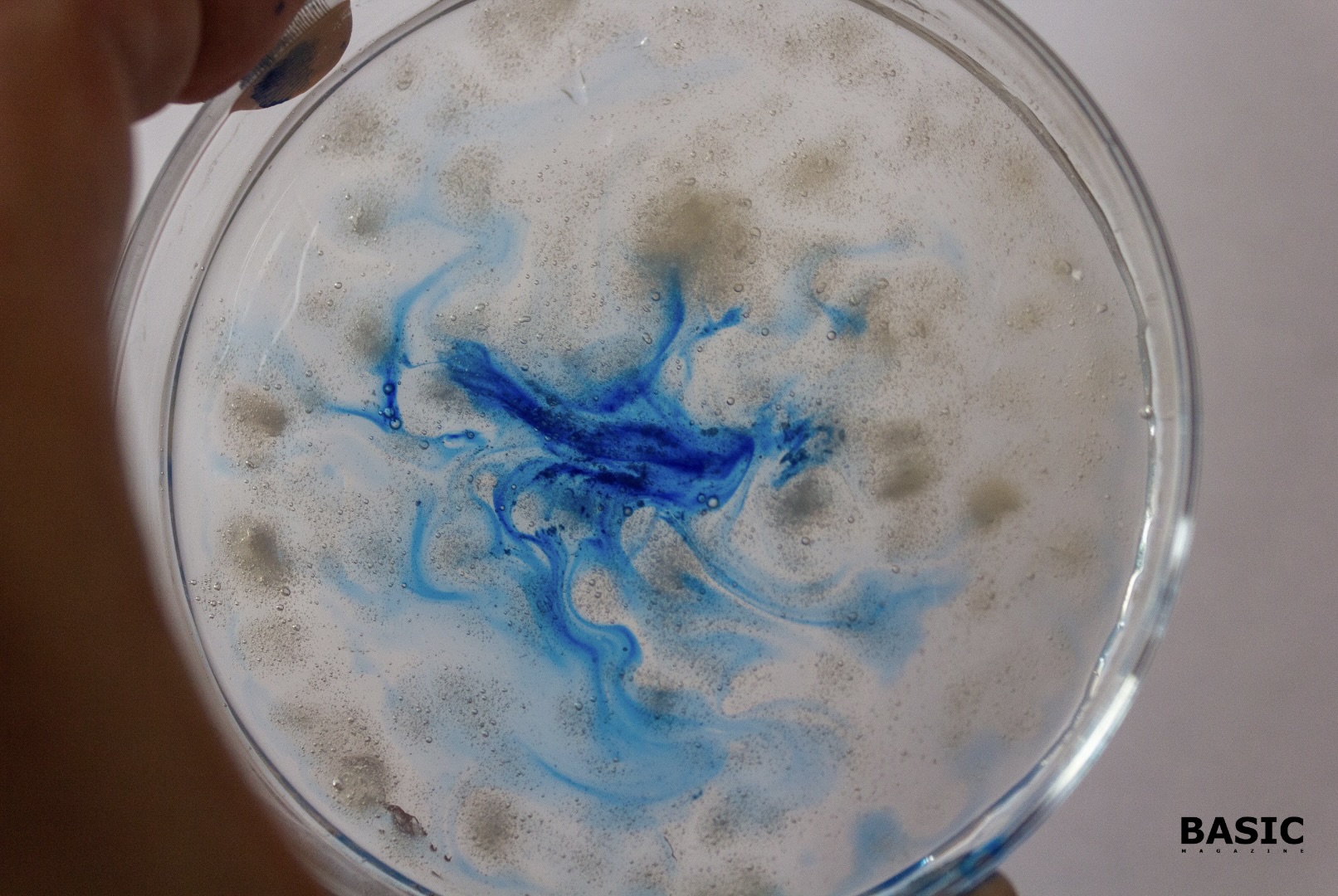
Yes. Living or organic materials do not always obey the speed, uniformity, and total control that fashion is used to. You have to accept more variability, more patience, and sometimes another rhythm of creation. Even color teaches you that. A natural white may be slightly broken rather than chemically immaculate. A rose from nature may carry less artificial brightness than a synthetic dye, but sometimes that softness is exactly where the beauty is. I believe it is also our role to re-explain the beauty of working with nature, and in my case, with the ocean.
You describe this as a return, but it doesn’t read like one. It feels more like you changed the scale of what you’re doing. Did it feel that way while you were inside it?
Yes, exactly. It felt like a natural evolution, not a break. I did not leave design behind, I just moved deeper into it, from silhouette to substance. Today, those materials are coming back into fashion form through couture pieces I develop very selectively, more as research chapters than as a traditional collection.
You dedicated this work to ocean communities—fishermen, scientists, farmers. Where do they exist in the final image, once it’s on a body inside the Grand Palais?
They exist inside the dress itself. For me, this piece is the result of collective work. It carries the knowledge of ocean communities, as well as the work of scientists, technicians, farmers, and makers who are rarely visible in the final image. What moved me most is that when I entered laboratories, many scientists were used to working on things that stayed abstract or far from everyday life. When they suddenly see their research become something concrete, something that can be worn, seen, and felt, the story changes. The dress becomes more than an image. It becomes a shared proof that all these worlds can meet.