
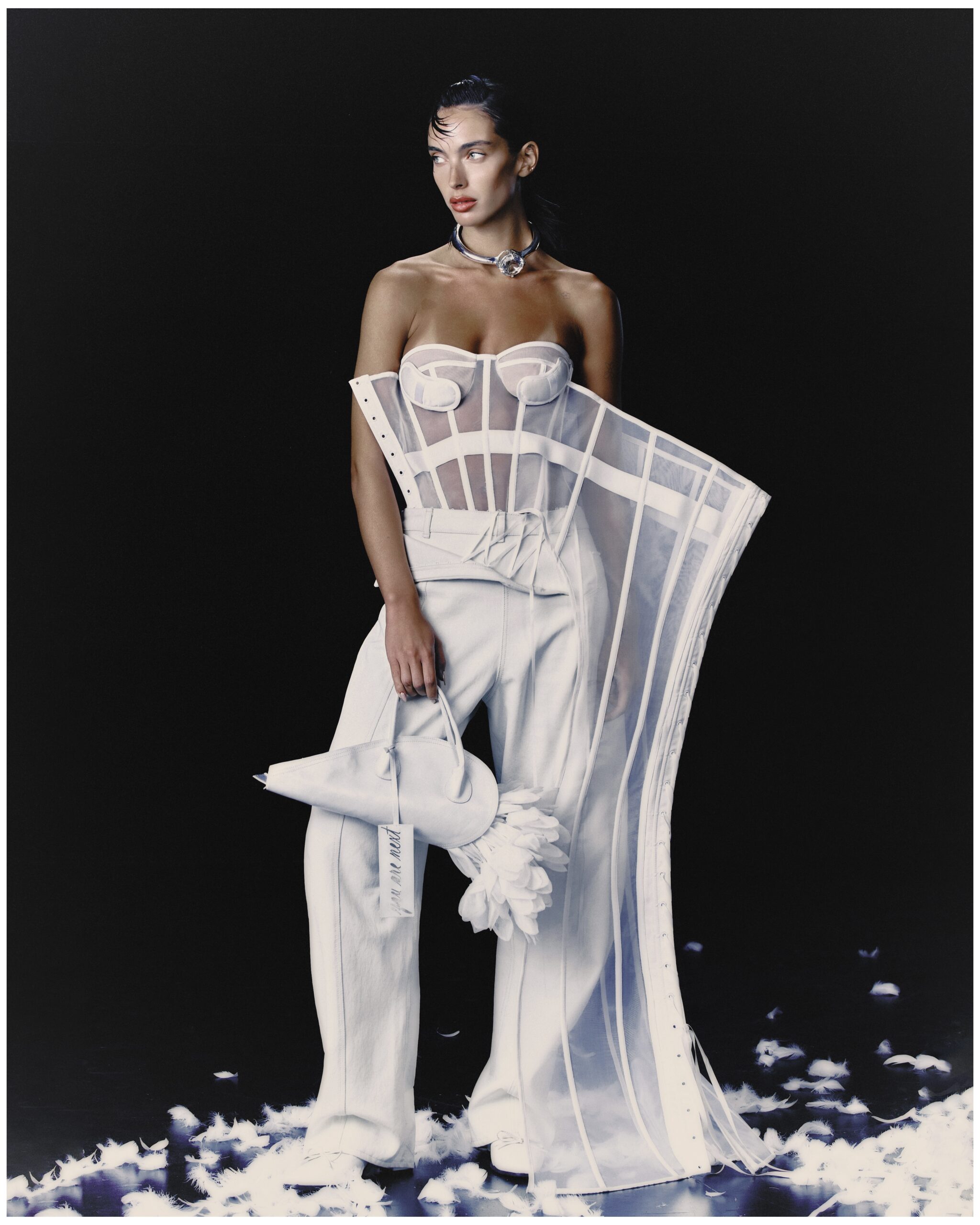
Shay Greenberg is a fashion designer and recent Shenkar graduate who specializes in the intersection of historical research and modern construction. Her experience at the Rose Fashion and Textiles Archive provided her with a unique mastery of garment anatomy and intricate techniques. Now, she applies the high-level technical skills from her background in bridal and evening wear to her own creative projects, ensuring every piece is as technically sound as it is conceptually driven.
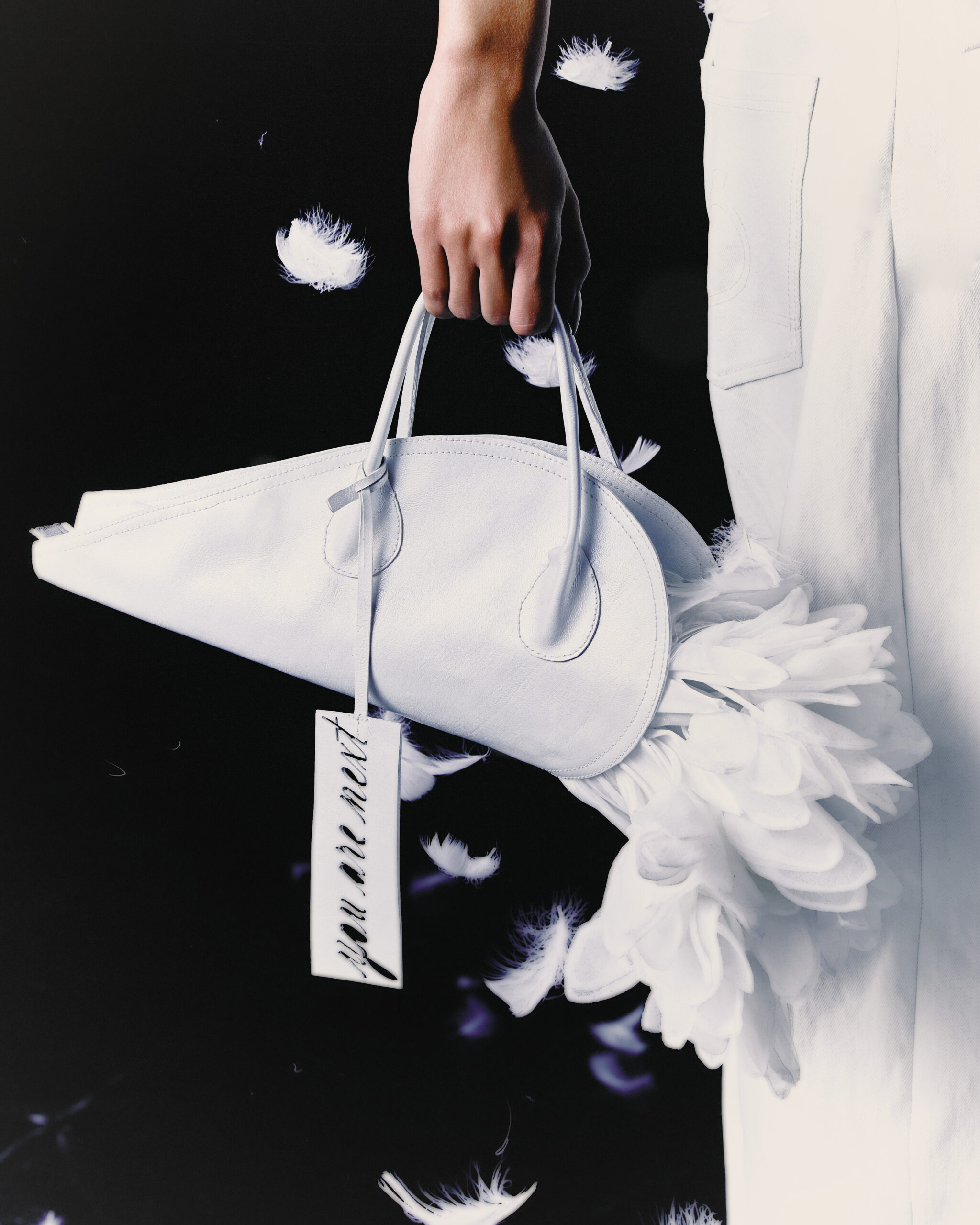

“The Dress Code” (Shay’s final school project) is a speculative womenswear collection that examines the complex relationship between women and wedding dresses — and more broadly, with the cultural and emotional weight of the wedding event itself, often idealized from early childhood. Through a critical and humorous lens, the collection challenges the romanticized perception of marriage and the rigid norms surrounding the female role within it.
Operating between streetwear and avant-garde, the collection blends speculative design with contemporary aesthetics. Each garment offers a distinct response to the traditional bridal image — whether through exaggeration, irony, or a sense of quiet resistance.

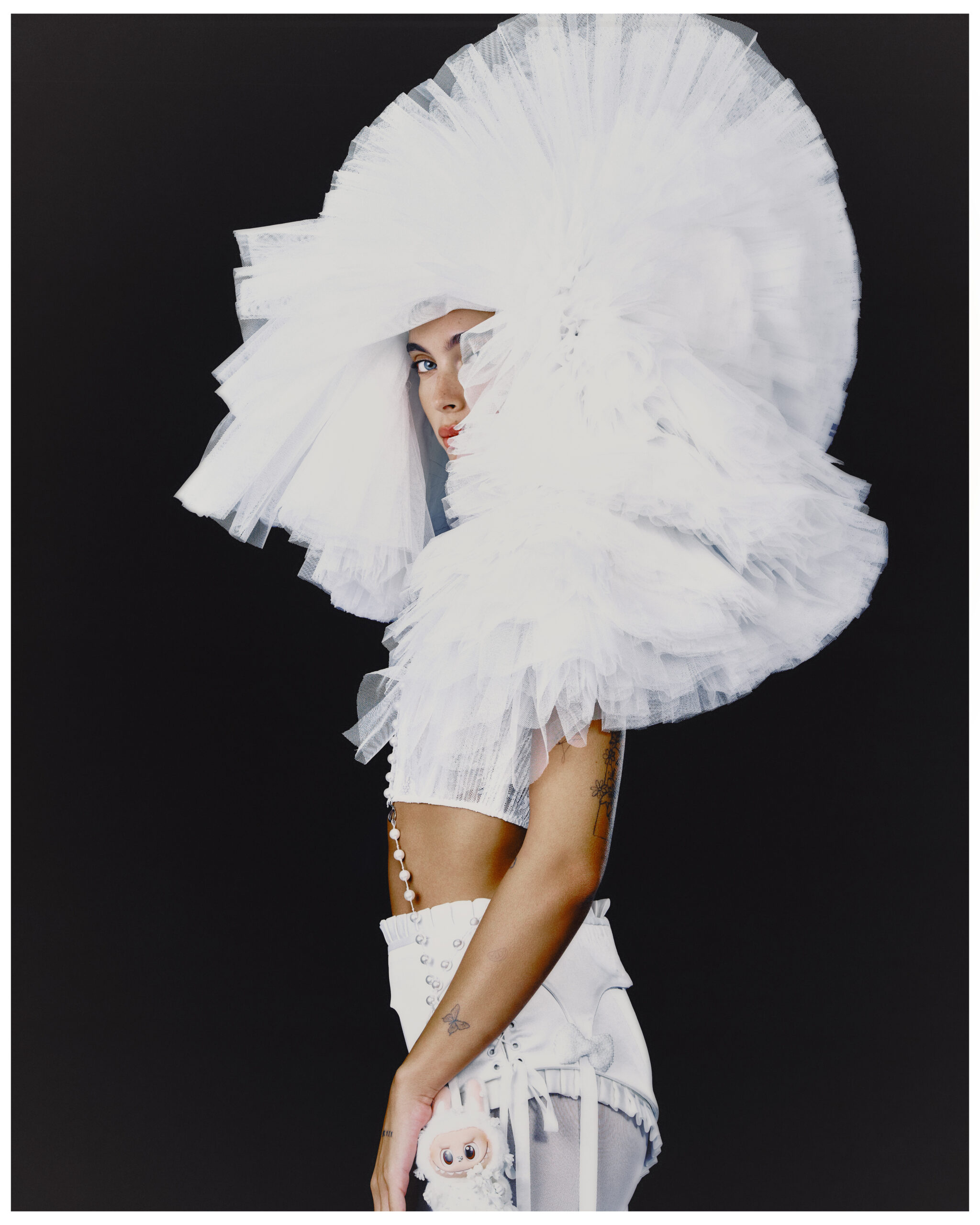
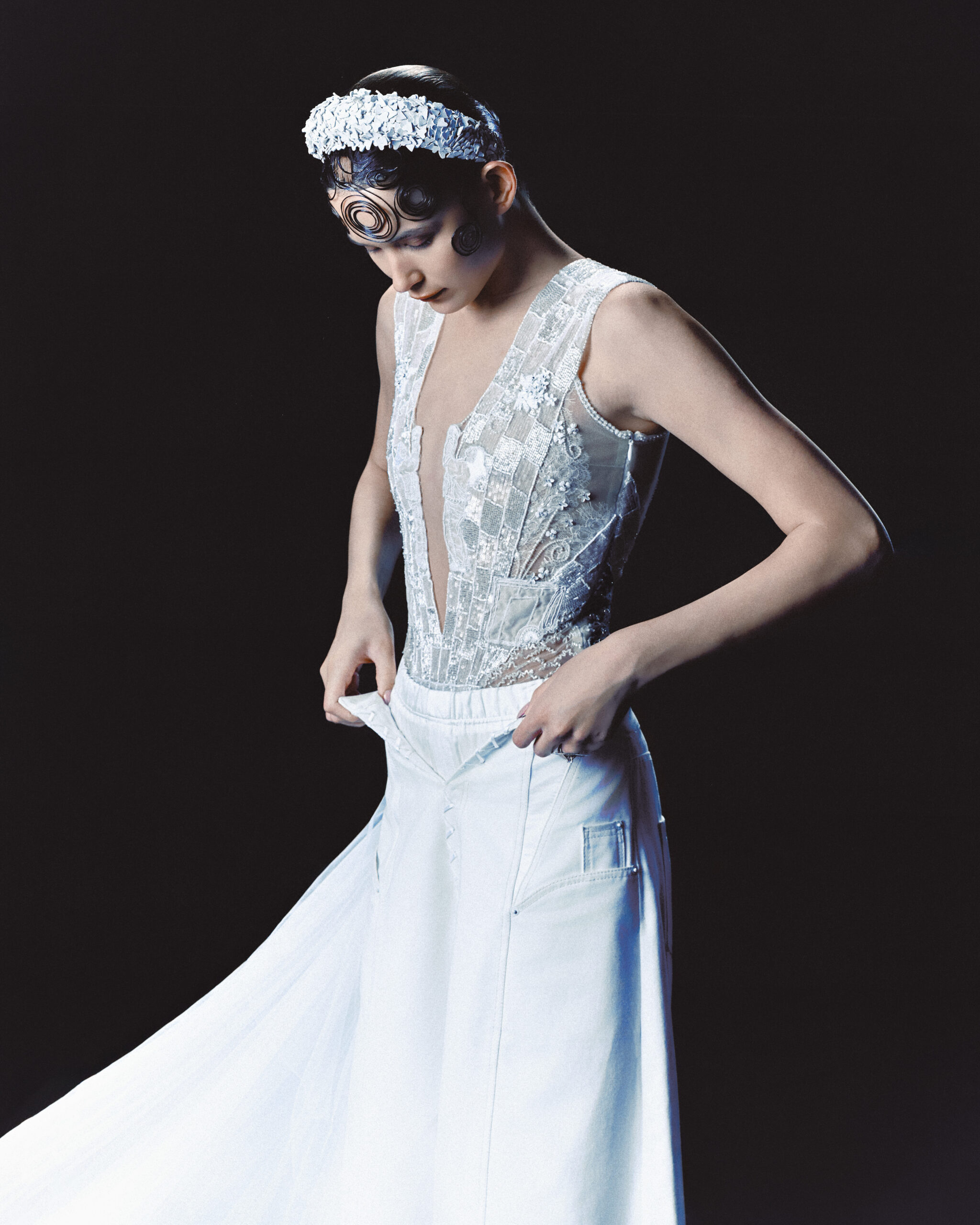
Exaggerated proportions and familiar bridal iconography are used to create visual dissonance between the fantasy of the “perfect bride” and the grounded reality of the body. Techniques such as free draping, laser cutting, hand embroidery, and layered transparencies form a tactile and conceptual language that deepens the garments’ presence and complexity.
Silhouettes and materials are drawn from both bridalwear and streetwear, resulting in hybrid forms that disrupt expectations. Tulle, satin, and lace are combined with structured mesh, oversized closures, printed ribbons, and corsetry — balancing delicacy and tension, softness and control.
Rather than offering a clear alternative to traditional bridalwear, the collection opens up space for questioning. It reflects on how garments can shape identity, reinforce norms, or become tools for self-expression. “The Dress Code” invites a rethinking of the bridal image — not as a fixed ideal, but as a dynamic space for reinterpretation.

Are you responding to who you are or who you’re becoming?
I believe my work is always a response to who I am in the moment, but design is also the vehicle through which I discover who I’m becoming. With “The Dress Code”, I wasn’t just designing garments; I was investigating how femininity is constructed through ritual. For me, each piece acts as a dialogue between my current voice and the growth I’m experiencing as a designer.
What non-fashion references influence your work?
I’m often drawn to environments that aren’t traditionally considered ‘beautiful.’ My work at Shenkar, for example, was heavily influenced by the Tel Aviv Central Bus Station—a brutalist, chaotic space that has a very raw honesty to it. I prefer looking at everyday reality, pop culture, or even social media rituals. I find that humor and satire can often reveal cultural structures more clearly than a serious approach.

If your designs existed in a film, what would that world look like?
It would be a world that shifts between fantasy and satire. In the universe of “The Dress Code”, the characters are fully aware of the ‘performance’ of a wedding. The clothing exaggerates traditional codes of bridalwear until they feel almost surreal. It would look like a romantic comedy with a sharp, critical edge. visually beautiful, but constantly questioning the expectations placed on women.
Why intentionally leave a “flaw” in a design?
In bridalwear, perfection is often part of the myth, but I find that absolute perfection can feel disconnected from reality. I’m interested in ‘controlled imperfection’, introducing proportions that feel slightly unexpected or revealing the structural mechanisms, like the corsetry. To me, showing how the ideal is constructed makes the garment more honest. It creates space for individuality within a very rigid symbol.


Do you design for confidence, comfort, or power?
I tend to use fashion as a medium for questioning rather than just a tool for empowerment. My goal isn’t necessarily to flatter in a conventional sense, but to expose social structures through exaggeration or humor. If there is power in the work, it comes from that moment of recognition, where the wearer or the viewer sees something familiar but is forced to look at it differently.
Who do you imagine wearing your designs when no one is watching?
I imagine someone wearing these pieces for herself, away from the ‘gaze’ of an audience. Most bridalwear is designed for the camera, the guests, or the ceremony. I’m interested in the intimacy that happens when those external expectations disappear, when the garment becomes about the person’s own experience and not just the public performance.


What are you unlearning as a designer right now?
I’m unlearning the idea that a designer must always provide a finished, clear answer. I’m learning to treat fashion as a space for research and curiosity. The Dress Code taught me that clothing can function as a cultural critique – a way to explore gender, consumerism, and symbolism. So, I’m embracing the freedom to stay within the ‘process’ and let the work be a series of questions rather than just a final product.
Photography @yairsigron_
Models @adiharell for @yuligroup, @lu_mina_ for @randrmodels
Hair Design @tomernagar
Makeup @shilatoron_makeup
Set Design @rotem_batito
Styling @maorrbn