MY STAY INSIDE DENVER’S LIVING URBAN FOREST by Viktorija Pashuta
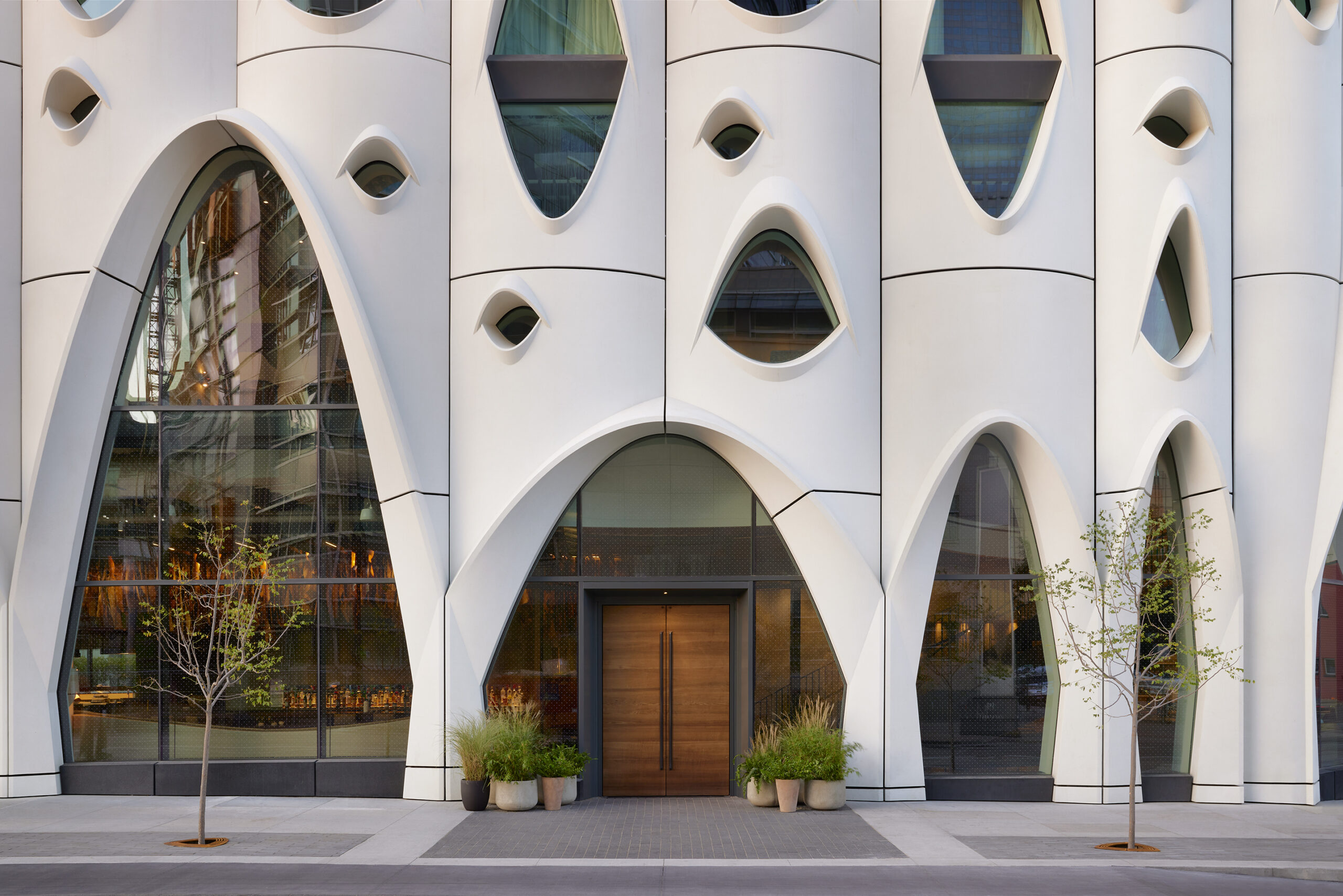
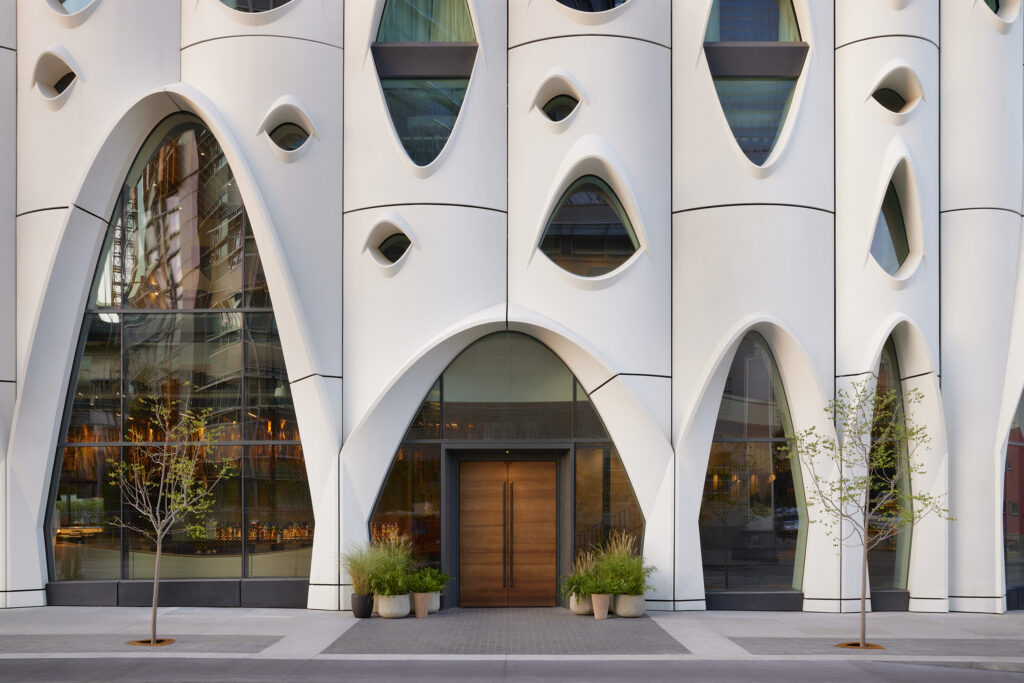
Before arriving in Denver, I had already seen photographs of Populus. It is difficult not to notice the extraterrestrial among the more conventional architecture surrounding Civic Center Park. But photographs did not quite explain what Populus actually was.
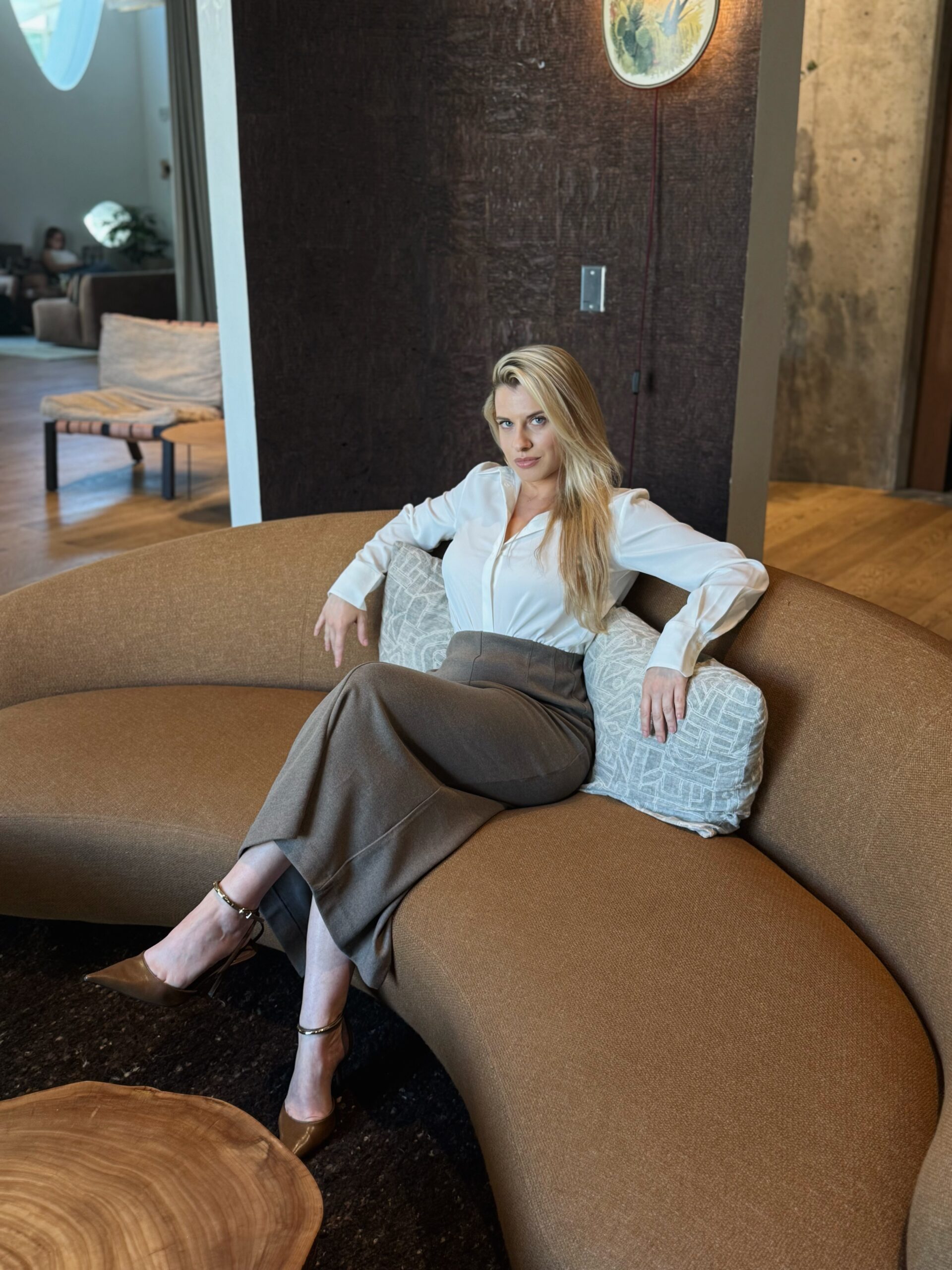
The minute I walked through the doors, I looked up. Suspended above the bar was what appeared to be an enormous installation of caramel-colored leather, folding organically out from the concrete core and glowing softly above the room. It was beautiful, but something about it seemed unusual. During my tour with Thomas Hudson, environmental experience manager, I learned that it wasn’t leather at all. The Reishi Tapestry is made from nearly 500 sheets of material engineered from mycelium, the root structure of mushrooms. Mushroom roots as luxury décor? I was intrigued.
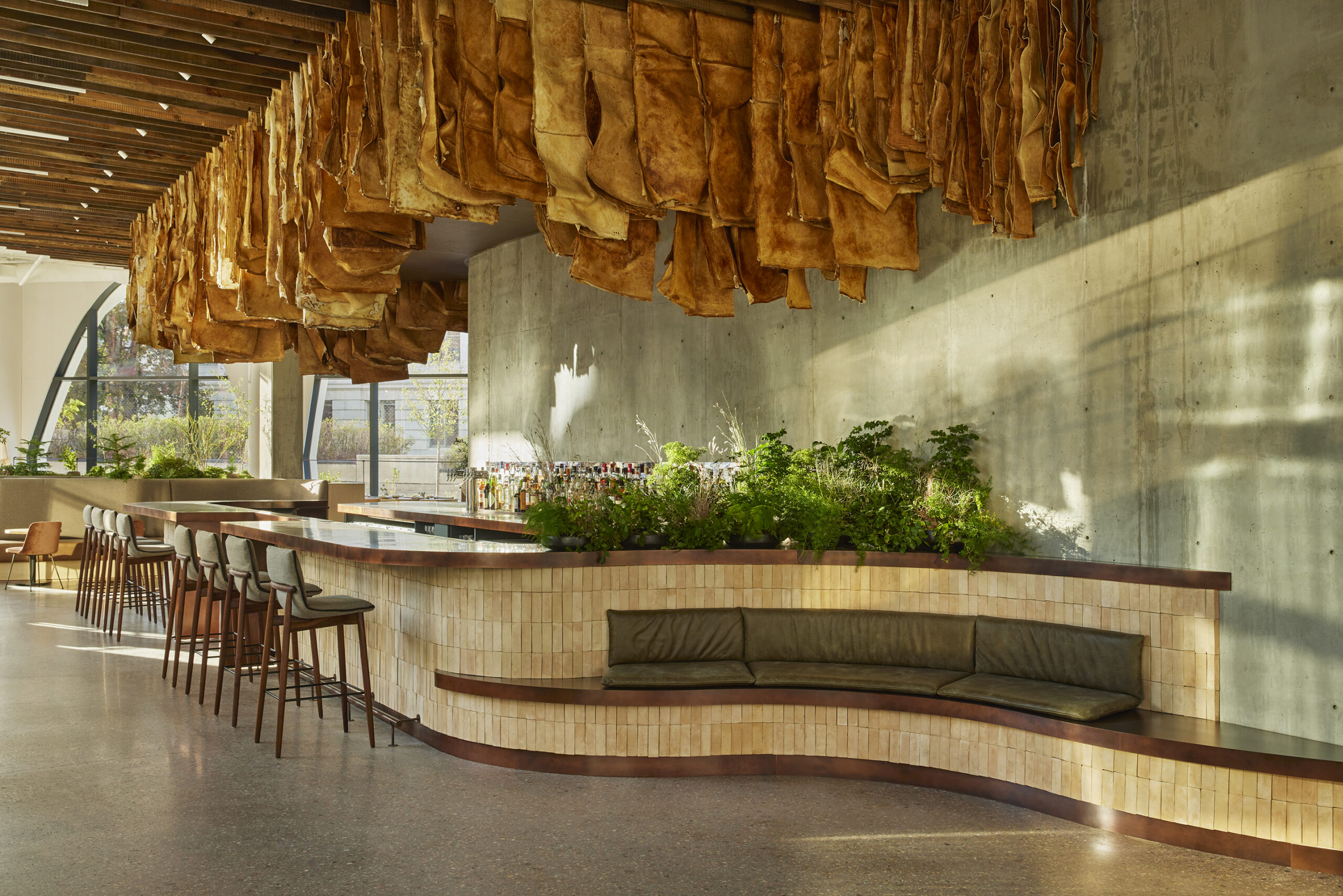
That first discovery became something of a game during my two-night stay. Almost everything I initially admired because it simply looked cool eventually revealed another story. Weathered wooden slats overhead had once been snow fencing exposed for years to Wyoming weather. Some guestroom headboards were made from fallen beetle-kill pine. Even the carpeting was selected with its eventual decomposition in mind.
Populus doesn’t use nature as decoration or sustainability as a fashionable selling point. Instead, it takes the idea much further, attempting to turn the hotel itself into a living ecosystem.
When the City of Denver auctioned the land, Thomas told me the Populus development team submitted the lowest bid. Denver chose them anyway because of what Urban Villages envisioned creating there. That philosophy takes physical form in the building itself, and I especially loved discovering that the mind behind its striking architecture is a woman.
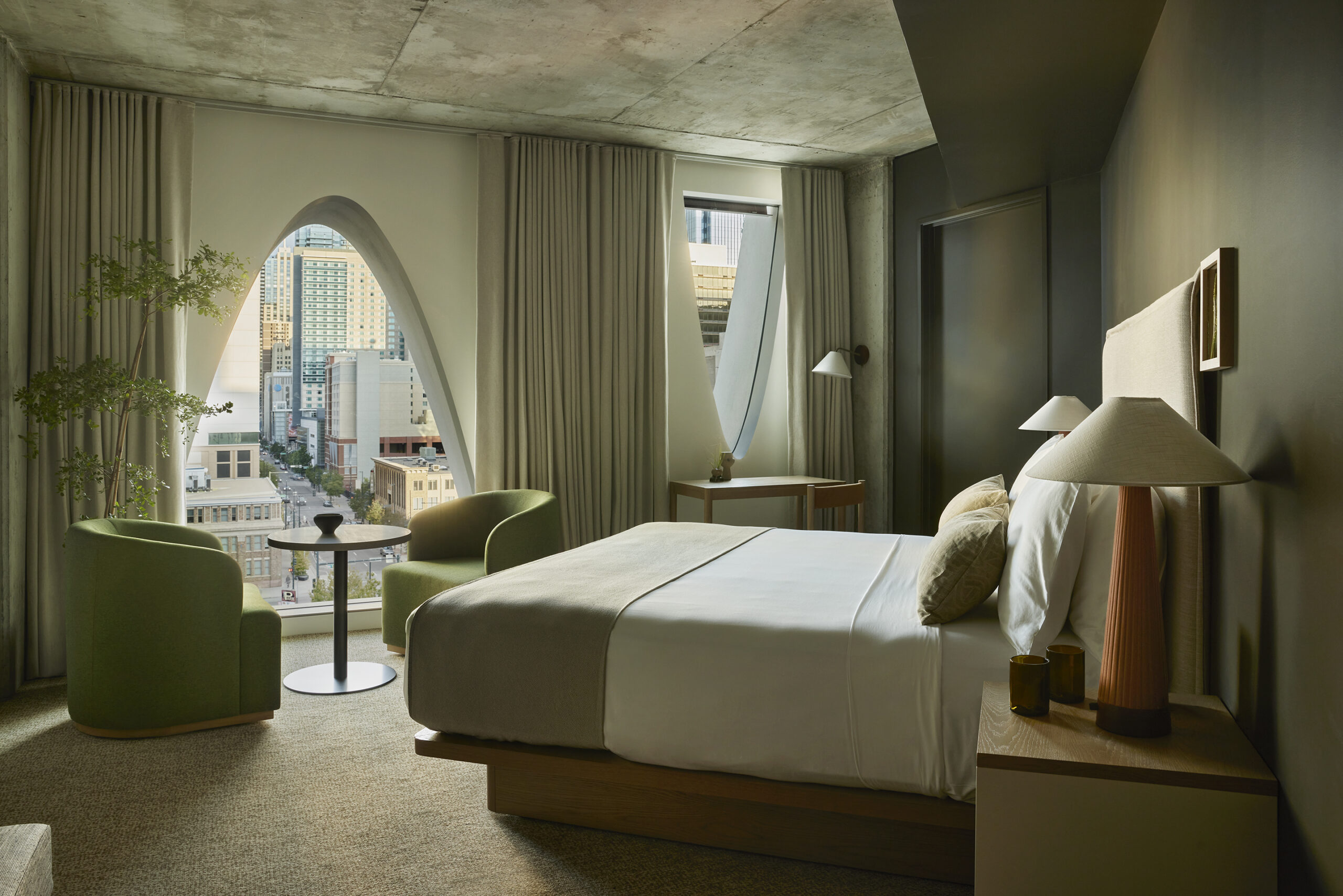
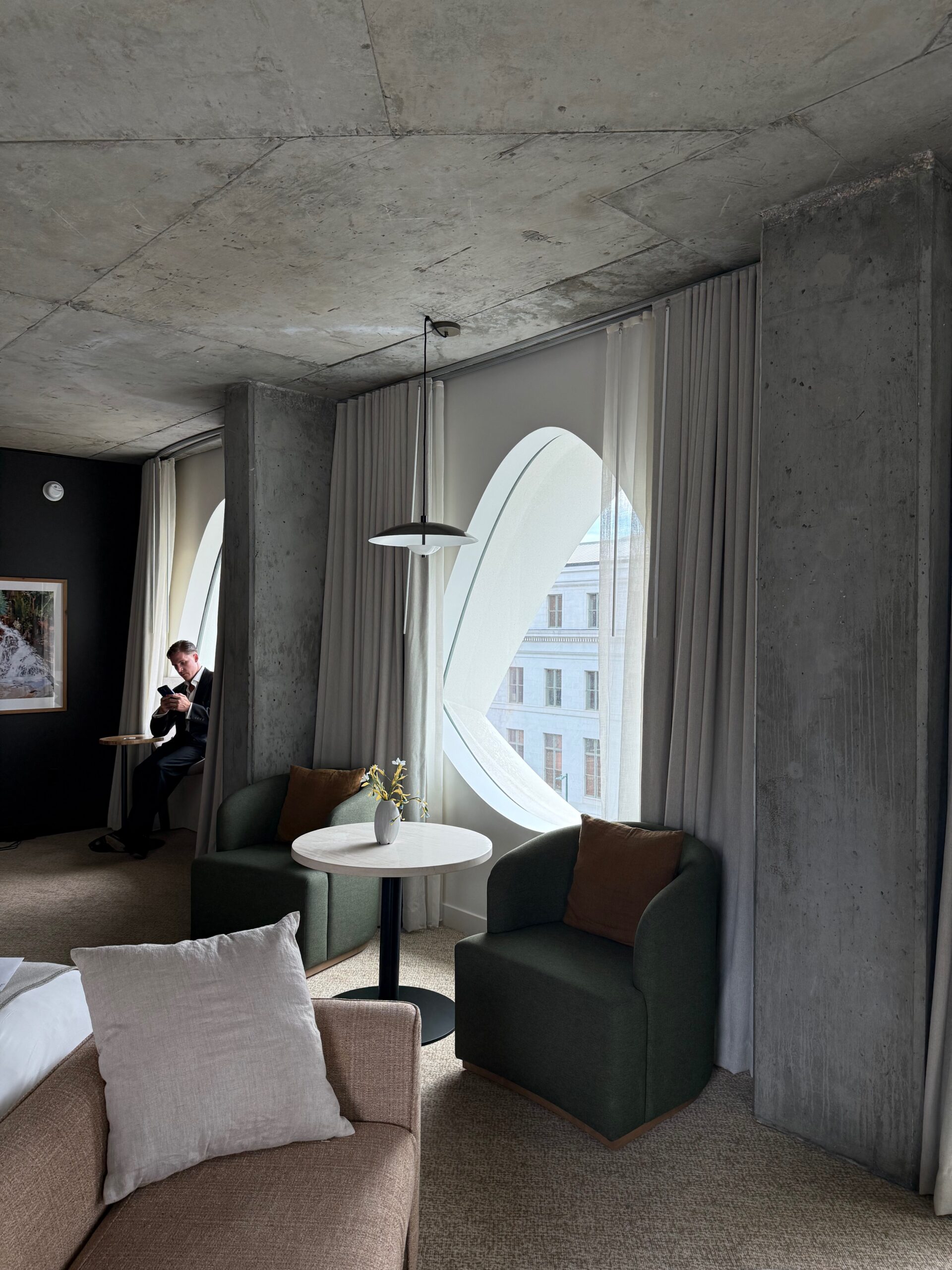
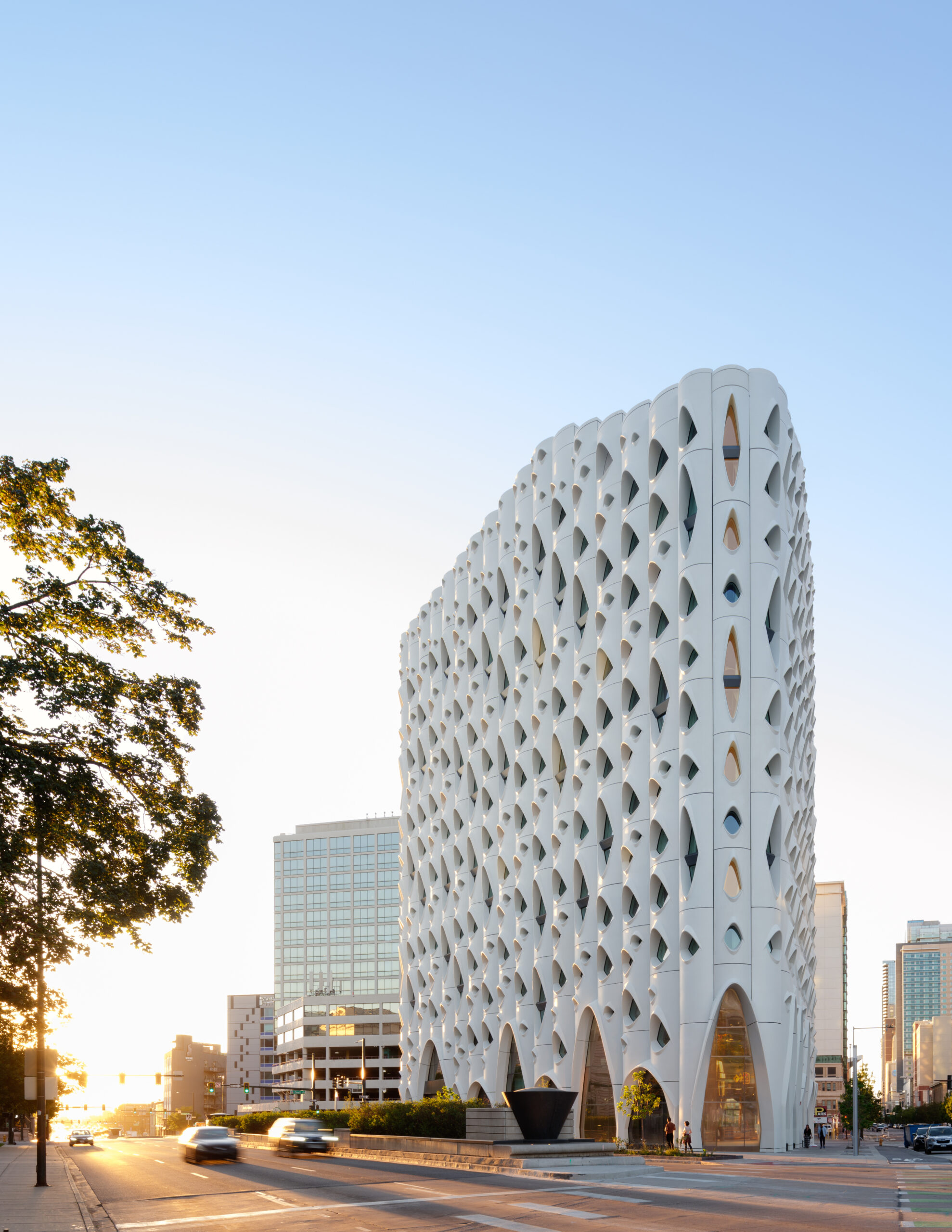
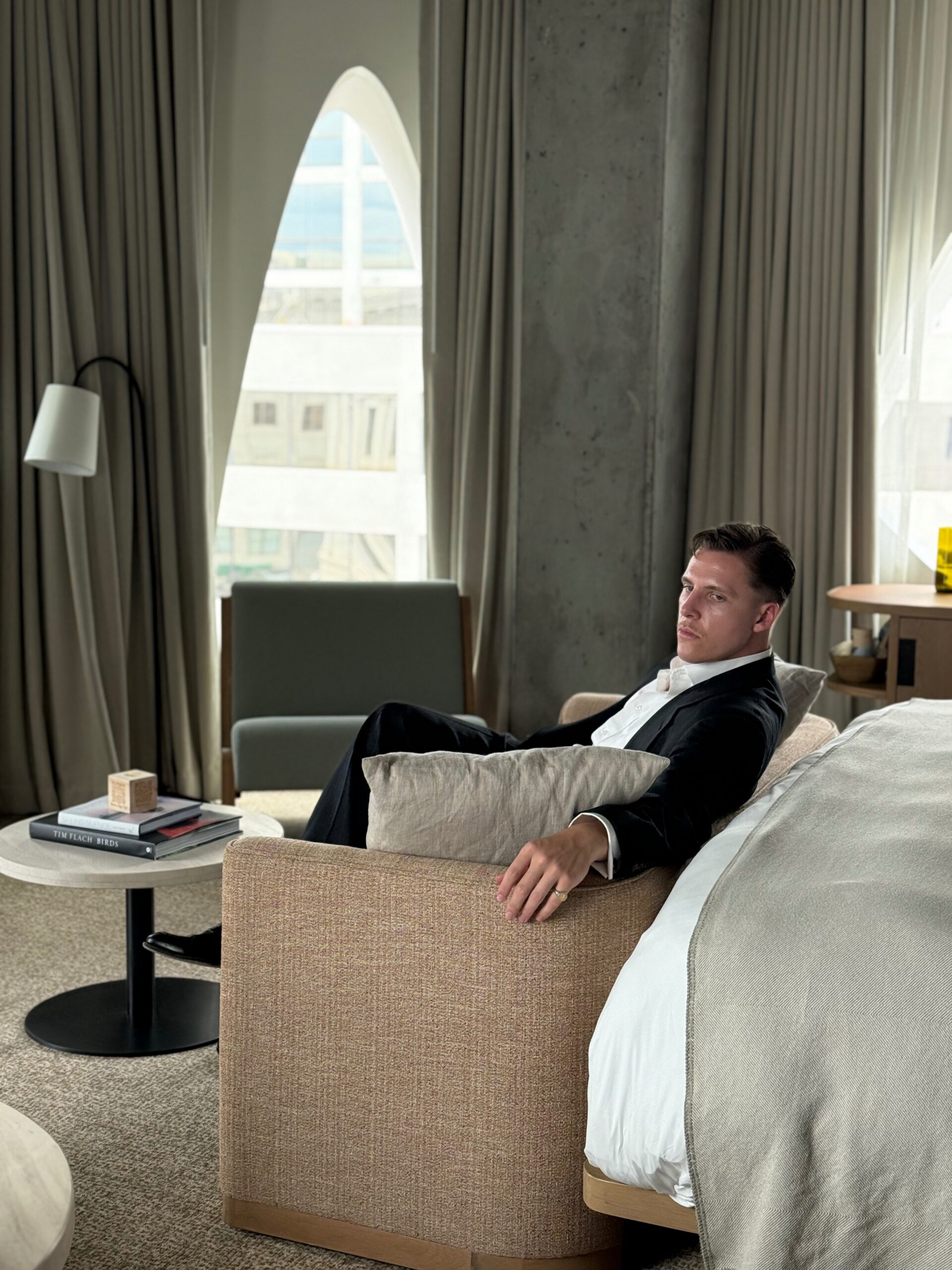
Jeanne Gang, founder of Studio Gang, drew inspiration from Populus tremuloides, Colorado’s native quaking aspen. Those peculiar windows I had seen in photographs reference the dark, eye-shaped scars left behind when an aspen naturally sheds its lower branches. Their scale shifts throughout the building, from dramatic openings at street level to more intimate frames around the guestrooms.
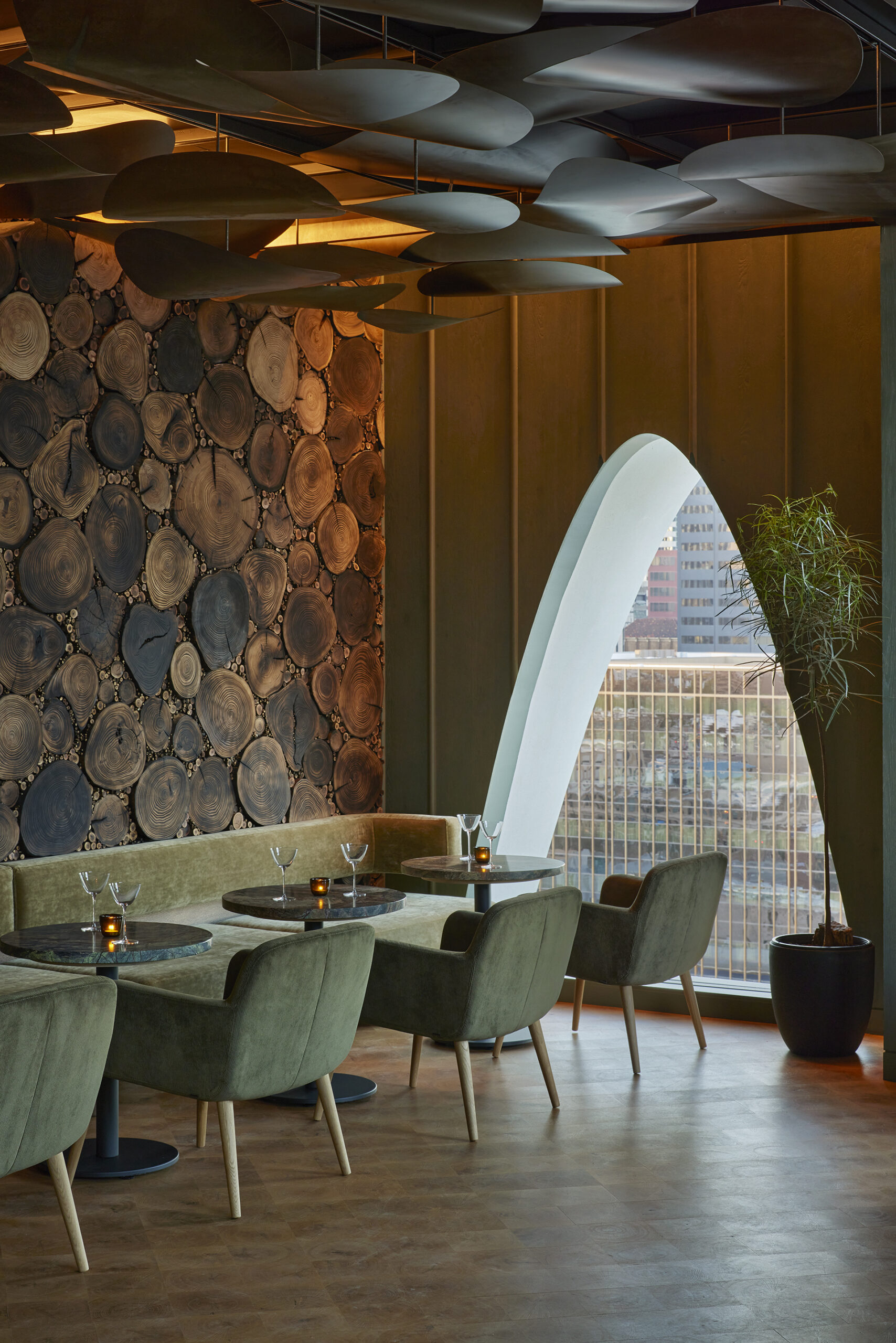
Thomas told me that Gang and developer Grant McCargo had even hiked together through Colorado’s aspen forests while developing the concept. Gang, whose practice often studies natural structures such as nests and other organic forms, returned with sketches that eventually informed the building. Once Thomas explained it to me, I couldn’t unsee the tree.
The lobby and Pasque restaurant form the “forest floor.” The exposed concrete core becomes a kind of trunk as you move upward through the guestrooms until eventually you emerge at Stellar Jay on the rooftop, the colorful, light-filled canopy. I wasn’t simply taking an elevator to my room; I was moving vertically through somebody’s interpretation of a forest.
Even the elevator had a surprise. Instead of generic hotel music, I heard birds, wind, and the sounds of moving water. Later, I discovered that conservationist Jacob Job had captured an astonishing 1,500 hours of audio in an aspen grove near Estes Park, eventually condensing those recordings into 24-hour sound cycles. Suddenly, even an elevator ride had become part of the forest illusion.
Populus also seemed to attract an unexpectedly eclectic crowd. Thomas told me that not long before my stay, the hotel had hosted what he jokingly described as “every cardiologist in the U.S.,” followed by an archaeology convention that filled the lobby with guests who looked somewhere between professors and Indiana Jones. Somehow, that mix felt completely right for a place seemingly designed to attract curious people.
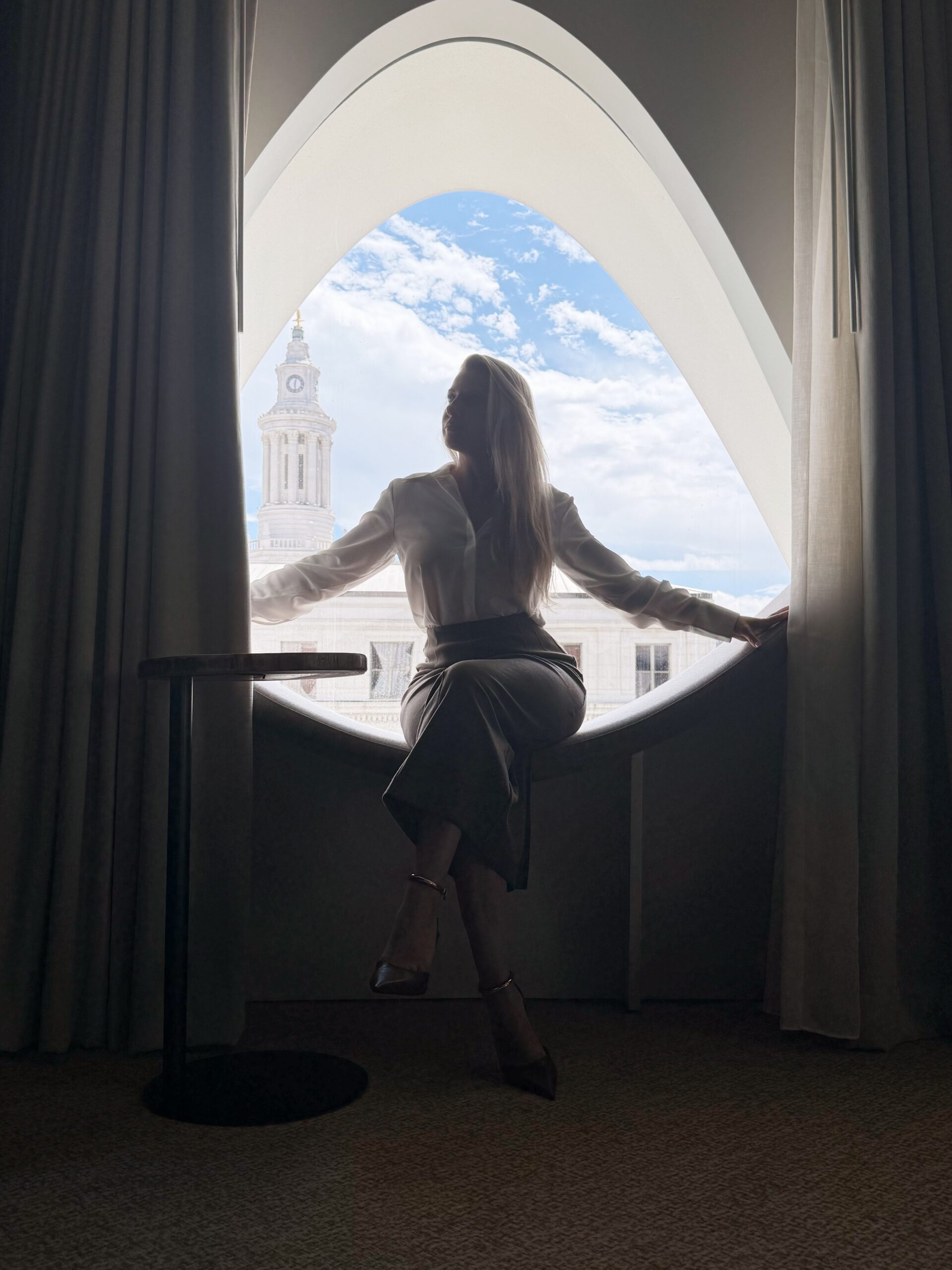
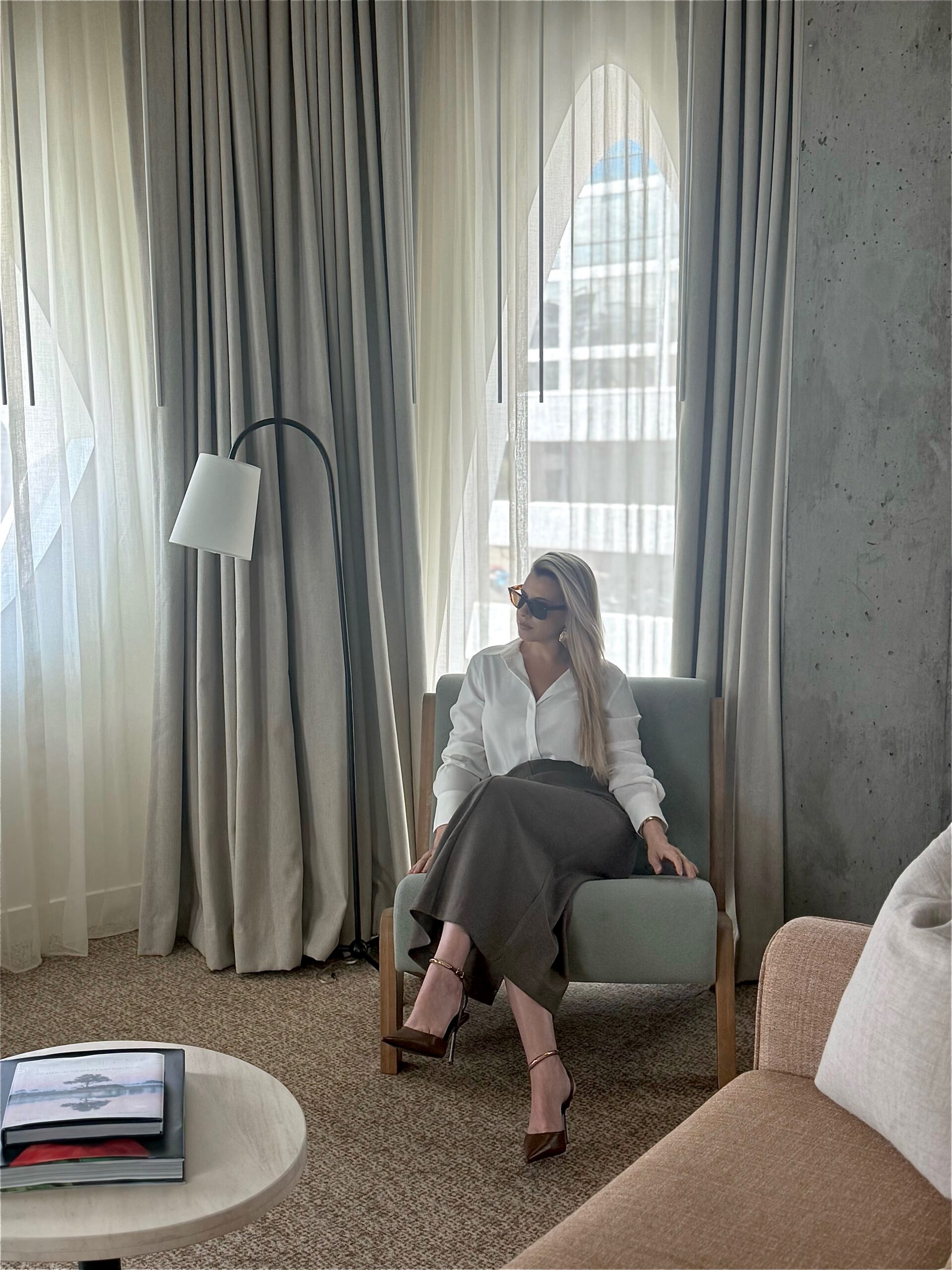
My room continued the scavenger hunt. A delicate handmade paper flower sat in a small ceramic vase, looking almost real until I leaned closer. In many guestrooms, those windows curve inward into cushioned ham- mocks where you can sit almost inside the architecture and look over the city.
Even my room key made me smile. Instead of the anonymous plastic rectangle we have been conditioned to lose somewhere at the bottom of our handbags, Populus handed me a circular wooden key etched with the rings of a tree trunk. The paper sleeve was even more charming: “Plant This Holder!” it instructed. Embedded with wildflower seeds, the entire holder could be soaked, planted, and eventually transformed into flowers. It might have been one of the smallest objects in the room, yet it summarized the entire hotel rather perfectly: design with an afterlife.
Wandering through the hotel, I became slightly obsessed with touching things. There was a wall made from pressed chamomile that carried a faint botanical aroma. Pinecones appeared as sculptural objects. Glassware had been fashioned from recycled wine bottles. Elsewhere, wood ash had been suspended in resin, while local craftspeople transformed natural materials into furniture that felt intentionally solid and imperfect. Even the reception desk had a former life. It began as a cottonwood tree that had fallen in Longmont, Colorado, before local artisans cut it into slabs, kiln-dried the wood, and reconstructed it as the desk guests now lean against at check-in.
Everything has weight, texture, and imperfection. Wood feels like wood; concrete is allowed to look like concrete. Maybe that is a more interesting definition of luxury: Here, sustainability isn’t its opposite but one of the mechanisms through which it is created.
Somewhere between touching a wall made from chamomile and learning that the ceiling above me had once spent years weathering Wyoming snowstorms, I realized the environmental story went much deeper than clever décor. Populus describes itself as the country’s first carbon-positive hotel, and some of its most consequential decisions are almost invisible. Even the concrete beneath my feet had a backstory. According to Thomas, its mix carries roughly a 30 percent lower carbon footprint than conventional concrete, reducing the project’s carbon impact by approximately 2,500 metric tons.

I normally lose interest when hotels begin throwing sustainability statistics at me, but one initiative was beautifully simple: One Night, One Tree. For every night a guest stays at Populus, a tree is planted through its partnership with the National Forest Foundation. Two nights in Denver suddenly meant two future trees somewhere beyond my hotel room.
The Populus Stewardship Grant directs part of the hotel’s revenue toward environmental and community projects. But the part I loved most was who gets a voice in deciding where some of that money goes: hotel employees themselves. Housekeepers, bartenders, pastry chefs, managers, and other team members hear presentations from local organizations and help determine where funding is directed.
The same sense of locality carries into the art. Populus almost functions as a gallery of the contemporary American West. The collection includes Cheyenne and Arapaho artist Brent Learned, whose contemporary pieces draw upon Plains traditions, and New Mexico artist Phil Atwood, whose layered canvases and extraordinarily detailed drawings caught my eye during the tour.
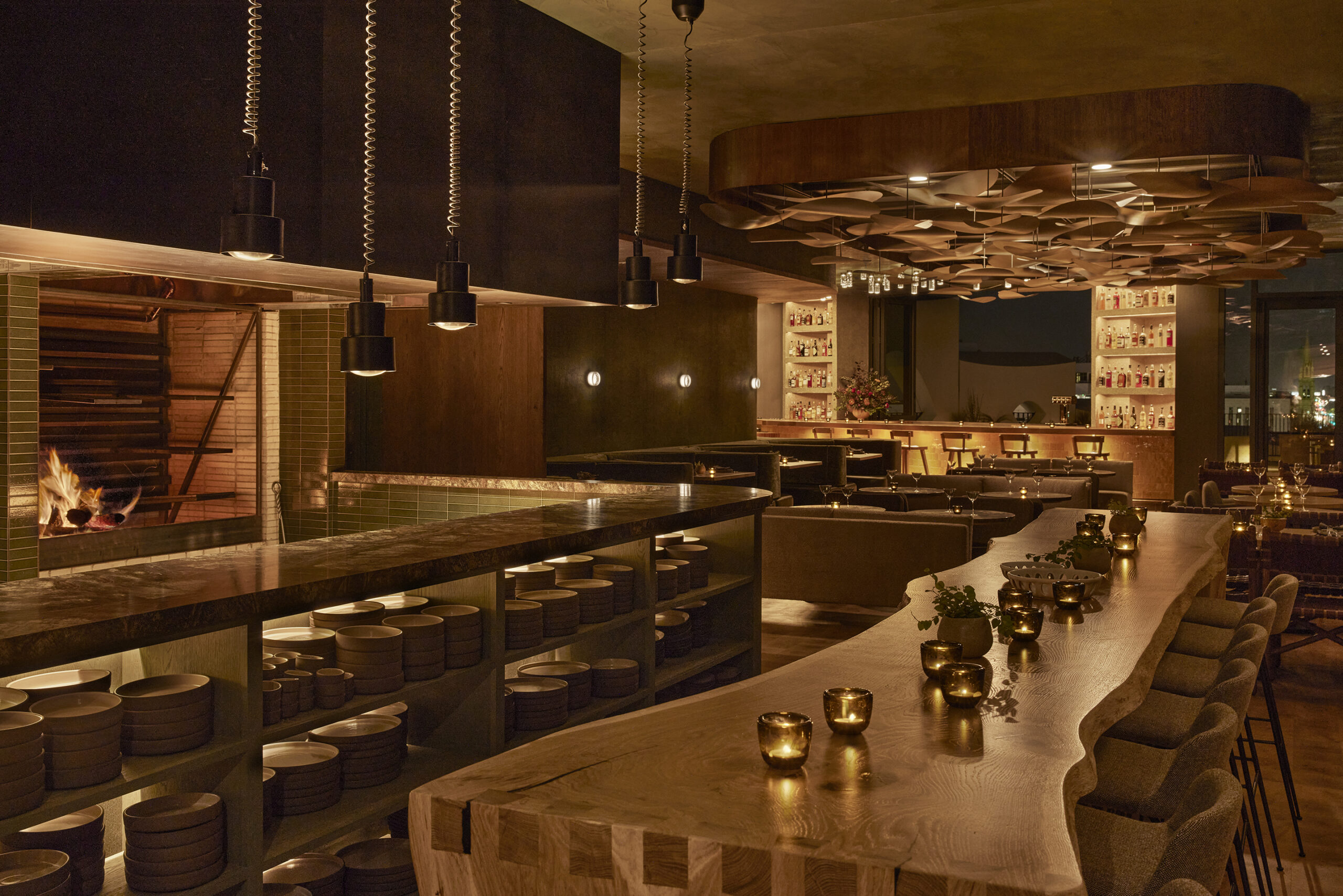
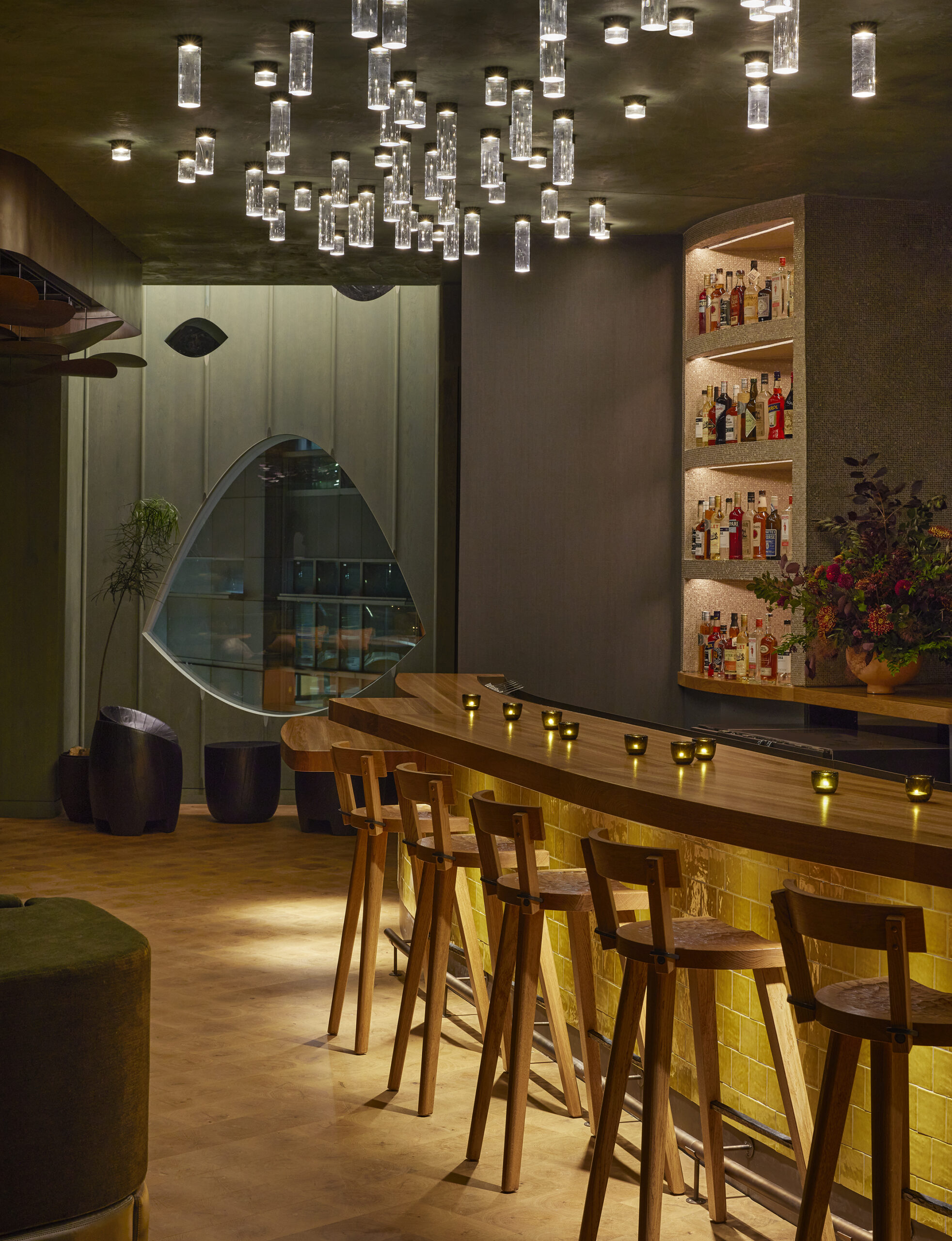
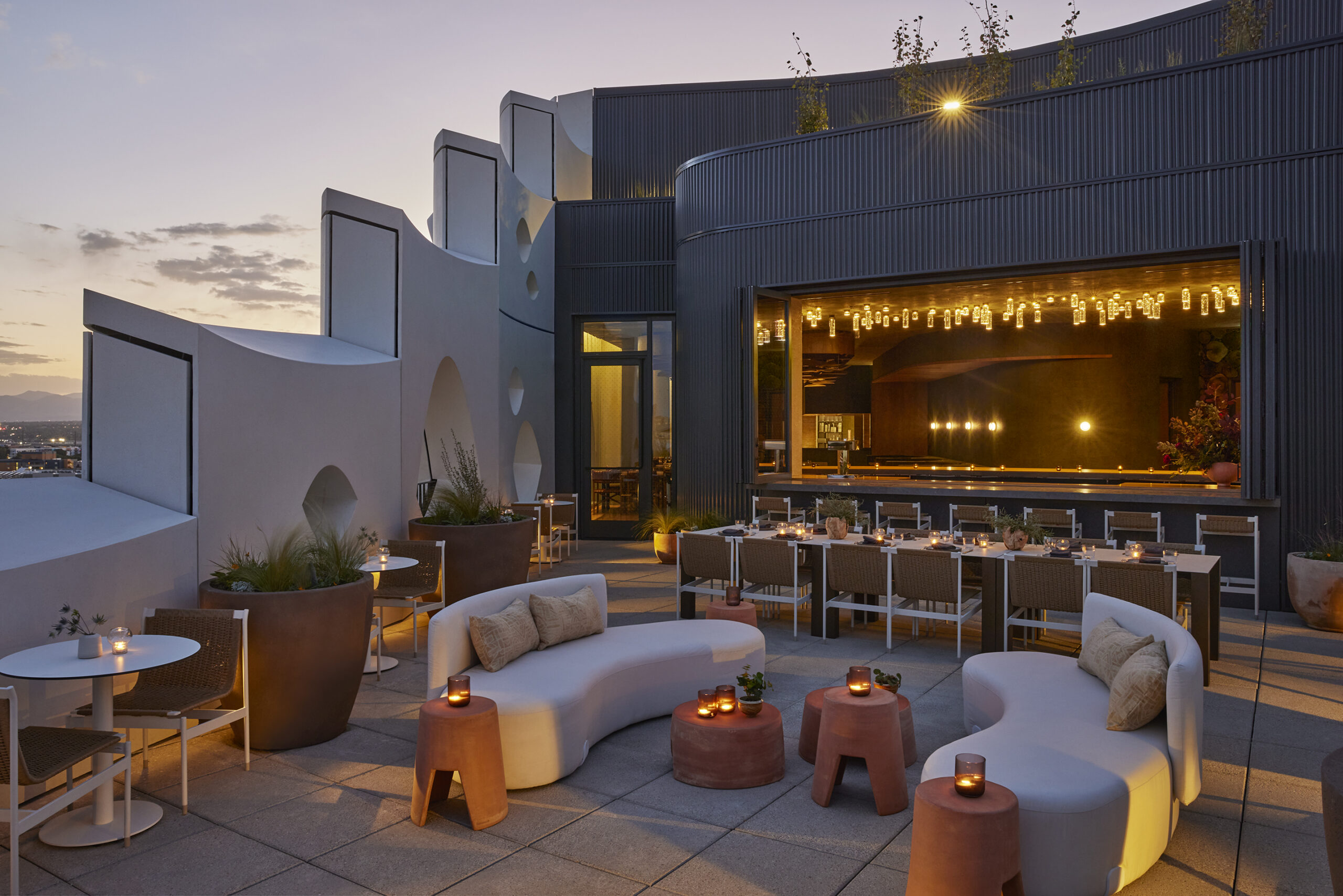
By evening, I had reached the canopy. Stellar Jay sits high above Denver with the city and Rocky Mountains stretching beyond its terrace. The mood changes completely from the earthy browns and restrained palette down- stairs. Here there is color, vegetation, warm light, and fire. The culinary concept revolves around a live-fire hearth, with hardwood smoke becoming almost another ingredient.
I realized I had actually smelled Stellar Jay before eating there. A faint woodsy aroma occasionally traveled through the hotel, and now its origin was right in front of me. We ordered generously: Bangs Island mussels fragrant with fennel, tomato, and saffron; delicate beef carpaccio with sunflower emulsion; roasted chicken with yogurt and peri-peri spice; and a beef flatiron with silky pomme purée, fried rosemary and sunchoke crunch. Dessert was strawberry-rhubarb zeppole with basil mascarpone, exactly the kind of slightly unexpected, sweet ending I wanted after a meal built around smoke and fire. After an afternoon of hearing about regenerative agriculture and circular food systems, I appreciated that none of those philosophies needed to be explained on the plate. Dinner was simply delicious. And perhaps that is the smartest part of Populus’s sustainability philosophy: it doesn’t constantly demand applause for itself. The restaurants work with small farms and regional producers, while food waste is processed through an onsite system and turned into compost that returns to Colorado farms.

The following morning, I descended from the canopy back to the “forest floor” for breakfast at Pasque. Named after one of Colorado’s early-blooming wildflowers, the restaurant feels calmer and earthier than its rooftop sibling. Sitting there with my morning latte, I thought that maybe luxury itself needs a little deinfluencing. Populus had certainly made me question what “more” actually means. And Denver continued the conversation outside the hotel.
At the Denver Botanic Gardens, I predictably spent far too much time in the herb garden, rubbing leaves between my fingers and smelling chocolate mint and spearmint, while silvery Southernwood looked almost unreal beside them. Later, Dinosaur Ridge reminded me just how ancient Colorado’s landscape actually is.
My favorite off-property experience, though, came at Red Rocks Amphitheatre. It was my first time there. Thousands of people had gathered between enormous sandstone formations to see Ray LaMontagne, and somewhere behind the stage lightning began flashing through the distance as he performed. For moments, nature seemed to have appointed itself lighting director. No hotel can manufacture something like that. But a great hotel can change the way you pay attention to everything around it.
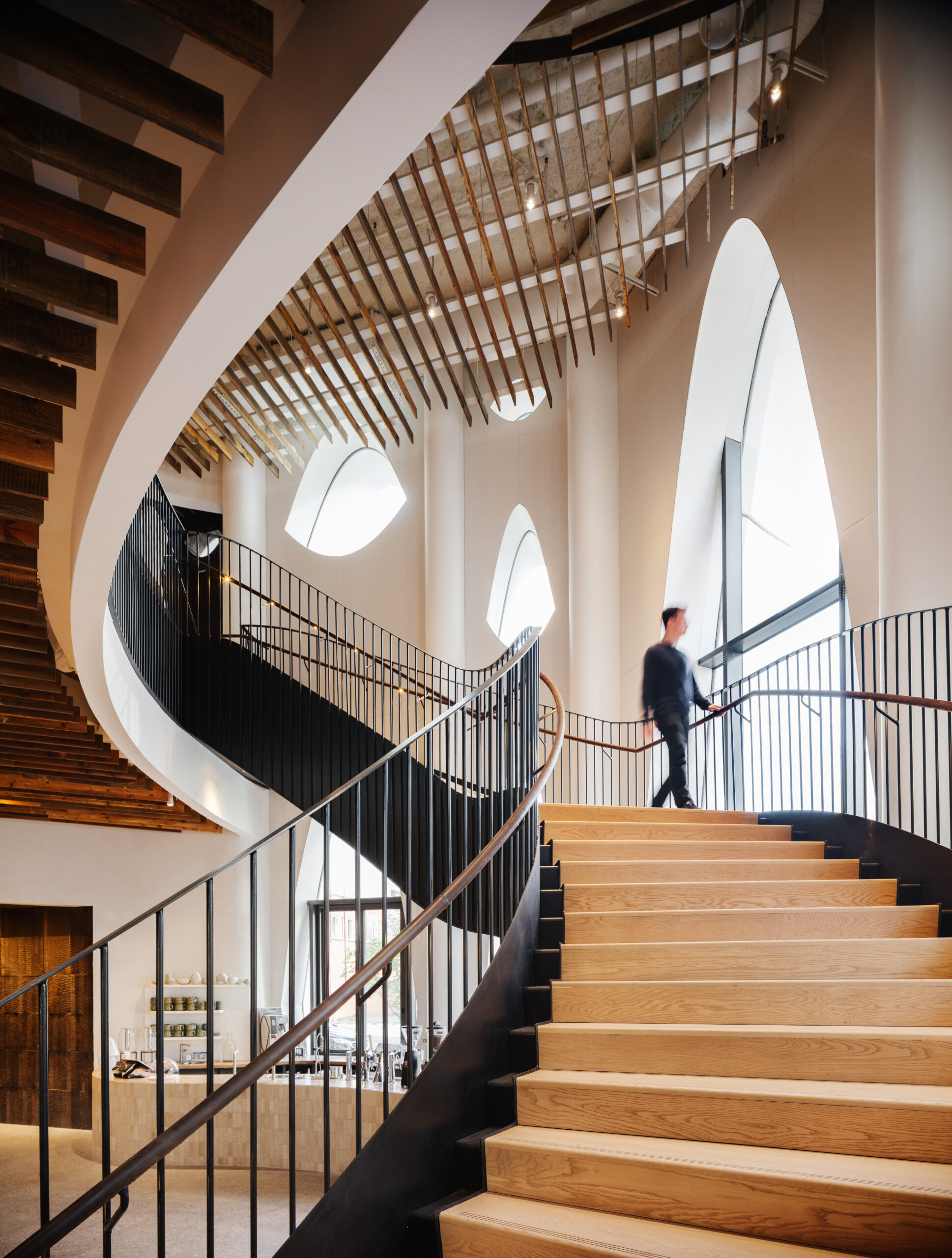
When I returned to Populus, I understood the property differently than when I had first walked through its doors. The mushrooms, wildflowers, birds, reclaimed wood, chamomile, trees, artisans, and fire weren’t isolated design tricks. Together, they formed a language.
I arrived at Populus expecting a beautiful hotel. I left thinking about forests, materials, food, craftsmanship, community, and the increasingly precious value of experiences that have some depth behind them. In a world obsessed with more, maybe the new luxury is understanding what is already around us—and actually paying attention to it.